

You are standing on a busy railway platform. A commuter sits on a wooden bench, staring blankly at a passing train that blur past in a smear of speed. A literal photograph records a person sitting near a moving train. A metaphoric photograph captures something else entirely: the feeling of isolation in a fast-moving world, or the weight of being left behind while life speeds onward.
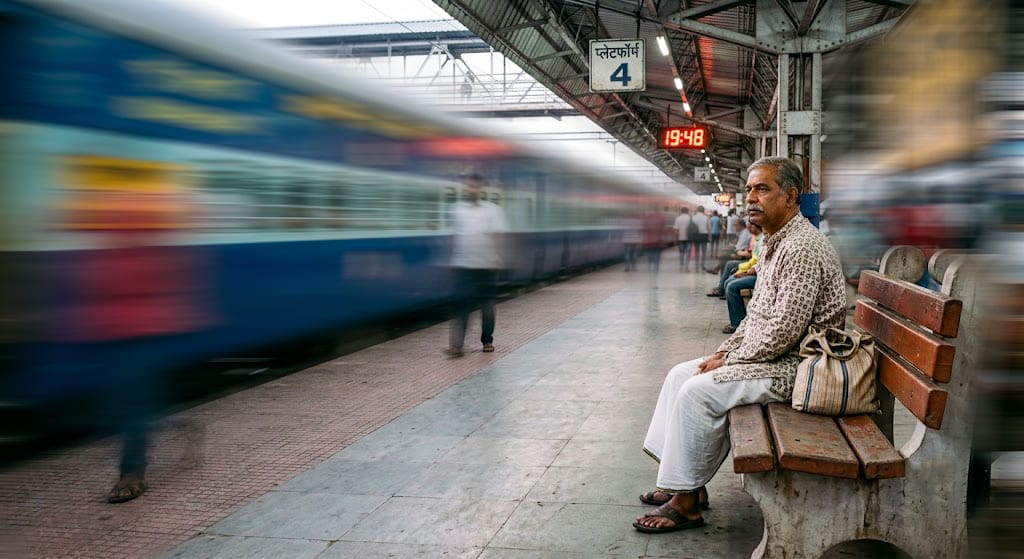
The difference between a snapshot and a resonant image often comes down to this single shift: moving from recording what a thing is to capturing what a thing represents. Visual metaphor allows you to translate abstract concepts—grief, freedom, inequality, passage of time, resilience—into tangible visual cues.
This guide will teach you how to spot, plan, and execute visual metaphors in your photography, shifting your work from technically precise documentation to evocative visual storytelling.
What Is Visual Metaphor in Photography?
A visual metaphor occurs when a photograph uses a physical subject, element, or arrangement to represent an abstract concept or emotional state.
In spoken language, a metaphor asserts that one thing is another (e.g., “Time is a thief”). In photography, a visual metaphor uses visible details—a shadow, a cracked mirror, a fork in a road, a lone bird, a fading light—to point the viewer toward an unsaid idea.

What Visual Metaphor Is:
- A bridge between physical form and invisible concept.
- A deliberate choice of framing, light, or subject relationship to prompt deeper interpretation.
- An invitation for the viewer to participate in completing the image’s meaning.
What It Is NOT:
- Literal Documentation: A photo of a broken chair is just a broken chair unless the context, lighting, and composition transform it into a symbol of decay, abandonment, or heartbreak.
- Heavy-Handed Cliché: Placing a literal heart-shaped object in a frame to signify “love” often feels forced. Metaphors work best when they feel discovered or subtle rather than manufactured.
Why Does Visual Metaphor Matter in Visual Storytelling?
Technically pristine1 photographs—perfectly exposed, razor-sharp, balanced by the rule of thirds—can still leave a viewer completely indifferent. Sharpness and accurate color speak to the camera’s capability; metaphor speaks to human experience.
Visual metaphors matter because they:
- Engage the Viewer’s Intellect: Instead of handing the viewer an answer, a metaphor presents a puzzle. When the brain decodes the link between subject and meaning, the connection to the photo becomes memorable.
- Bypass the Need for Captions: While context helps, a strong visual metaphor conveys emotional weight instantly across language and cultural barriers.
- Elevate Everyday Subjects: You don’t need exotic landscapes or dramatic events to create powerful work. Everyday objects—an unravelling thread, a puddle reflecting skyscrapers, a shadow crossing a boundary—become deep narrative elements.

How Does Visual Metaphor Work?
Visual metaphors rely on fundamental visual building blocks to establish symbolic relationships.
- Juxtaposition: Placing two contrasting elements together in the frame (e.g., a towering luxury high-rise looming over a decaying mud hut) forces the viewer to compare them, generating a statement on wealth disparity.
- Light and Shadow: Shadow can represent the unseen, mystery, guilt, or the subconscious. Light can signify hope, truth, or sudden clarity.
- Scale and Framing: Framing a small child against a massive, blank concrete wall instantly conveys themes of vulnerability, isolation, or the pressure of urban environments.
- Texture and State of Matter: Cracks, rust, peeling paint, smoothly flowing water, or frozen ice carry inherent psychological weight linked to aging, decay, fluidity, or stagnation.
- Gesture and Stance: A figure slumped forward in a crowded subway train visualizes mental exhaustion far more effectively than a posed portrait.
How to Apply Visual Metaphor When Shooting
Creating metaphorical images requires shifting your mental framework from capturing subjects to observing relationships.
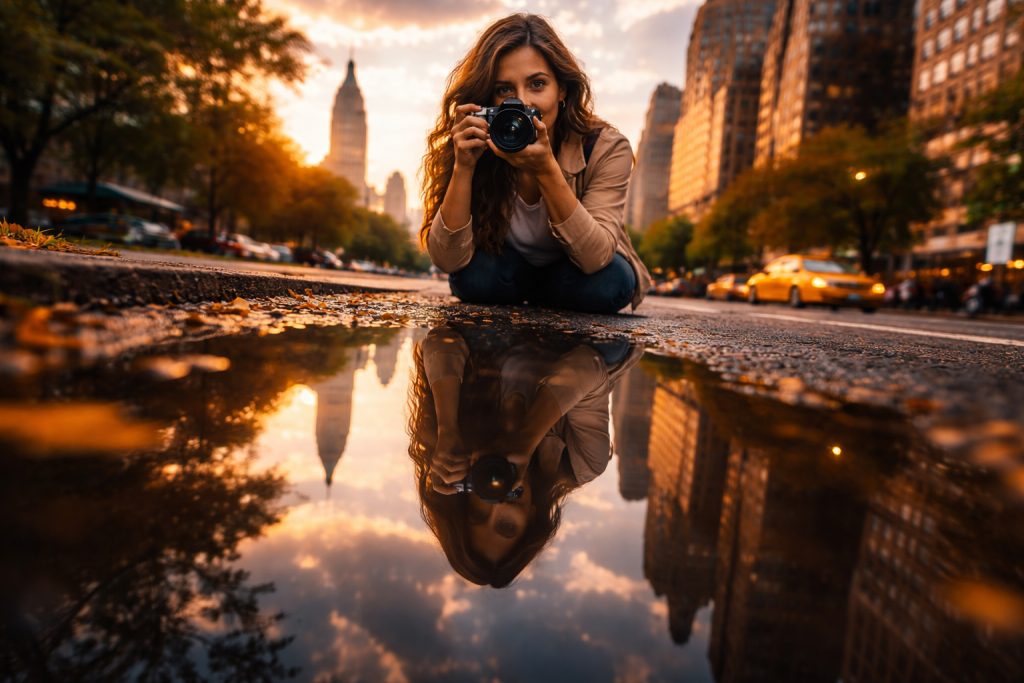
- Define the Emotion or Theme First: Before raising the camera, ask yourself: What does this situation feel like? (Is it lonely, chaotic, hopeful, restrictive?)
- Find a Physical Anchor: Search the scene for an object or visual condition that physically echoes that feeling.
- Isolate or Pair the Subject: Frame your scene so the connection is clear. Strip away extraneous 2elements that distract from the core metaphor.
- Choose a Viewpoint That Amplifies the Concept: Shooting from a low angle can make a subject feel imposing or oppressive; shooting from above can make them feel small or powerless.
- Wait for the Decisive Gesture or Light: Wait until a person walks into the frame, a shadow hits the precise spot, or a gesture completes the symbolic link.
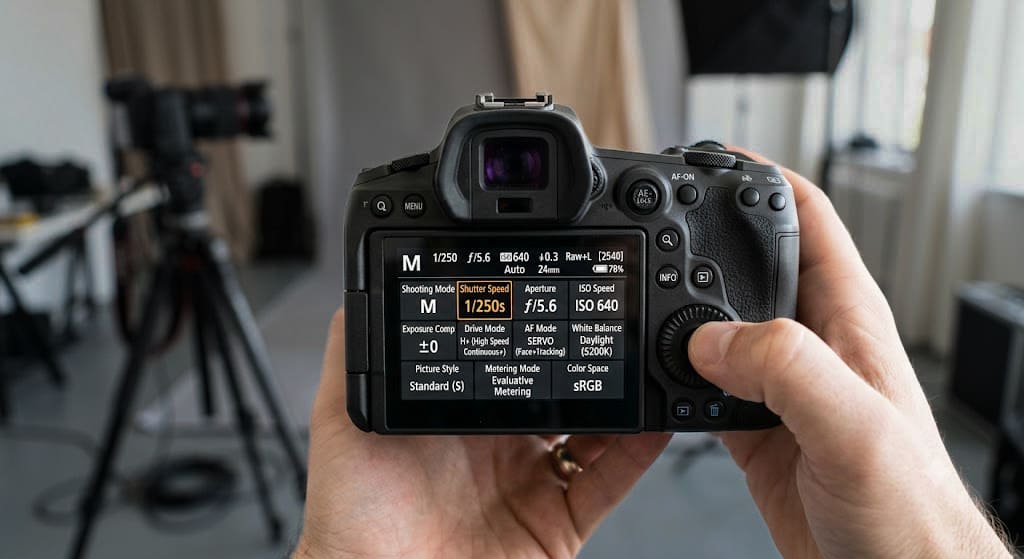
Camera Settings and Technical Considerations
Technical choices must serve the metaphor, not just exposure.
- Depth of Field (Aperture):
- Wide Aperture (e.g., f/1.8): Isolates a subject from a chaotic world, emphasizing solitude or internal focus.
- Narrow Aperture (e.g., f/8 or f/11): Keeps background elements sharp when the metaphor depends on the interaction between the foreground subject and background environment.
- Shutter Speed:
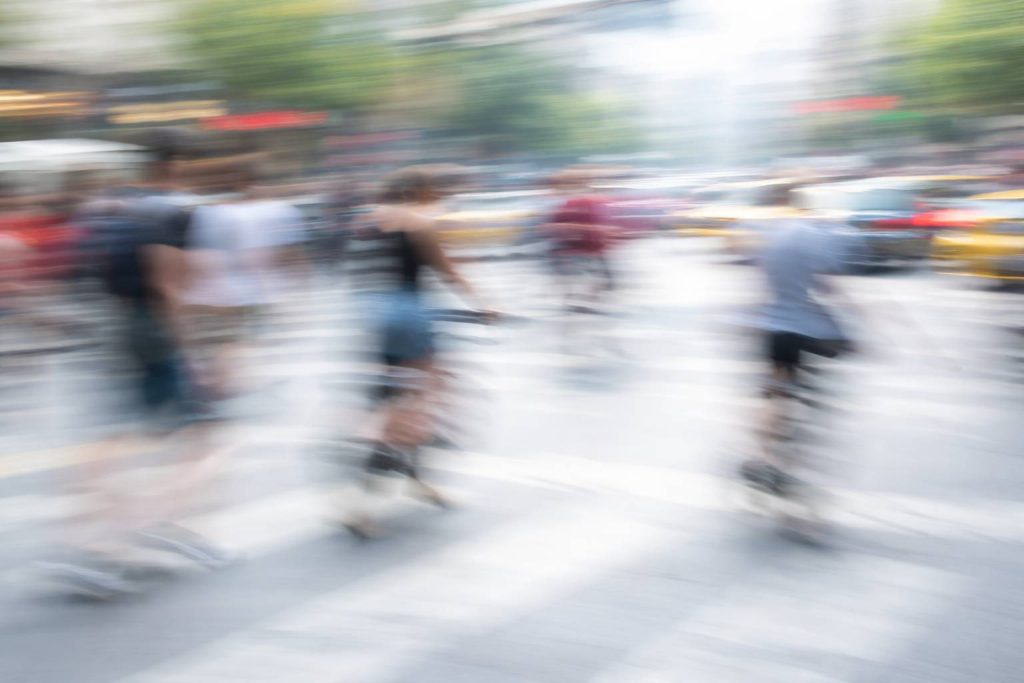
- Slow Shutter Speed: Blurs moving crowds while keeping your primary subject still, metaphorically capturing time rushing past an isolated individual.
- Fast Shutter Speed: Freezes a fleeting, fractional gesture (like a hand reaching out) to turn a temporary action into a permanent statement.
- Focal Length:
- Telephoto Lenses: Compress distance, making background elements feel pressingly close to the foreground subject—useful for creating feelings of claustrophobia or pressure.
- Wide-Angle Lenses: Exaggerate spatial relationships, making nearby subjects look dominant and distant elements feel remote.
Real-World Photography Examples
Scenario 1: Street Photography (The Commute)
- Situation: A busy metro station during rush hour.
- Photographer’s Intention: Represent the feeling of modern work burnout and routine.
- What to Photograph: A commuter standing motionless on an escalator while silhouettes of rushing people motion-blur around them.
- Why It Works: The contrast between motion and stillness visualizes stagnant energy amidst relentless societal movement.
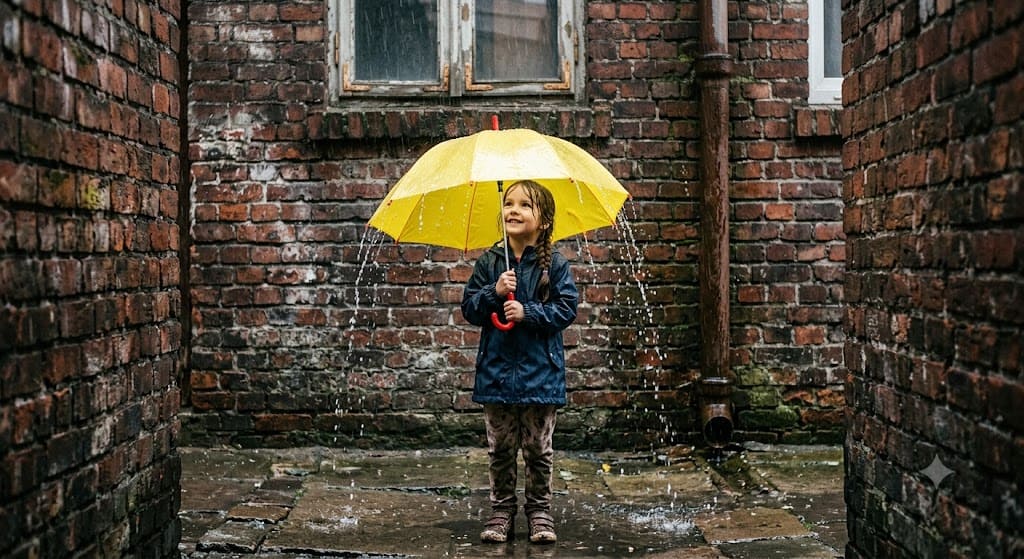
Scenario 2: Cultural / Festival Photography (Monsoon in India)
- Situation: Children playing under torrential rain in a narrow alleyway.
- Photographer’s Intention: Represent resilience and joy despite tough living conditions.
- What to Photograph: A child holding a bright, intact plastic umbrella with water pouring off its edges, framed against dilapidated3, water-stained brick walls.
- Why It Works: The umbrella becomes a shield of vibrant hope and playfulness against structural decay.
Scenario 3: Portraiture (Environmental Portrait)
- Situation: An elderly artisan working in a dying traditional craft workshop.
- Photographer’s Intention: Represent the passage of time and fading traditions.
- What to Photograph: The artisan’s weathered, calloused hands working on a piece of pottery, illuminated by a single harsh shaft of light cutting through a dark, dusty room.
- Why It Works: Dust motes floating in the light shaft suggest time slipping away, while hand textures mirror the rough clay.
Common Mistakes Photographers Make
- Being Overly Literal: Photographing a stop sign to represent “stopping a bad habit” lacks subtlety and nuance.
- Fix: Look for organic, real-world interactions that suggest the concept implicitly.
- Cluttering the Frame: Including too many visual elements dilutes the core metaphor.
- Fix: Simplify your composition. Remove elements that don’t actively build the symbolic narrative.
- Sacrificing Context for Heavy Blur: Using maximum aperture (e.g., f/1.2) to blur everything into unreadable color circles can destroy necessary story elements.
- Fix: Close down your aperture slightly (f/4 – f/5.6) so environmental elements remain recognizable shapes.
- Forcing Staged Symbols: Forcing subjects into unnatural poses to form a metaphor often feels dishonest, especially in documentary work.
- Fix: Cultivate patience; observe real life until natural metaphors present themselves.
- Relying Solely on Post-Processing: Adding artificial textures, heavy vignettes, or selective color in editing software rarely turns an empty image into a meaningful metaphor.
- Fix: Build the metaphor in-camera using light, timing, and spatial relationships.
- Ignoring the Background: A strong subject linked with an irrelevant or distracting background breaks the symbolic connection.
- Fix: Check every corner of the frame before clicking the shutter.
How to Improve Weak Results
| Visual Problem | Likely Cause | Tactical Solution |
| The photo looks pretty, but feels empty. | Focused purely on aesthetics without an underlying core concept. | Ask yourself: “What word describes this scene emotionally?” Reframe to emphasize that specific emotion. |
| Viewers don’t get the symbol. | The connection between subject and environment is too obscure or chaotic. | Clean up the composition. Use negative space or selective lighting to draw direct eyes to the metaphoric relationship. |
| The image feels artificial/cliché. | Used an overused visual trope or forced staging. | Look for real-life ironies or subtle gestures rather than textbook symbols. |
| The story feels emotionally flat. | Flat lighting or neutral camera angle. | Change your angle (go high or ultra-low) and shoot during times of directional light (early morning/late afternoon). |
Creative Ways to Use Visual Metaphor
- Absence and Empty Space: Photographing an empty chair at a bustling family dinner table speaks more loudly about loss or memory than a sad expression ever could.
- Reflection and Distortion: Utilizing puddles, shop windows, or distorted mirrors can symbolize fractured identity, internal conflict, or dual lives.
- Scale Disparity: Placing a small human element against massive architectural or natural geometry highlights human insignificance or quiet endurance.
- Framing Within Frames: Shooting a subject through a tight doorway, window frame, or fence link visualizes ideas of restriction, isolation, or observation from the outside.

Visual Metaphor in Contemporary Photography
In contemporary documentary and street photography, authenticity is crucial. Viewers are increasingly fatigue-weary of manipulated, staged, or overly polished imagery.
Visual metaphor today relies heavily on unscripted observation. It respects real life while finding naturally occurring poetry within it. Photographers carry an ethical responsibility to ensure that metaphorical framing elevates human dignity rather than misrepresenting real people or manipulating truth for dramatic effect.
How Photo Critics Analyze Visual Metaphor
When evaluating a photo’s metaphoric depth, critics consider:
- Intention vs. Accidental Symbolism: Does the visual arrangement feel purposeful, or did the elements just happen to fall together without direction?
- Readability: Is the metaphor accessible to the viewer, or does it require an essay to understand?
- Layering of Meaning: Does the image offer immediate aesthetic value while revealing deeper symbolic layers upon longer viewing?
- Cultural Context: How do regional symbols (e.g., monsoon rains, specific architectural structures) shape interpretation across different audiences?
Practical Exercise: The “Abstract to Concrete” Challenge
Objective: Train your brain to translate an abstract emotion into a concrete visual metaphor without staging the scene.
- Location: A public street, market, transit hub, or park.
- Time: 1 to 2 hours.
- Equipment: Any camera or smartphone (fixed prime lens or fixed focal length preferred).
Rules:
- Pick ONE abstract concept from this list before leaving home: Isolation, Connection, Transition, Weight, or Hope.
- Do NOT stage any objects or ask people to pose.
- No selective color or heavy editing filters allowed.
Shooting Task: Photograph 3 distinct scenes where everyday physical subjects interact with light, shadow, or geometry to communicate your chosen concept.
Final Output: Select your single strongest image.
Reflection Questions:
- If I remove the title, can a friend guess the chosen concept?
- What element in the frame actively strengthens the metaphor?
- What element in the frame distracts from the idea and should be cropped or avoided next time?
- How did camera height or aperture affect the emotional weight of the image?
Final Thought
A camera does not just record physical light bouncing off objects; it records how you choose to see relationships in the world. Next time you hold your camera, don’t just ask yourself, “What am I looking at?” Ask yourself, “What does this moment feel like, and what visual elements tell that hidden story?”
Frequently Asked Questions
Q1: What is the difference between visual symbol and visual metaphor?
A symbol represents a specific, widely recognized idea directly (e.g., a dove symbolizing peace). A metaphor creates a new, contextual relationship between two distinct elements in a frame to convey a broader, complex concept (e.g., an abandoned shoe on an empty highway suggesting sudden loss or disruption).
Q2: Can I capture visual metaphors spontaneously, or do they need to be planned?
Both! While some conceptual photographers plan and stage metaphors, street and documentary photographers train themselves to spot unscripted metaphors naturally occurring in everyday light, interactions, and geometry.
Q3: Are visual metaphors only useful for artistic or gallery photography?
No. Visual metaphors are widely used in photojournalism, editorial portraiture, brand campaigns, and documentary storytelling to communicate complex human stories quickly and compellingly.
Q4: Will casual viewers understand my visual metaphors?
If the metaphor relies on universal human experiences (like light vs. dark, small vs. large, stillness vs. motion), viewers will feel the emotional weight subconsciously, even if they don’t break down the technical structure intellectually.
Q5: Do I need expensive gear to create visual metaphors?
Not at all. Visual metaphor is entirely about observation, perspective, light, and composition—skills that apply whether you shoot on a smartphone or a professional full-frame camera.
- Pristine means completely clean, fresh, or in its original, unspoiled condition as if new. ↩︎
- Extraneous means not relevant, unnecessary, or coming from an outside source rather than being a natural part of something. ↩︎
- Dilapidated means old and in very bad condition because of age or lack of care. ↩︎
