

You are walking through a busy train station. On a platform bench sits an abandoned, battered leather suitcase, scuffed at the edges and wrapped with faded luggage tags. Nearby, a glossy modern smartphone lies screen-up on the ground, its glass shattered in a web of sharp fractures. If you point your camera at the phone, are you simply documenting a broken electronic device? Or are you capturing a subtle comment on fragile connections, sudden loss, or digital overload?
This distinction marks the shift from taking a snapshot to creating a visual story.
Many photographers struggle when their images—while sharp, well-exposed, and properly composed—feel emotionally flat. The photograph shows a person, a room, or an object, but it fails to communicate a deeper idea. Visual symbolism solves this problem. It allows everyday physical items to represent invisible concepts like memory, isolation, transition, or passage of time.

In this guide, you will learn how object symbolism works, how to spot and frame symbolic elements in real time, how to avoid heavy-handed visual clichés, and how to use metaphor to elevate your photography.
What Is Symbolism in Photography?
Symbolism in photography occurs when an object within the frame carries a meaning beyond its literal function. An object serves two purposes simultaneously:
- Literal Level (The Subject): What the object actually is (e.g., an old brass key).
- Symbolic Level (The Idea): What the object represents to the viewer (e.g., opportunity, secrets, access, or closure).
What Symbolism Is NOT
- It is NOT abstract nonsense: A symbol must remain grounded in the physical reality of the scene.
- It is NOT heavy-handed staging: Forcing an unnatural object into a scene often creates a fake, staged photo rather than a subtle visual metaphor.
- It is NOT a replacement for good technique: A symbol cannot save an uninspired image with poor focus or messy framing.
Why Does Symbolism Matter in Visual Storytelling?
A photograph cannot broadcast audio, smell, or text. It operates entirely within a static two-dimensional plane. To bridge this gap, symbolism supplies the emotional narrative.

Visual metaphors transform passive viewers into active interpreters. When viewers decode an image themselves, they form a personal connection with it.
How Does Symbolism Work?
Symbolic meaning does not exist in a vacuum. It is built through five main visual mechanics:
1. Cultural Context
Objects carry shared cultural meanings. For instance, in Indian cultural contexts, a string of fresh marigolds suggests celebration, devotion, or new beginnings, whereas a faded, crushed garland on a dusty street suggests a forgotten celebration or past reverence.
2. Juxtaposition
Placing two contrasting objects side by side alters the meaning of both. A sleek, modern skyscraper reflected in the broken mirror of a roadside tea stall creates an instant dialogue about wealth disparities and rapid urbanization.

3. State and Condition
An object’s physical condition shapes its narrative tone:
- Pristine / New: Hope, innocence, commercialism, potential.
- Worn / Weathered: History, resilience, endurance, labor.
- Broken / Decayed: Fragility, loss, neglect, passage of time.
4. Placement and Isolation
Where an object sits within your frame dictates its narrative weight. Isolating a small object using negative space or light draws focus directly to its symbolic weight.
How to Apply Symbolism When Shooting
Follow this practical, field-tested process to find and capture symbolic elements:
- Define your narrative intent: Before pressing the shutter, ask yourself: What does this place or person feel like?
- Scan the surroundings for secondary objects: Look beyond your primary subject. Search for items that echo or contradict the main subject (e.g., shoes, clocks, mirrors, discarded items, doorways).
- Assess the object’s condition and light: Does the light hit the object naturally? Does the texture carry history?
- Simplify your composition: Crop out distracting elements that dilute the object’s meaning.
- Wait for the interaction or moment: Wait for a person, a shadow, or a shift in light to engage with the object.
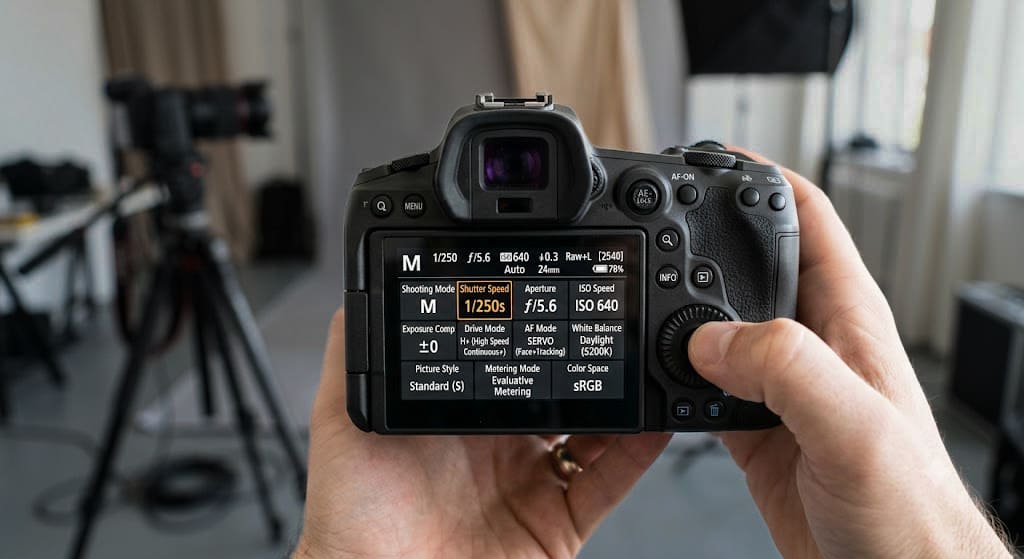
Camera Settings and Technical Considerations
Technical choices directly control how strongly a visual symbol communicates.
- Aperture (Depth of Field): While shooting wide open (f/1.4 or f/1.8) isolates a subject, it can erase important environmental background details. Stopping down to f/4 or f/5.6 keeps your symbolic object crisp while leaving the background recognizable.
- Exposure Compensation: Darkening your exposure slightly (−0.7 to −1.0 EV) silhouetting surrounding elements can turn an ordinary object into a striking, minimalist symbol.
Building a Stronger Visual Story
In a photo essay or multi-image sequence, symbolic objects serve as anchor points across different shot types:
- Establishing Shot: Sets the broader environment (e.g., an old, crumbling heritage home).
- Medium Shot: Introduces the human subject inside the home.
- Detail Shot (The Symbol): Focuses sharply on a dusty, motionless pendulum clock on the wall, reinforcing the theme of lost time.
- Closing Shot: Ends on a open door leading outside, leaving the viewer with a sense of lingering mystery.

Real-World Photography Examples
Scenario 1: Street Photography (The Abandoned Toy)
- Situation: A busy, chaotic city pavement where commuters rush past.
- Photographer’s Intention: Highlight lost innocence amid modern hustle.
- What to Photograph: A muddy, forgotten plastic toy car lying near high-heeled shoes and business boots rushing by.
- Why It Works: The contrast between adult urgency and forgotten childhood play creates an immediate emotional hook.
- Viewer’s Interpretation: The fast pace of adult life leaves childhood behind.
Scenario 2: Cultural Festival (The Aftermath)
- Situation: A quiet street early the morning after a major festival.
- Photographer’s Intention: Capture the quiet, bittersweet return to daily routines.
- What to Photograph: A single, half-burned incense stick standing in a crack on the pavement alongside swept festival debris.
- Why It Works: It shifts focus from noisy celebrations to quiet reflection.
- Viewer’s Interpretation: Devotion is temporary, but daily life goes on.
Common Mistakes Photographers Make
- Mistake 1: Relying on Clichés.
- Why it fails: Red roses for love or clocks for time feel overused and lazy.
- Fix: Find subtle, unexpected everyday items that carry personal or environmental meaning.
- Mistake 2: Over-blurring Context.
- Why it fails: An f/1.2 aperture turns the background into smooth blur, stripping away the context that gives the symbol its meaning.
- Fix: Use f/4 or f/5.6 to keep contextual details visible.
- Mistake 3: Staging Unnatural Scenes.
- Why it fails: Forcing an out-of-place object into a scene makes the shot feel artificial.
- Fix: Focus on authentic observation rather than forcing setup shots.
- Mistake 4: Including Too Many Competing Symbols.
- Why it fails: Cluttering the frame with multiple symbolic objects confuses the viewer.
- Fix: Keep your composition clean and stick to a single, clear visual element.
- Mistake 5: Over-editing and Over-saturating.
- Why it fails: Heavy vignetting or extreme color edits look unnatural and distract from the subject.
- Fix: Keep edits subtle so the story speaks for itself.
How to Improve Weak Results
| Problem | Root Cause | Solution |
| “The photo looks pretty, but feels empty.” | You focused purely on aesthetics over story. | Find an object within the scene that adds context or tells a story. |
| “Viewers don’t get the symbol.” | The object is too small or buried in visual clutter. | Use light, framing, or a lower angle to make the object stand out. |
| “The story feels forced or fake.” | You placed an object where it doesn’t belong. | Remove staged elements and observe authentic moments as they happen. |
Creative Ways to Use Symbolism
- Absence as a Symbol: Photographing an empty chair, an unplayed instrument, or an open umbrella left behind can communicate missing presence more powerfully than showing a person directly.
- Visual Metaphor Through Shadows: A person’s shadow falling across a cracked wall can represent internal conflict or hidden emotional weight.
- Repetition and Interruption: A row of identical, neatly lined-up objects broken by one damaged or misplaced item highlights individuality or non-conformity.
Symbolism in Contemporary and Documentary Photography
Modern documentary photography prioritizes authenticity over manipulated artifice. Today’s visual storytellers avoid staged setups, choosing instead to capture real-life details as they exist naturally.
In smartphone and mobile-first photography, visual symbolism offers a way to create thoughtful, meaningful photos without needing expensive gear.
How Photo Critics Analyze Symbolism
To evaluate symbolic images thoughtfully, ask yourself these analytical questions:
- What is the core object, and what does it represent in this environment?
- Does the composition support the symbol, or does visual clutter distract from it?
- Is the symbolic meaning clear, subtle, or intentionally open to interpretation?
- Does the image rely on captions to explain itself, or does the framing carry the story?
- Whose perspective does the photograph present?
Practical Exercise — Create Your Own Visual Metaphor
Put theory into practice with this structured assignment.
Assignment Rules
- No staging: You cannot move, place, or adjust objects in the scene.
- Single focal length: Stick to one focal length (or do not zoom on your phone).
- No text or signs: Do not use words, signboards, or labels to convey your message.
- Keep it natural: Avoid extreme visual effects or unnatural filters.
Shooting Task
Find an everyday object that represents “Transition” (e.g., a worn pair of shoes, a peeling poster, a melting block of ice, a flickering lamp). Photograph this object in three ways:
- Shot 1 (Context): A wide shot showing the object within its surroundings.
- Shot 2 (Focus): A medium shot emphasizing the object’s connection to its environment.
- Shot 3 (Detail): A close-up highlighting the object’s texture, wear, or unique details.
Editing & Reflection
Select your strongest single shot from the three and ask yourself:
- Does this photograph communicate transition without needing a caption?
- What unnecessary elements can I crop out to strengthen the story?
- How does the lighting affect the mood of the shot?
Final Thoughts
Equipment and camera settings give you a clear image, but visual intent gives it meaning.
Next time you hold your camera, don’t just focus on your main subject. Look closely at the small, everyday details around them. An abandoned object, a worn texture, or a passing shadow can transform a simple snapshot into a memorable visual story.
Frequently Asked Questions (FAQ)
Q1: What is the difference between a subject and a symbol in photography?
A subject is the actual person, place, or thing you point your camera at. A symbol is an object that carries a deeper meaning beyond its physical appearance.
Q2: Do I need to stage photos to use symbolism effectively?
No. In fact, candid documentary and street photography often yield stronger visual symbols. Observing real-life details usually creates more authentic stories than forcing staged setups.
Q3: Can an object have different meanings for different viewers?
Yes. Symbolic meaning depends heavily on personal, cultural, and historical context. A single object can evoke entirely different emotions in different viewers.
Q4: How can I tell if my symbolic photo is too obvious or cliché?
If your image relies on overused visual tropes (like a single red rose for love or a cracked mirror for sadness), it may feel generic. Try using subtle, unexpected everyday objects instead.
Q5: Does symbolism work in black-and-white photography?
Yes! Removing color highlights textures, shapes, light, and shadows, which can make symbolic elements stand out even more clearly.
