

You step into a crowded, historic wrestling pit (akhada) at dawn. The air is thick with damp earth and marigold incense. You raise your camera, spot two wrestlers grappling in the mud, and spend forty-five minutes taking thirty photos of the exact same action from the exact same standing position.
When you get home and scroll through your grid, something feels missing. You have thirty sharp, well-exposed pictures, but you don’t have a story. You haven’t shown where this place is, who is watching from the sidelines, the sweat dripping off a veteran’s brow, or the quiet moment when the losing wrestler sits alone on the dirt. You captured an isolated physical act, but you missed the narrative.
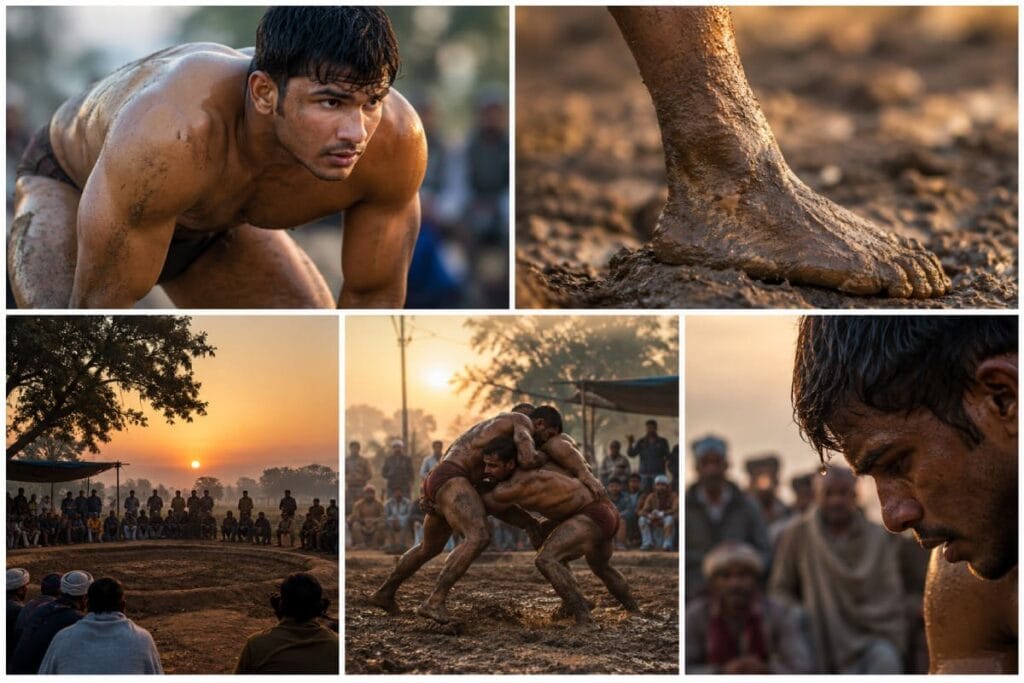
This is where photo story grammar changes everything. Just as written language uses sentences, paragraphs, and punctuation to build a story, visual storytelling relies on a structured sequence of shot types: wide establishing shots, medium interactions, close-up details, peak actions, and emotional reactions.
What Is Photo Story Grammar?
Photo story grammar is a visual language framework 1derived from classic photojournalism and cinema. It organizes a series of photographs into a clear narrative structure by changing the distance between your lens, your subject, and the environment.
Instead of capturing a single, disconnected image, you shoot a deliberate set of visual layers:
SHOT TYPE | PRIMARY FUNCTION | EMOTIONAL PURPOSE |
Establishing | Sets location & context | Orient the viewer |
Medium | Shows interaction | Build connection |
Close-Up | Highlights texture | Reveal intimacy |
Action | Captures momentum | Drive tension |
Reaction | Shows emotional response | Create empathy |
Photo story grammar does not mean taking a random mix of pictures and putting them into a slider or carousel. It is a deliberate shooting mindset where each frame answers a specific question for the viewer: Where are we? Who is involved? What are they doing? How does it feel?
Why Does Photo Story Grammar Matter in Visual Storytelling?
A single photo can be visually striking, but single images are often limited in what they can explain. They show a moment frozen in time, but they rarely reveal the full context, relationships, or emotional weight of a situation.
When you apply photo story grammar:

- You control viewer focus: You guide the viewer’s eye from the big picture down to the fine details.
- You create emotional rhythm: Alternating between wide environment shots and tight, personal moments keeps a sequence dynamic.
- You eliminate ambiguity: Context prevents misunderstanding. A close-up of a crying face can mean grief or joy; an establishing shot of a wedding or funeral instantly clarifies the emotion.
Even a technically imperfect image becomes compelling when it sits within a clear narrative sequence. Conversely, five beautiful photos shot from the exact same focal distance feel repetitive and dull.
How Does Photo Story Grammar Work?
The visual grammar framework rests on five primary building blocks:
1. The Establishing Shot (The Environment)
- What it is: A wide frame showing the location, scale, weather, and overall environment.
- What it answers: Where are we, and what is the atmosphere like?
- How it works: Uses wide focal lengths (24mm–35mm) and smaller apertures (f/8-f/11) to keep foreground and background sharp.
2. The Medium Shot (The Relationship)
- What it is: A mid-range frame focusing on subjects within their immediate working or living space.
- What it answers: Who is this story about, and how do they interact with their environment?
- How it works: Positions subjects clearly while leaving enough surrounding context to explain their role or work.
3. The Close-Up / Detail Shot (The Texture)
- What it is: A tight frame isolating a specific object, gesture, hands, or texture.
- What it answers: What subtle details carry symbolic or emotional weight?
- How it works: Eliminates environmental clutter to force absolute focus on a single texture or micro-movement.
4. The Action Shot (The Tension)
- What it is: A frame capturing movement, effort, or the core activity taking place.
- What it answers: What is happening right now?
- How it works: Relies on precise shutter timing—either freezing dynamic motion with fast shutter speeds or emphasizing movement with light motion blur.
5. The Reaction Shot (The Emotion)
- What it is: A frame focusing on human expression, gestures, or quiet secondary responses to the main action.
- What it answers: How does this moment feel to those involved?
- How it works: Requires turning away from the main event to photograph spectators, resting workers, or subtle facial shifts.
How to Apply Photo Story Grammar When Shooting
When working in the field, avoid running around frantically trying to snap everything at once. Use a systematic step-by-step shooting process:
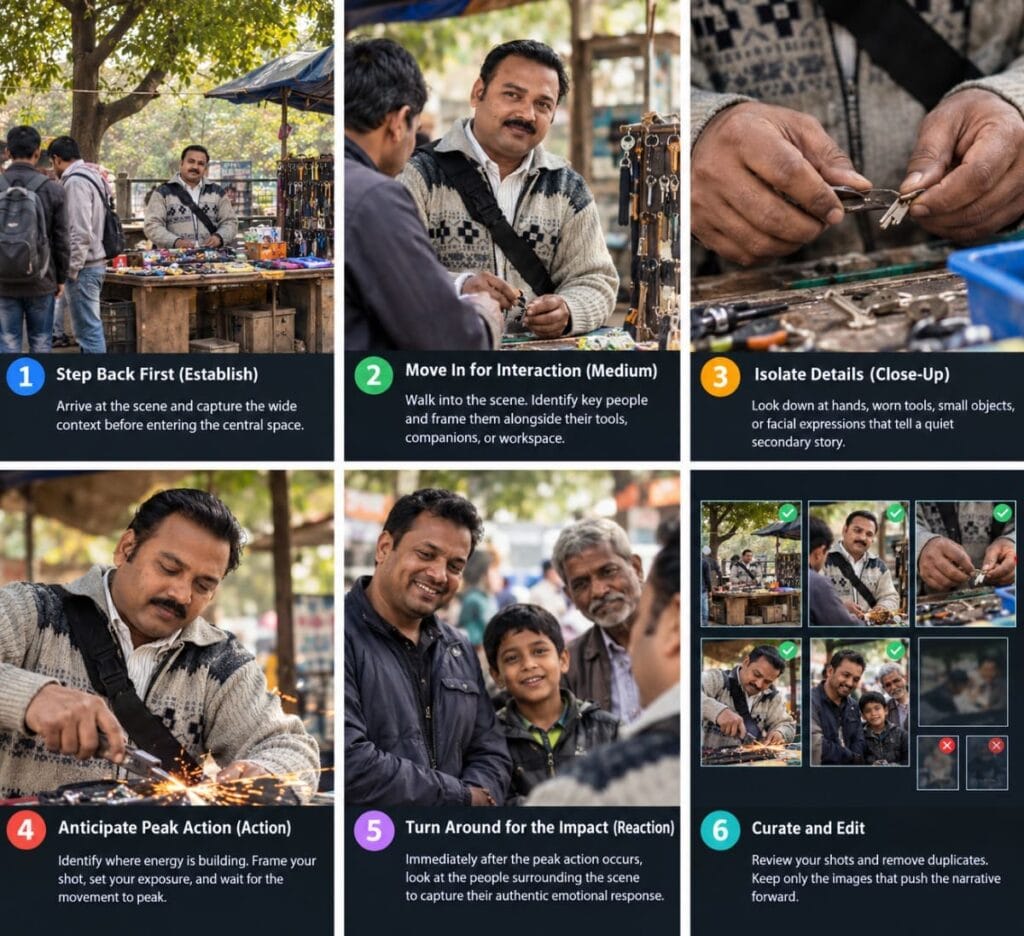
- Step Back First (Establish): Arrive at the scene and capture the wide context before entering the central space.
- Move In for Interaction (Medium): Walk into the scene. Identify key people and frame them alongside their tools, companions, or workspace.
- Isolate Details (Close-Up): Look down at hands, worn tools, small objects, or facial expressions that tell a quiet secondary story.
- Anticipate Peak Action (Action): Identify where energy is building. Frame your shot, set your exposure, and wait for the movement to peak.
- Turn Around for the Impact (Reaction): Immediately after the peak action occurs, look at the people surrounding the scene to capture their authentic emotional response.
- Curate and Edit: Review your shots and remove duplicates. Keep only the images that push the narrative forward.
Camera Settings and Technical Considerations
Your camera settings should adapt to the demands of each specific shot type in your narrative chain:
ESTABLISHING SHOT ──> Deep Depth of Field (f/8 - f/11) ──> Maximum Context
MEDIUM SHOT       ──> Balance Subject & Scene (f/4 - f/5.6)──> Environmental Subject
CLOSE-UP / DETAIL  ──> Shallow Depth of Field (f/1.8 - f/2.8) ─> Absolute Focus
ACTION / REACTION  ──> Fast Shutter (1/500s+) or Intentional Blur (1/15s)
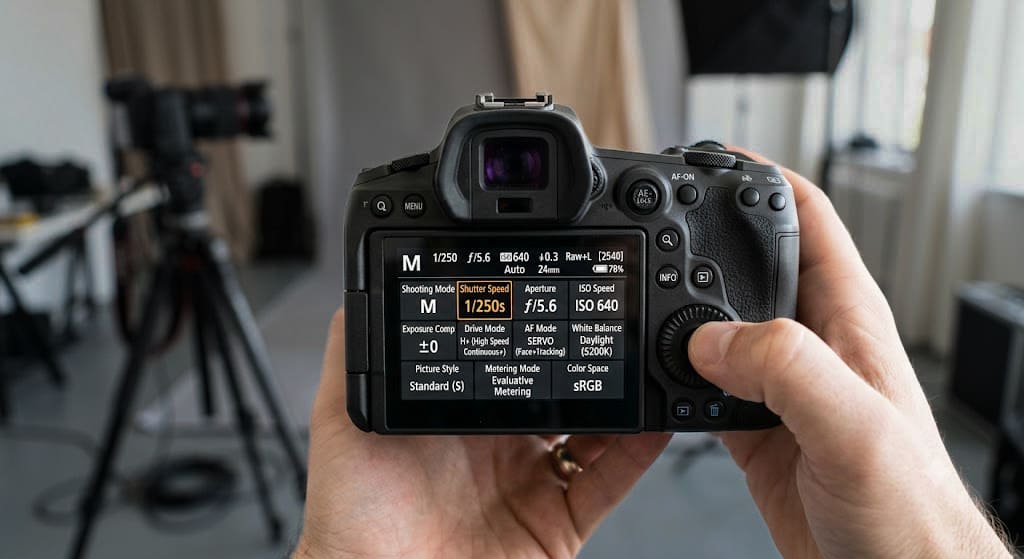
- Aperture Choice for Context: When shooting establishing shots, keep your aperture small (f/8-f/11) so distant elements stay readable. When moving to detail shots, open up (f/1.8-f/2.8) to separate your subject from background noise.
- Shutter Speed for Human Energy: Use high shutter speeds (1/500s or faster) for action shots to freeze fleeting gestures. For reaction shots, keep an eye on light levels—emotions often happen in shadowed spaces on the sidelines.
- Focal Length Strategy: Avoid constantly changing zoom lenses if it slows you down. A single 35mm lens can produce all five shot types—simply change your physical distance from your subject.
Building a Stronger Visual Story
A common beginner mistake is treating every shot as an isolated single photo. A strong visual story relies on how individual images transition from one to another.
Think of your sequence as a wave:
[Wide Establishing] ──> [Medium Interaction] ──> [Action Peak] ──> [Close Detail] ──> [Quiet Reaction]
    (Orientation)         (Engagement)           (Climax)            (Intimacy)         (Resolution)
- The Opening Image: Usually a wide or medium frame that invites the viewer into the scene without spoiling the entire story immediately.
- Pacing and Transitions: Do not put three wide shots side-by-side. Jump from wide to close-up, then to action. This contrast creates visual rhythm.
- The Closing Image: A quiet moment or detail frame that offers resolution—a resting worker, an empty stage, or hands washing up at the end of a long day.
Real-World Photography Examples
Scenario 1: A Traditional Pottery Village (Kumartuli, Kolkata)
- Establishing: Wide frame showing narrow alleys lined with straw, clay statues, and morning light breaking through roofs.
- Medium: An artisan sitting on a low stool shaping a large clay deity, surrounded by half-finished sculptures.
- Detail: Close-up of clay-covered fingers carefully painting the eyelid of a statue with a fine brush.
- Action: High-speed shot of an artisan lifting a heavy wet clay frame onto a drying rack, dust flying in the air.
- Reaction: A small child sitting in the workshop doorway, watching their grandfather work with quiet fascination.
Scenario 2: Community Street Kitchen / Festival Feast
- Establishing: Wide overhead shot of long outdoor seating arrangements under colorful awnings crowded with diners.
- Medium: Two cooks stirring large iron cauldrons (handis) over open wood fires.
- Detail: Close-up shot of spices hitting hot oil, capturing steam and rising bubbles.
- Action: A cook tossing flatbreads into a traditional clay oven with fast, rhythmic movements.
- Reaction: A guest smiling as a hot meal is served onto their plate.
Scenario 3: Behind the Scenes at a Classical Dance Recital
- Establishing: Wide shot of the dimly lit theater wings showing stage lights, curtains, and silhouettes waiting offstage.
- Medium: A dancer adjusting her traditional jewelry in front of a small back-stage mirror.
- Detail: Close-up of feet tied with bells (ghungroos), highlighting worn leather straps.
- Action: A dramatic low-angle shot of feet striking the wooden stage floor during a fast sequence.
- Reaction: The dancer exhaling deeply behind the curtain immediately after completing her performance.
Common Mistakes Photographers Make
Mistake: Shooting only from standing height ──> Weakness: Flat, boring perspectives ─> Fix: Drop low or shoot high
Mistake: Missing the reaction ───────────────> Weakness: Story lacks heart ─────────> Fix: Look away from action
Mistake: Visual redundancy ──────────────────> Weakness: Repetitive grid ───────────> Fix: Cut similar shot types
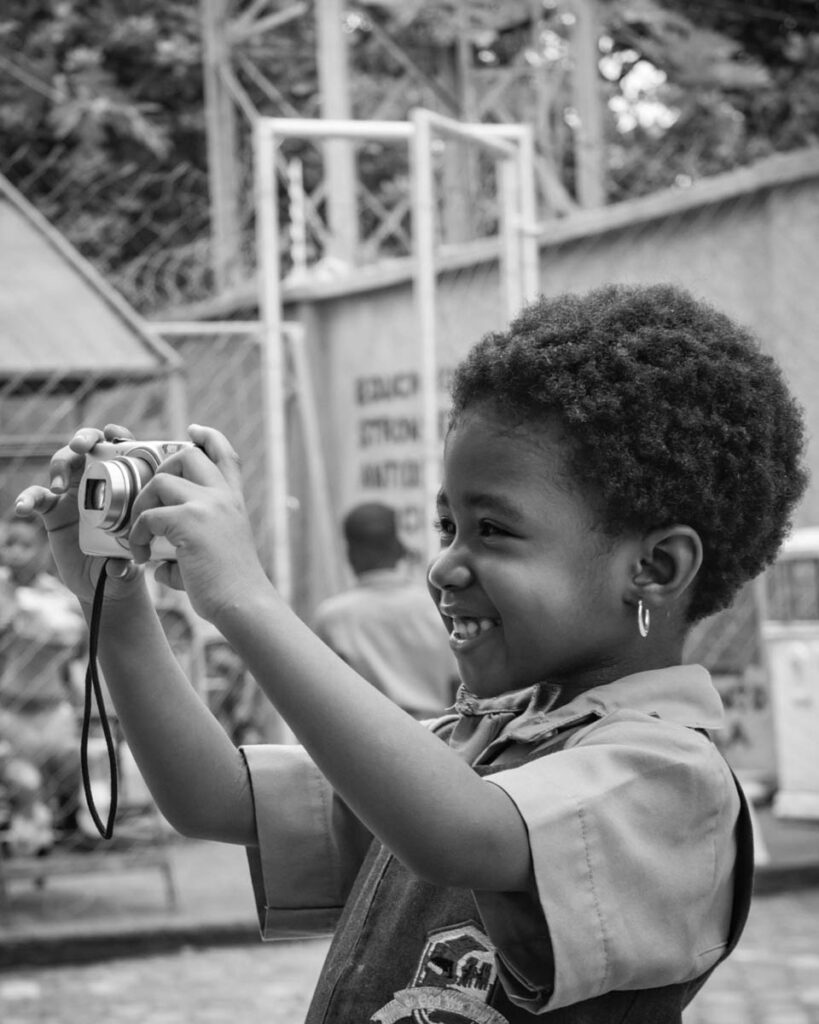
- Standing in One Spot (The “Lazy Foot” Trap)
- Why it weakens the story: Taking wide, medium, and close-up shots using a zoom lens from the exact same standing position produces flat, uninteresting perspectives.
- How to fix it: Move your feet. Get down low for detail shots, step back for wide shots, and physically engage with your environment.
- Ignoring the Reaction Shot
- Why it weakens the story: Photographers often stare exclusively at the main event, missing the emotional impact on those watching.
- How to fix it: When something exciting happens, force yourself to turn your back to the action for five seconds to capture the audience’s reaction.
- Shooting Duplicate Medium Shots
- Why it weakens the story: Filling a portfolio with 10 slightly different medium shots makes a project feel monotonous.
- How to fix it: Enforce a strict rule during editing: allow only one or two medium shots per five-frame sequence.
- Cropping Too Tightly on Establishing Shots
- Why it weakens the story: Trying to make an establishing shot look clean by cutting out surroundings destroys the context the viewer needs.
- How to fix it: Embrace environmental complexity. Let wide shots include scale, clutter, sky, and architecture.
- Focusing Entirely on Peak Action
- Why it weakens the story: Constant high-energy shots tire the viewer out and miss quiet, human moments.
- How to fix it: Look for quiet moments before and after the main action occurs.
- Over-reliance on Extreme Bokeh in Details
- Why it weakens the story: Blurring an object so heavily that the background becomes unrecognizable removes where the detail exists.
- How to fix it: Stop down to f/4 or f/5.6 so the detail is clear while still keeping subtle background context visible.
You may like to read Why your best photo may not belong in photo story?
How to Improve Weak Results
“My sequence feels flat and uninteresting.”
- The Problem: You have captured everything from eye-level at similar distances.
- The Solution: Vary your spatial distance and height dramatically. Follow an extreme wide shot immediately with a tight detail shot.
“Viewers like my photos individually, but don’t understand what is happening.”
- The Problem: You skipped your establishing shot.
- The Solution: Add a wide contextual frame to the beginning of your sequence to ground the viewer before zooming in on details.
“My story lacks emotional heart.”
- The Problem: You recorded physical tasks without capturing human reactions.
- The Solution: Focus on expressions, eyes, resting hands, and quiet glances between subjects rather than just physical labor.
You may like to read about: “How viewers read a photograph?“
Creative Ways to Use Photo Story Grammar
Once you master the basic wide-medium-close structure, experiment with breaking the rules for stylistic effect:
- Inverted Sequencing: Start your story with a mysterious close-up detail shot. Force the viewer to guess what they are looking at before revealing the wide establishing shot in frame two.
- Visual Rhythm through Scale Contrast: Pair an extreme wide shot directly next to an extreme close-up in a print or digital layout to create dynamic visual tension.
- The Missing Piece (Ambiguity): Deliberately omit the peak action shot. Show only the quiet preparation and the emotional reaction afterward, letting the viewer fill in the missing moment using their imagination.
Photo Story Grammar in Contemporary & Social Storytelling
The classic rules of photojournalism apply directly to contemporary platforms like Instagram Carousels, vertical photo essays, and mobile photo stories.
VERTICAL CAROUSEL GRAMMAR:
- Slide 1: High-Impact Medium / Detail (Hook)
- Slide 2: Wide Establishing Shot (Context)
- Slide 3: Action Frame (Momentum)
- Slide 4: Reaction / Emotion (Human Connection)
- Slide 5: Quiet Detail (Closing / Resolution)
Contemporary storytelling often takes place on mobile screens, where viewers swipe past images in seconds. Using photo story grammar prevents your carousels from looking like random dumps of unedited photos. Instead, it turns a simple swipe into an engaging, multi-layered visual experience.
How Photo Critics Analyze Photo Story Sequences
Photo critics look far beyond sharp focus or pleasant colors when analyzing a photographic sequence. They evaluate the narrative framework through these critical questions:
- Does the sequence rely heavily on captions to explain itself? A strong visual story speaks clearly on its own visual merit.
- Is there an intentional relationship between consecutive frames? Do shot distances change deliberately, or do frames feel repetitive?
- Whose perspective is being prioritized? Is the photographer operating as an empathetic insider or an detached outside observer?
- Does the editing show respect for the subject’s dignity? Are reaction and action shots authentic, or do they feel staged for dramatic effect?
Practical Exercise: The “5-Shot Narrative Challenge”
Build a complete photo story using strict grammar rules in a single location.

- OBJECTIVE: Learn to capture a complete story using all five fundamental shot types without over-shooting.
- LOCATION: A local tea stall (chai tapri), flower market, bakery, barber shop, or street food vendor.
- TIME: 1 Hour.
- EQUIPMENT: Any camera or smartphone.
ASSIGNMENT RESTRICTIONS:
- Total exposures allowed: Maximum 25 frames
- Must select EXACTLY 5 final images
- No staging, posing, or asking subjects to repeat
- All 5 images must be shot at the same venue
- SHOOTING TASK: Photograph the location ensuring you capture:
- One Wide Establishing Shot
- One Medium Interaction Shot
- One Tight Detail Shot
- One Peak Action Shot
- One Human Reaction Shot
- EDITING TASK: Sequence the 5 final images into a coherent linear series. Apply consistent contrast and color adjustments across all 5 frames.
Reflection Questions:
- Does my wide establishing shot clearly explain where the story takes place?
- Did I jump too quickly between focal distances, or does the sequence feel smooth?
- Is my detail shot genuinely symbolic, or is it just a random close-up?
- Which image carries the strongest emotional impact?
- If I remove the text captions, can a stranger still understand what happened?
Final Thoughts
Technically attractive photographs catch the eye for a second, but well-structured photo stories hold the viewer’s mind. Next time you take your camera out, stop shooting isolated pictures. Think like a visual storyteller: Establish the space, show the relationships, isolate the details, capture the action, and never miss the reaction.
Frequently Asked Questions (FAQ)
1. What are the basic shot types needed for a photo story?
The core shot types are the wide establishing shot ( context), medium shot (relationship), detail close-up (texture), action shot (energy), and reaction shot (emotion). Combined, they form a complete visual narrative.
2. Can I shoot a complete photo story using a single prime lens?
Yes. Lenses like a 35mm or 50mm prime are ideal for photo stories. Instead of zooming with a ring, you zoom with your feet—stepping back for wide shots and moving close for detail shots.
3. How many photos should a short photo story contain?
A standard short photo essay or digital carousel works best with 5 to 8 well-selected images. Every image must serve a distinct narrative purpose without repeating shot types unnecessarily.
4. What is the most common mistake beginners make in photo sequencing?
The most common mistake is taking all photographs from the exact same standing position and eye-level height, resulting in repetitive medium shots that lack context and depth.
5. Why is the reaction shot so important in documentary photography?
The reaction shot provides emotional heart. While action shots show what happened, reaction shots reveal how people felt about what happened, creating empathy for the viewer.
6. Should establishing shots always go at the very beginning of a photo story?
Usually, yes, because they ground the viewer. However, in creative storytelling, you can start with a detail shot to create mystery before revealing the establishing frame later.
- A basic supporting structure, system of rules, or conceptual guide used to build, plan, or organize something ↩︎
