

The Rise of Collaborative Creativity in Photography
Community-led visual projects—where multiple contributors participate in storytelling—are becoming increasingly popular. These projects are not only reshaping how stories are told but also redefining how audiences interact with visual content. Platforms like Patreon and Behance have played a pivotal role in enabling this shift, offering tools for collaboration, funding, and global exposure.
Photography is undergoing a significant transformation. Once defined by individual vision and solitary exploration, it is now evolving into a collaborative, community-driven practice. The rise of digital platforms and global connectivity has enabled photographers to work together across borders, cultures, and creative disciplines.
What Are Community-Led Visual Projects?
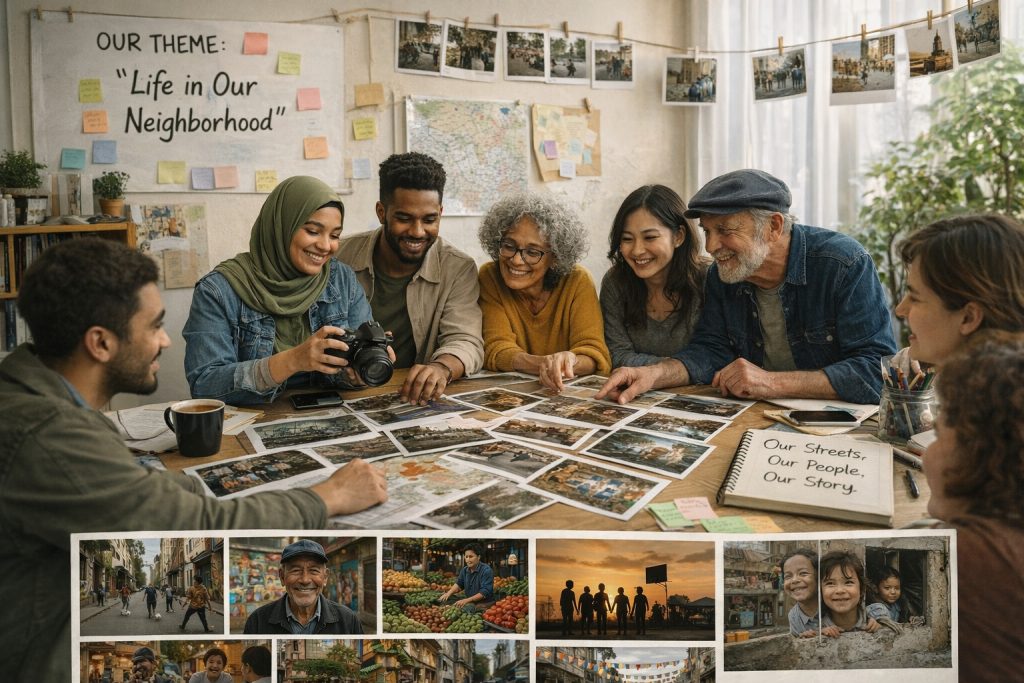
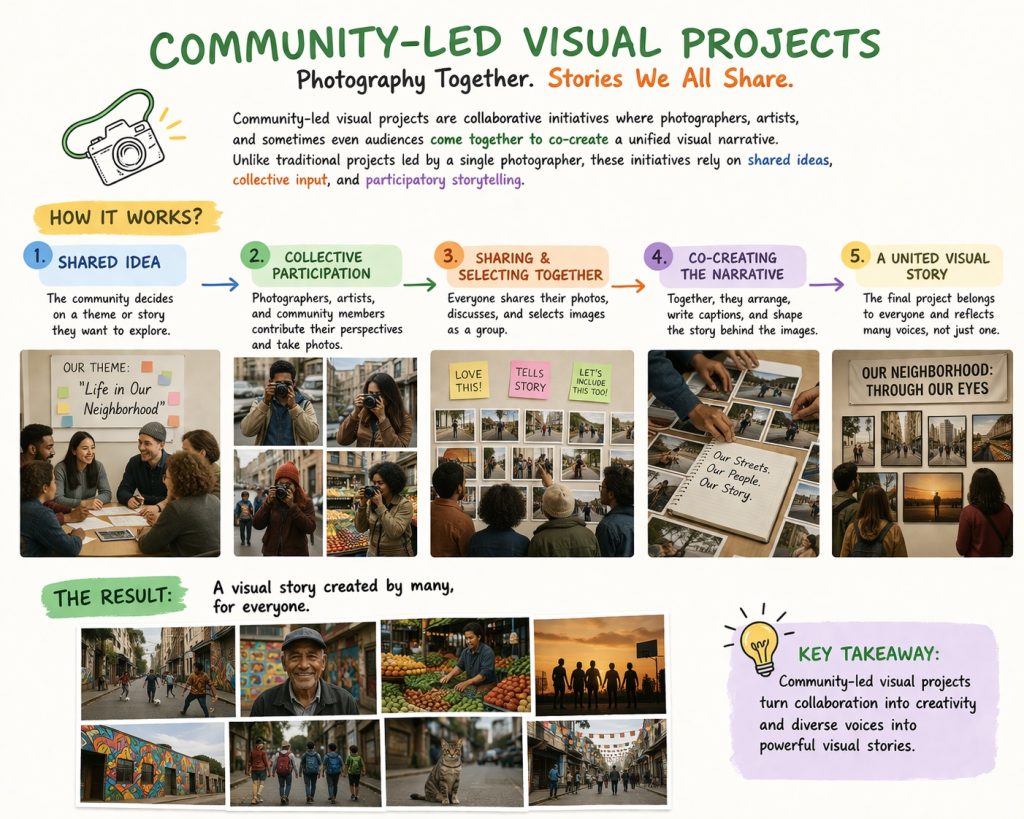
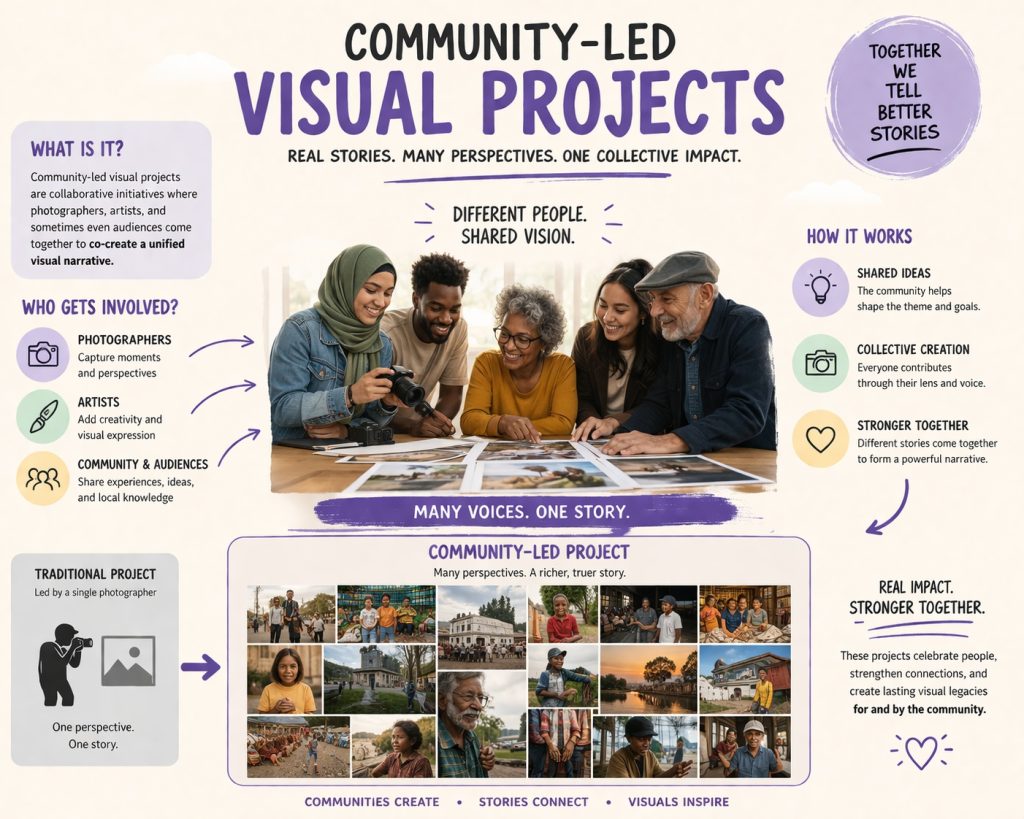
Community-led visual projects are collaborative initiatives where photographers, artists, and sometimes even audiences come together to co-create a unified visual narrative. Unlike traditional projects led by a single photographer, these initiatives rely on shared ideas, collective input, and participatory storytelling.
Such projects can take many forms:
- Global photo series based on a common theme
- Crowdsourced storytelling campaigns
- Collaborative documentaries
- Social media challenges and visual movements
At their core, these projects emphasize inclusivity, diversity, and shared ownership.
The Evolution: From Individual Vision to Collective Narratives
Historically, photography celebrated the “author”—the singular creative mind behind the lens. While this approach still holds value, the digital age has introduced new possibilities.
Why the Shift Is Happening
- Global Connectivity – Photographers can now collaborate in real time from different parts of the world.
- Social Media Influence – Platforms encourage sharing, remixing, and co-creation.
- Audience Expectations – Modern audiences prefer interactive and participatory content.
Collaboration allows stories to become more authentic and multidimensional, reflecting a broader range of human experiences.
How Collaboration Changes Creative Approaches
1. Expanding Perspectives
When multiple contributors are involved, each brings unique cultural, social, and artistic viewpoints. This diversity results in richer storytelling.
For example, a project documenting “daily life” across continents will naturally capture vastly different realities—urban chaos, rural simplicity, cultural rituals—creating a layered narrative that a single photographer might not achieve.
2. The Photographer as a Facilitator
In community-led projects, the role of the photographer evolves. Instead of being the sole creator, they often act as:
- A curator of ideas
- A coordinator of contributors
- A storyteller who shapes the final narrative
This shift requires new skills such as communication, leadership, and project management.
3. Iterative and Dynamic Creation
Collaborative projects are rarely static. They evolve through:
- Feedback from contributors
- Audience interaction
- Ongoing updates and additions
This iterative process leads to more refined and impactful outcomes.
4. Encouraging Experimentation
Working with others encourages photographers to step outside their comfort zones. Exposure to different styles and techniques fosters innovation and creative risk-taking.
Real-World Example 1: A Global Time-Synced Photography Project
Imagine a project titled “One Moment, Many Worlds.”
Concept
Photographers from 50 countries capture images at exactly 6:00 PM local time. Each participant documents their surroundings—streets, homes, workplaces, or public spaces.
Execution
- Contributors upload their images to a shared platform like Behance
- Images are curated into a digital exhibition
- The project is promoted through social media campaigns
Outcome
- A powerful visual representation of global diversity
- Increased visibility for all contributors
- A compelling narrative that resonates with international audiences
This type of project demonstrates how collaboration can turn a simple idea into a global storytelling experience.
Real-World Example 2: Community-Funded Documentary Photography
Consider a photographer working on a long-term documentary about climate change.
Approach Using Patreon
- The photographer shares the project concept with supporters
- Subscribers contribute monthly funding
- The community votes on locations, themes, and subjects
- Exclusive behind-the-scenes content is shared with members
Impact
- Financial sustainability without relying solely on grants
- Strong emotional connection between creator and audience
- A sense of shared ownership in the final project
This model transforms audiences from passive viewers into active collaborators.
The Power of Audience Engagement in Co-Creation
One of the biggest advantages of community-led projects is their ability to foster deep audience engagement.
Why Engagement Matters
- Engaged audiences are more likely to share content
- They contribute ideas and feedback
- They become long-term supporters and advocates
Key Strategies to Boost Engagement
1. Crowdsourcing Ideas
Crowdsourcing ideas means inviting your audience to actively contribute to the creative direction of your project. Instead of deciding everything on your own, you open the door for suggestions—this could be themes, locations, subjects, or even storytelling styles.
For example, you can ask questions like:
- “What theme should I shoot next?”
- “Which city or culture should this project explore?”
- “What emotions should this series focus on?”
This approach makes your audience feel valued and heard. When people see their ideas being used, they develop a stronger emotional connection to the project. It also increases engagement because they are more likely to follow updates, share the content, and support the final outcome.
Additionally, crowdsourcing can lead to unexpected and creative ideas that you might not have thought of on your own, making your project more unique and diverse.
2. Interactive Storytelling
Interactive storytelling transforms your audience from passive viewers into active participants. Instead of just consuming content, they help shape the story as it unfolds.
You can use tools like:
- Instagram or YouTube polls
- Live sessions and discussions
- Q&A formats
- Story voting systems
For instance, during a documentary project, you might ask your audience:
- “Should I focus on this character or another one?”
- “Which ending feels more powerful?”
This kind of interaction builds anticipation and keeps your audience engaged over time. It also creates a sense of shared journey, where viewers feel they are part of the storytelling process rather than just observers.
As a result, engagement metrics like comments, shares, and watch time naturally increase.
3. User-Generated Content
User-generated content (UGC) is one of the most powerful ways to build a community around your project. Here, you invite your audience to contribute their own photos, videos, or interpretations based on a theme you provide.
For example:
- A theme like “Life in My City”
- A challenge like “Capture Happiness”
- A concept like “One Color, One Story”
Participants submit their work, and you can:
- Feature selected entries on your platform
- Create a collaborative gallery
- Credit contributors publicly
This approach has multiple benefits:
- Expands your content without extra cost
- Encourages creativity among your audience
- Builds a sense of belonging and recognition
When people see their work featured, they are more likely to stay connected and contribute again in the future.
4. Transparency
Transparency means openly sharing your creative process with your audience. Instead of only showing the final polished result, you give them a behind-the-scenes look at how the project is created.
This can include:
- Planning stages and idea development
- Challenges and setbacks
- Editing process and decision-making
- Personal insights and experiences
For example, you might share:
Transparency builds trust and authenticity. Audiences today appreciate honesty and realness more than perfection. When they see the effort and challenges behind your work, they value it more.
It also strengthens the creator-audience relationship, making your project feel more human and relatable rather than distant and polished.
Digital Platforms Enabling Collaboration
Modern collaboration would not be possible without digital platforms that connect creators and audiences.
Behance
- Ideal for showcasing collaborative projects
- Helps photographers gain global exposure
- Encourages feedback from creative communities
Patreon
- Enables direct monetization
- Builds a loyal community of supporters
- Facilitates ongoing engagement
In addition, social media platforms like Instagram and global photography contests play a crucial role in spreading collaborative initiatives.
Benefits of Community-Led Visual Projects
1. Richer Storytelling Through Collaborative Visual Narratives
One of the biggest advantages of community-led visual storytelling is the depth it brings to narratives. When multiple photographers contribute, each adds their own cultural background, perspective, and creative style.
Instead of a single viewpoint, the project reflects a wide range of real-life experiences. This results in:
- More authentic storytelling
- Diverse visual interpretations
- Stronger emotional impact
For example, a global photography project on “daily life” will look completely different when captured in different countries. This diversity makes the story more relatable and engaging for a broader audience.
2. Increased Visibility and Wider Audience Reach
Collaboration naturally boosts visibility in photography projects. Each contributor shares the project with their own audience, creating a ripple effect that expands reach organically.
This means:
- More exposure across different regions and communities
- Higher chances of social media shares
- Increased traffic to your portfolio or website
In a collaborative photography project, you’re not relying on one audience—you’re tapping into multiple networks at once. This makes it easier to grow your presence without heavy marketing efforts.
3. Skill Development and Creative Growth
Participating in community-driven photography projects is a great way to improve both technical and creative skills. Working with others exposes you to new techniques, styles, and workflows.
You can learn:
- Different editing and post-processing methods
- Unique composition and storytelling techniques
- New ways to approach themes and subjects
Feedback from collaborators also helps you identify strengths and areas for improvement. Over time, this leads to continuous growth and stronger creative confidence.
4. Stronger Networks and Long-Term Opportunities
Collaboration helps build meaningful connections within the photography community. These relationships often extend beyond a single project, leading to future opportunities.
Benefits of networking include:
- Partnerships for future projects
- Referrals and professional opportunities
- Access to new communities and platforms
A strong network is essential for long-term success in photography. By participating in community-led visual projects, you not only create impactful work but also build relationships that support your creative journey.
Why These Benefits Matter
Together, these advantages make collaborative visual storytelling a powerful approach in modern photography. You gain:
- Better content quality
- Greater audience engagement
- Long-term creative and professional growth
Challenges and How to Overcome Them
1. Creative Differences
Challenge: Difference in artistic vision
Solution: Establish clear guidelines and a shared theme
2. Coordination Issues
Challenge: Managing contributors across time zones
Solution: Use project management tools and clear deadlines
3. Maintaining Consistency
Challenge: Ensuring a unified visual style
Solution: Define aesthetic standards and curate carefully
4. Attribution and Credit
Challenge: Giving proper recognition to contributors
Solution: Clearly outline credit policies from the start
Future Trends in Collaborative Photography
Community-led visual storytelling is still evolving. Some emerging trends include:
- Decentralized creative communities using blockchain technology
- AI-assisted collaboration for editing and curation
- Hybrid projects combining photography, video, and interactive media
As technology advances, collaboration will become even more seamless and immersive.
Conclusion: The Future Is Collective
Community-led visual projects are more than a trend—they represent a fundamental shift in how photography is created and experienced. By embracing collaboration, photographers can move beyond individual limitations and create stories that are richer, more inclusive, and more impactful.
In a world driven by connection, the power of storytelling lies not just in capturing moments, but in sharing them collectively. Whether through global photo projects or community-funded documentaries, collaboration is redefining the creative landscape and building deeper, more meaningful relationships between creators and audiences.
