

Advantages of studio photography begin with one simple word: control. A studio gives photographers the ability to control light, backgrounds, exposure, composition, and the overall shooting environment with a level of precision that is difficult to achieve outdoors.
Whether you are photographing portraits, fashion, beauty, products, food, advertising, or corporate subjects, this controlled environment can make a significant difference to the quality and consistency of your images.
Unlike landscape, wildlife, or street photography, where photographers must often adapt to changing conditions, studio photography allows you to create the conditions you need. You can shape the light, choose the background, position the subject precisely, and repeat the same setup whenever necessary.
A photography studio is therefore much more than an indoor space with a camera and a few lights. It is a creative and controlled environment where every element of the photograph can be deliberately designed. From soft portrait lighting and dramatic shadows to clean product images and polished commercial photographs, the studio gives you the freedom to turn an idea into a carefully controlled visual result.
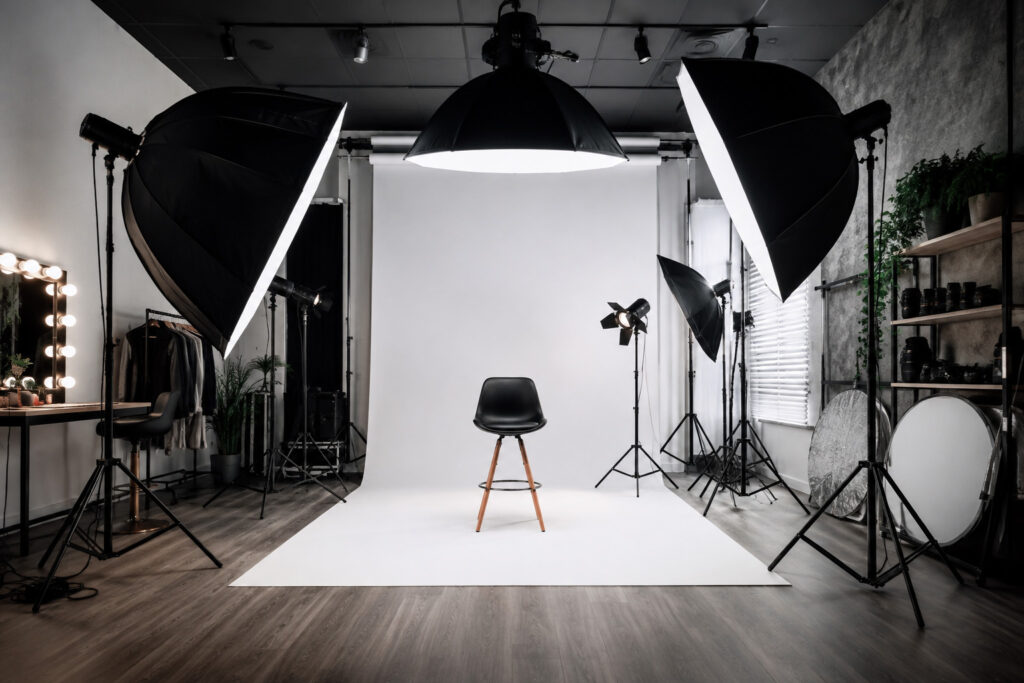
This level of control is one of the main reasons professional photographers continue to use studios even when modern cameras, natural-light techniques, and sophisticated editing software can produce remarkable results.
So, what are the real advantages of studio photography? And why do professionals continue to invest in dedicated studio spaces? Let’s explore the key benefits.
1. Complete Control Over Lighting
Lighting is the foundation of every photograph. Even the most expensive camera cannot compensate for poor lighting.
One of the biggest advantages of studio photography is that you are no longer dependent on the sun. Outdoors, lighting changes every minute as clouds move, the sun shifts across the sky, or weather conditions suddenly change. These variations can alter exposure, color, and contrast, making it difficult to maintain consistency.
In a studio, you create the light instead of waiting for it.
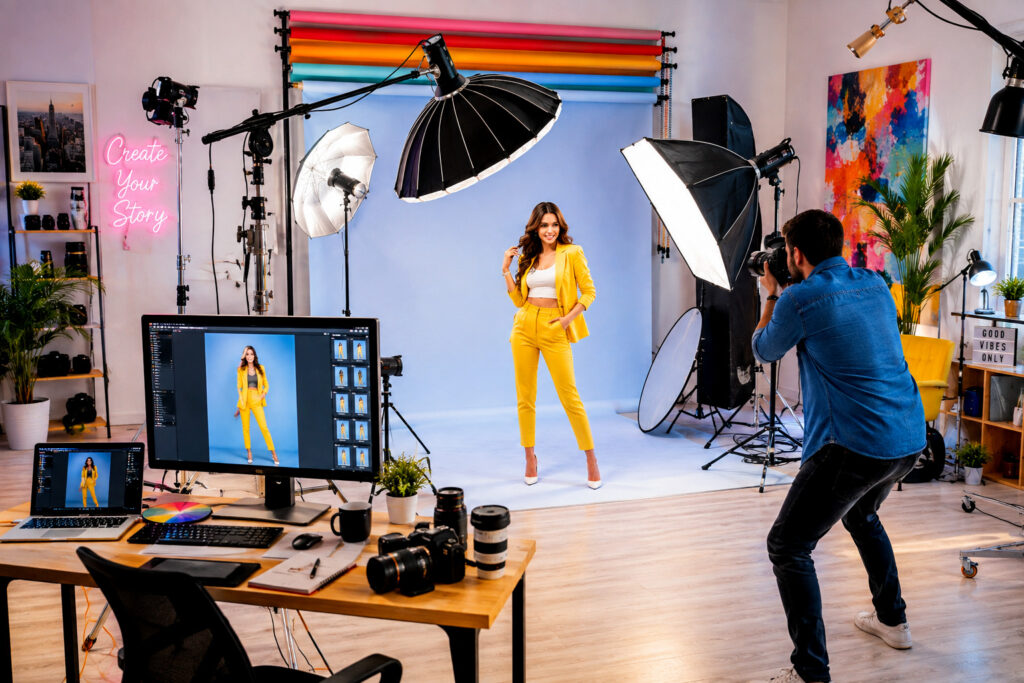
You decide:
- The direction of the light
- Its intensity
- The softness or hardness of shadows
- The color temperature
- The number of light sources
- How each light interacts with the subject
Need a dramatic portrait with deep shadows? Position a single gridded light to the side. Want a soft, flattering headshot? Use a large softbox close to the subject. Looking for bright, shadow-free product photos? Add fill lights and reflectors until the lighting is perfectly balanced.
Because every lighting decision is intentional, you can recreate the same setup days, weeks, or even months later—a level of consistency that is nearly impossible outdoors.
2. Consistent Results Every Time
Professional photography often requires repeatability.
Imagine you’re photographing products for an online store. The first batch of images is approved, and three months later the client sends another shipment. If the new photographs don’t match the original lighting, shadows, and colors, the website will appear inconsistent and unprofessional.
A studio solves this problem.
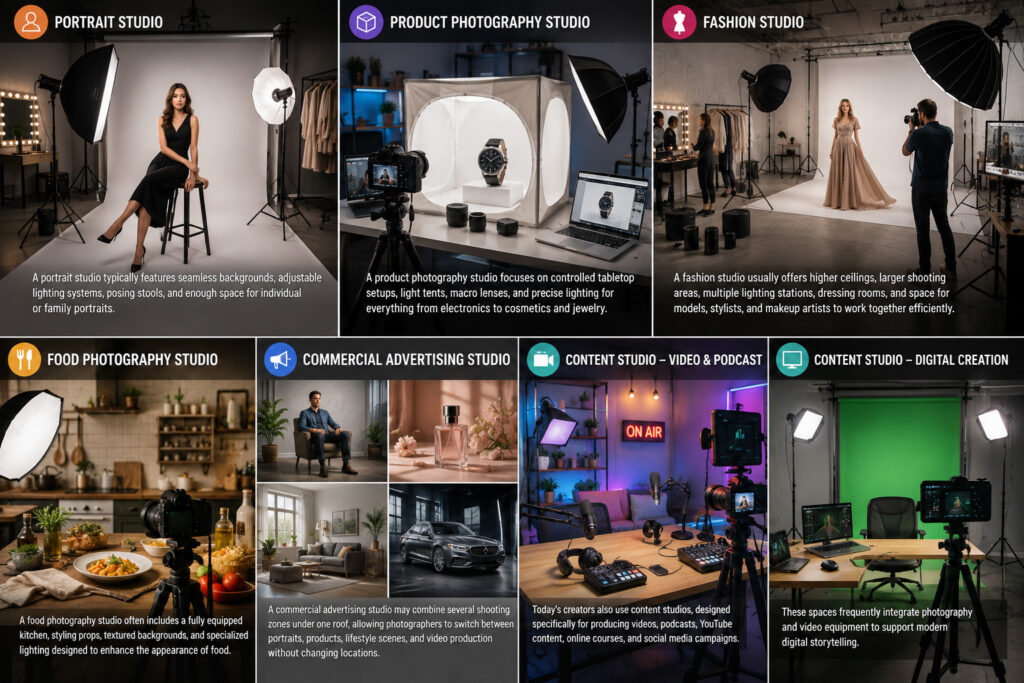
Since your lighting, camera position, backdrop, and subject placement remain under your control, you can reproduce the same look whenever needed. This consistency is invaluable for:
- E-commerce photography
- Corporate headshots
- School portraits
- Fashion catalogs
- Advertising campaigns
- Brand identity photography
Consistency not only saves time but also builds trust with clients, who know they can rely on you to deliver the same high-quality results every session.
3. Freedom from Weather and Time Constraints
Outdoor photography is at the mercy of nature. Rain can cancel a portrait session. Strong winds may ruin hairstyles and backdrops. Harsh midday sunlight creates deep shadows, while cloudy skies can flatten a scene. Even the beautiful golden hour lasts only a short time.
A studio removes these limitations entirely.
You can photograph clients:
- Early in the morning
- Late at night
- During heavy rain
- On hot summer afternoons
- Throughout winter
- Regardless of the season
This flexibility makes scheduling easier for both photographers and clients. Instead of planning your day around changing weather conditions, you simply turn on your lights and begin shooting.
For commercial photographers working under deadlines, this reliability is a significant advantage.
4. Greater Creative Freedom
A studio is like a blank canvas.
Without the distractions of unpredictable backgrounds, changing light, or environmental obstacles, photographers are free to experiment with ideas that might be impossible outdoors.
By adjusting lights, modifiers, backgrounds, props, and camera angles, you can create countless visual styles, including:
- Bright and airy portraits
- Moody cinematic lighting
- High-key fashion images
- Low-key dramatic portraits
- Color-gel effects
- Silhouette photography
- Fine-art concepts
The studio becomes a creative laboratory where ideas can be tested, refined, and perfected without external interruptions.
5. Better Image Quality
Studio lighting is designed to provide clean, even, and controllable illumination.
Because you can use lower ISO settings and optimal shutter speeds, your images often exhibit:
- Less digital noise
- Greater sharpness
- Improved color accuracy
- Better skin tones
- Richer tonal detail
- More balanced exposure
This is especially important for commercial work, where clients expect technically flawless photographs suitable for large prints, advertising campaigns, and high-resolution online displays.
High-quality lighting also reduces the amount of correction needed during post-processing, saving valuable editing time.
6. Professional Background Control
Backgrounds play a crucial role in directing the viewer’s attention.
Outdoor environments often contain distracting elements such as parked vehicles, electrical wires, crowds, or cluttered buildings. Removing these distractions later in editing can be time-consuming.
In a studio, the background becomes part of the creative design.
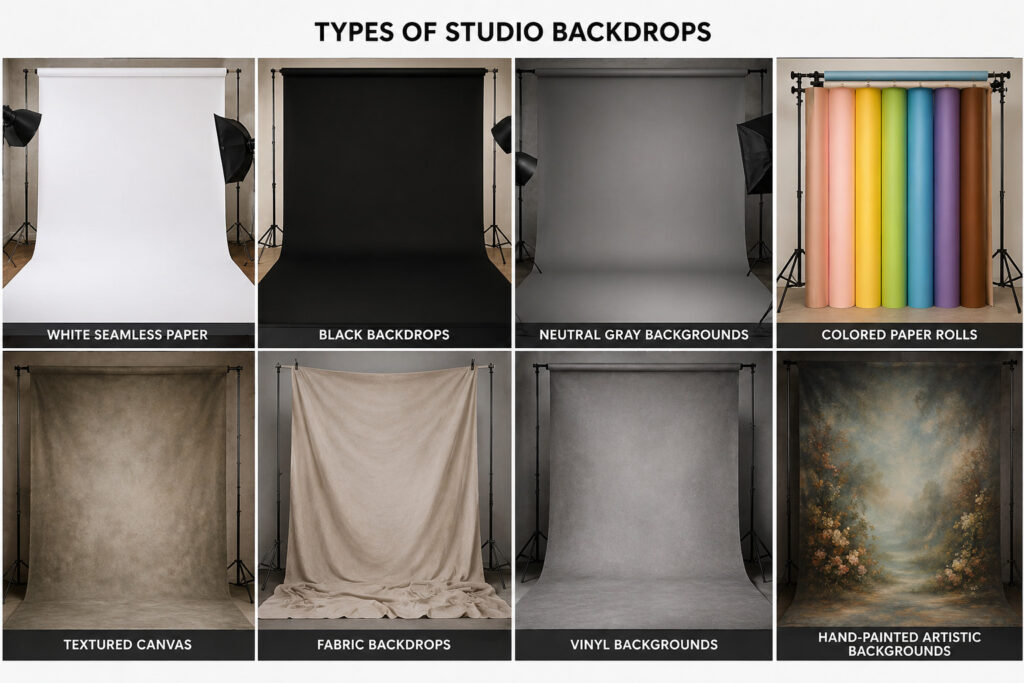
You can choose from:
- White seamless paper
- Black backdrops
- Neutral gray backgrounds
- Colored paper rolls
- Textured canvas
- Fabric backdrops
- Vinyl backgrounds
- Hand-painted artistic backgrounds
By selecting the right background, you can create anything from minimalist corporate portraits to luxurious fashion editorials without leaving the studio.
7. Efficient Workflow and Time Management
Professional photography isn’t just about taking great pictures—it’s also about working efficiently. Since your equipment remains organized and ready for use, studio sessions typically begin much faster than location shoots.
A well-designed studio allows you to:
- Keep lights permanently assembled
- Store props within easy reach
- Prepare multiple shooting stations
- Tether your camera to a computer
- Review images instantly on a larger screen
- Make quick lighting adjustments
Instead of transporting equipment to every location, photographers can concentrate on creativity and client interaction. This streamlined workflow increases productivity and allows more sessions to be completed in a single day.
8. Improved Client Comfort and Experience
Many clients feel more relaxed inside a comfortable studio than in busy public locations. A professional studio provides privacy, making it easier for people to pose naturally without worrying about strangers watching them.
Studios may also include amenities such as:
- Air conditioning or heating
- Comfortable seating
- Changing rooms
- Makeup stations
- Mirrors
- Refreshments
- Music
These small details create a positive experience that encourages repeat business and client referrals. A relaxed client almost always leads to more natural expressions and stronger photographs.
9. Easier Learning for Beginners
Many new photographers assume studio lighting is difficult to master. Surprisingly, the opposite is often true. Because studio lighting remains constant until you change it, beginners can clearly observe how each adjustment affects the final image.
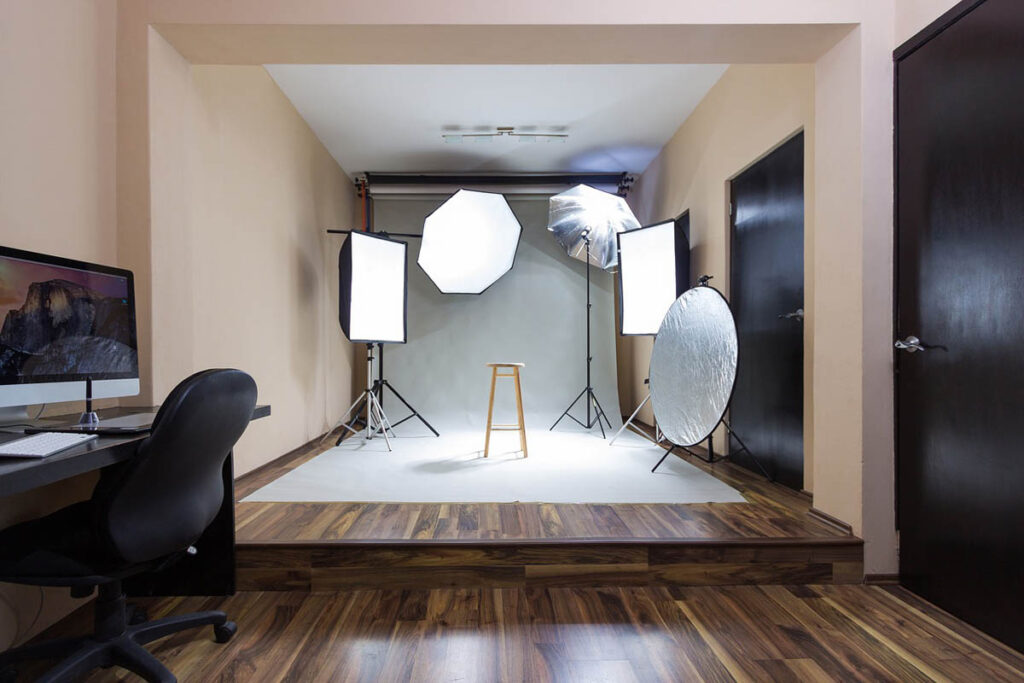
For example:
- Move the softbox closer, and the light becomes softer.
- Raise the light higher, and the shadows shift downward.
- Add a reflector, and dark areas brighten.
- Reduce flash power, and exposure decreases.
This immediate visual feedback helps photographers understand lighting much faster than relying solely on unpredictable natural light. The studio becomes an excellent classroom for learning the principles of exposure, shadow control, and light direction.
10. Endless Opportunities for Experimentation
Creativity grows through experimentation.
A studio encourages photographers to try new ideas without worrying about changing weather, fading daylight, or environmental distractions.
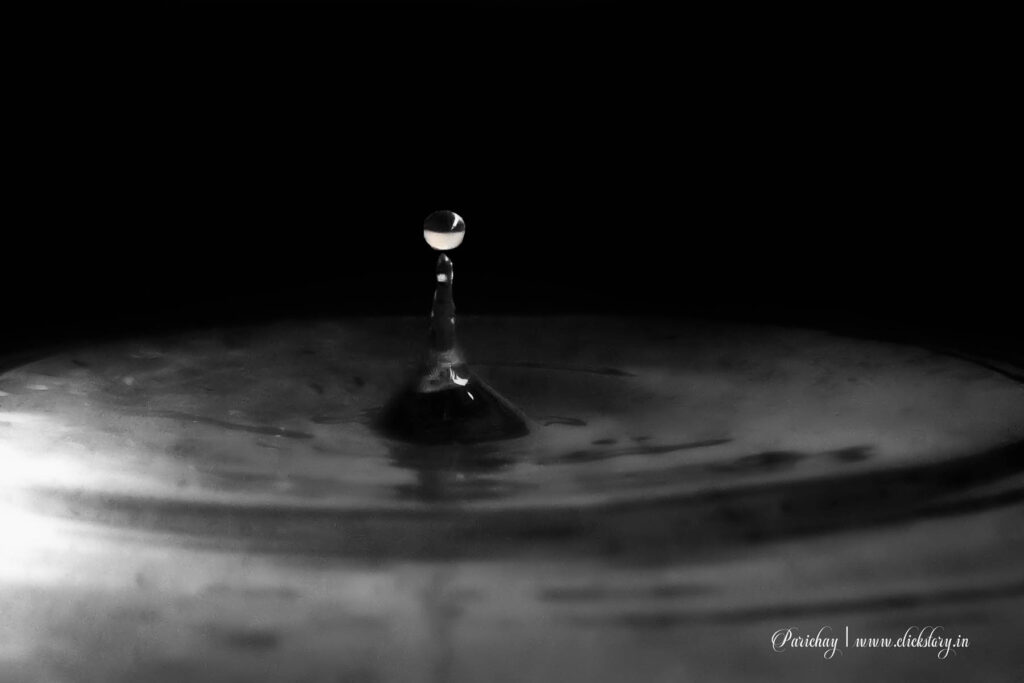
You can experiment with:
- Multiple light setups
- Colored gels
- Smoke or fog effects
- Water splashes
- Creative reflections
- Prism photography
- Long exposures with controlled lighting
- Projection lighting
- Macro setups
- Fine-art concepts
Since the environment remains under your control, mistakes become valuable learning experiences rather than expensive failures. Many iconic photographic styles were developed simply because photographers had the freedom to experiment inside a studio.
11. Ideal for Commercial and Business Photography
Businesses demand consistency, speed, and accuracy.
Whether you’re photographing clothing for an online store, cosmetics for an advertising campaign, or executive headshots for a corporate website, clients expect every image to meet the same professional standard.
Studio photography makes this possible by providing:
- Repeatable lighting
- Accurate product colors
- Clean backgrounds
- Sharp focus
- Predictable results
- Faster production
This is why nearly every successful commercial photography business relies heavily on studio-based workflows.
12. Long-Term Cost Efficiency
Although setting up a studio requires an initial investment, it often becomes more economical over time.
Owning your own studio can reduce expenses associated with:
- Frequent location rentals
- Travel costs
- Transportation of equipment
- Weather-related cancellations
- Rescheduling sessions
For photographers who shoot regularly, the savings can quickly outweigh the initial cost of lights, stands, and backdrops.
More importantly, a permanent studio allows you to practice whenever you want—an advantage that has no price tag.
Key Insights
Studio photography offers something every photographer values: control. By eliminating many of the variables that make outdoor photography unpredictable, a studio allows you to focus on creativity, precision, and consistency. From mastering light and producing technically flawless images to creating a comfortable experience for clients, the benefits extend far beyond the walls of the studio itself.
Whether you’re setting up a modest home studio or working in a fully equipped commercial space, the principles remain the same. The more control you have over your environment, the more freedom you have to bring your creative vision to life.
Now that you understand why studios are such powerful creative spaces, the next step is to explore the different types of studio photography, where each genre—from portraits and fashion to products and food—has its own techniques, lighting styles, and workflow.
You may be interested to read Studio Photography -> Types, Benefits and Beginner’s Guide article. Then explore the advantages of studio photography. After that choose a particular genre where you feel more comfortable than others.
