

Micro-composition is the small but powerful part of photography that many people overlook. It is not about changing the place or buying a new lens. It is about tiny movements—one step left, a slight crouch, or a small camera tilt—that completely change the final image.
What Is Micro-Composition?
Micro-composition means making small adjustments after you already found a good scene. The subject stays the same. The light stays the same. Only you move a little. These small choices decide whether a photo looks clean and professional or messy and distracting.
Think of big composition as choosing the location. Micro-composition is cleaning and arranging everything inside the frame.
Why Micro-Composition Matters
Even a beautiful scene can fail because of tiny distractions. Our eyes are naturally drawn to bright areas, sharp edges, and strange overlaps.
Common micro-composition mistakes:
- A pole, tree, or wire touching the subject’s head – X
- Bright highlights pulling attention away from the subject – X
- Crooked horizons that feel unintentional – X
- Unbalanced empty space on one side of the frame – X
Fixing these problems usually takes only a few seconds.
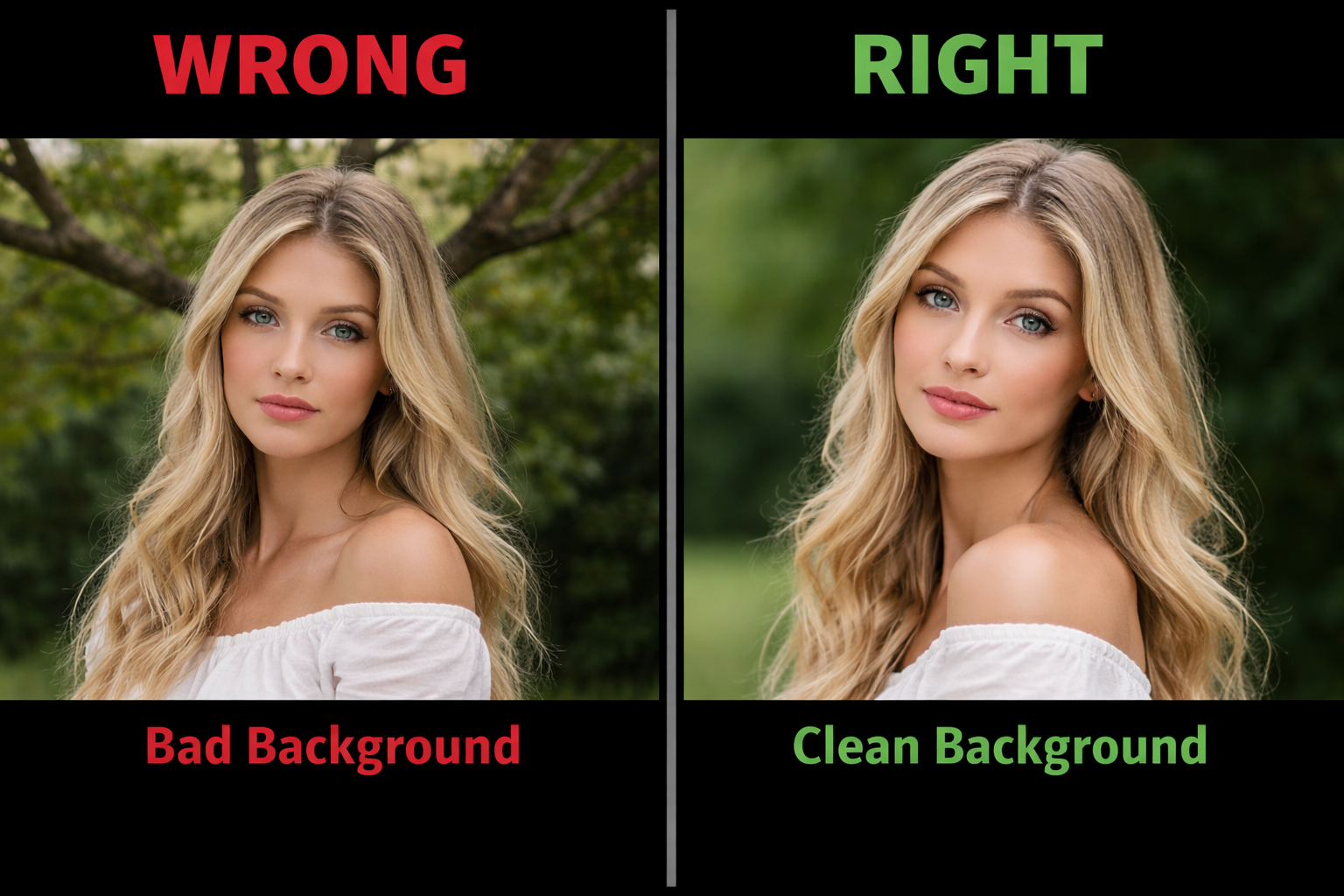
Everyday Micro-Composition Examples
1. One Step Can Save the Photo
You are photographing a person near a wall. Behind them is a messy background. Take one small step sideways. Now the wall becomes clean and simple. Same photo, better result.
2. The Power of Crouching
Shooting everything from eye level gets boring. Lower yourself slightly. The background changes. The subject stands out more. This works especially well with children, pets, and street portraits.
3. Small Camera Tilt
A straight frame feels calm and balanced. A slight intentional tilt can feel dynamic. But an accidental tilt looks careless. Micro-composition helps you decide what feeling you want.
4. Edge Awareness
Before pressing the shutter, quickly scan the edges. Is someone half-cut? Is there a random hand or bag entering the frame? Move the camera a few inches and clean it up.
5. Bright Spot Control
If a bright area is not your subject, it becomes a problem. Change your angle so that bright spots move behind your subject or leave the frame.
Micro-Composition in Different Photography Types
Portrait Photography
- Move your position to avoid objects growing from the head
- Ask the subject to turn their chin slightly to improve face shape
- Step left or right to get cleaner background colors
- Raise or lower the camera slightly to change mood
Street Photography
- Wait one second for people to move into better positions
- Shift a little to align the subject with light and shadow
- Avoid clutter by changing angle instead of zooming
- Use walls, shadows, or doorways as clean backdrops
Landscape Photography
- Move the camera a few inches to avoid overlapping elements
- Adjust horizon height to balance sky and land
- Slight height changes help separate foreground, midground, and background
- Remove distracting branches or rocks by shifting position
Wildlife Photography
- Change angle to separate the animal from the background
- Move slightly to catch light in the eyes
- Avoid cutting tails or wings at the frame edge
- Lower yourself to create a stronger connection
Product Photography
- Rotate the product slightly to control reflections
- Move lights or camera a few inches to reduce glare
- Adjust spacing around the product for balance
- Keep edges clean and symmetrical
Travel Photography
- Step aside to avoid tourists in the background
- Frame landmarks through doors or windows
- Change height to show scale better
- Use small movements to avoid visual clutter
Mobile Photography
Micro-composition is even more important with phones because of wide lenses.
- Take a step back to avoid distortion
- Move closer instead of using digital zoom
- Keep lines straight by adjusting hand position
- Clean the background before tapping the shutter
How to Practice Micro-Composition
- Slow down before clicking
- Ask: “What can I remove from this frame?”
- Take two shots: one normal, one slightly adjusted
- Review your photos and note small distractions
A Short Story From the Field
I once photographed a man sitting near a tea stall. The light was perfect. His expression was strong. But when I reviewed the photo, a bright blue plastic bucket was touching his shoulder and stealing attention. I didn’t change the location. I didn’t change the lens. I simply moved one step to the right and took another shot. That second image looked calm, focused, and complete. That was micro-composition at work.

Moments like this happen every day. The difference is whether we notice them or not. When your photography composition is clean, viewers stay longer, share more, and trust your work.
Simple Micro-Composition Checklist
Before pressing the shutter, quickly check:
- Background: Is it clean?
- Edges: Is anything cut awkwardly?
- Bright spots: Do they support the subject?
- Balance: Does the frame feel stable?
- Angle: Can one small move improve it?
Final Thoughts
Micro-composition is not about following strict rules. It is about slowing down and caring about details. Professional photographers are not lucky—they are observant. They fix small problems before they become big mistakes.
Next time you photograph anything—people, streets, landscapes, or products—pause for one second. Move an inch. Tilt a little. Lower yourself slightly. That small adjustment can transform your photography.
Frequently Asked Questions (FAQs)
1. What is micro-composition in photography?
Micro-composition is the practice of making small physical adjustments—like shifting your position, lowering your camera, or changing angle slightly—to significantly improve the final image without changing location or gear.
2. Why is micro-composition important in photography?
Micro-composition can dramatically change how elements align in a frame. Small movements can clean up backgrounds, improve balance, and strengthen visual impact without extra equipment.
3. How does micro-composition improve a photo?
By adjusting your stance or camera angle, micro-composition helps eliminate distractions, improve subject separation, and guide the viewer’s eye more effectively.
4. Do I need a new lens to practice micro-composition?
No. Micro-composition focuses on movement and awareness, not gear. You can improve your images using the same camera and lens by changing how you position yourself.
5. What are examples of micro-composition techniques?
Examples include taking one step left or right, crouching lower, tilting the camera slightly, or raising the camera a few inches to refine framing.
6. Is micro-composition useful for beginners?
Yes. Micro-composition is one of the fastest ways beginners can improve their photos because it requires no technical knowledge or additional equipment.
7. How is micro-composition different from composition rules?
Traditional composition rules guide structure, while micro-composition fine-tunes the frame. It’s the final adjustment that turns a good composition into a strong image.
8. Can micro-composition change the mood of a photo?
Absolutely. Even slight shifts in angle or height can alter perspective, depth, and emotional impact in a photograph.
9. When should photographers focus on micro-composition?
Micro-composition should be applied after basic composition is set—right before pressing the shutter—when refining the frame for maximum impact.
10. Why do many photographers overlook micro-composition?
Many photographers focus on gear or locations and miss how powerful small movements can be in improving image quality.





Yes really keep in mind