

Imagine standing at a busy intersection in Kolkata during monsoon season. Rain beats against the pavement, an old yellow taxi splash-cuts through a deep puddle, and an elderly man leaps across the rising water, his face twisted in a tense, sudden grimace. You raise your camera, press the shutter, and capture a single frame: water droplets frozen in mid-air, a dirty reflection of the neon sign behind him, and motion blur sweeping past his outstretched hands.
Now imagine opening an advanced AI image generator and typing: “Photorealistic Kolkata Street scene in monsoon, yellow taxi splashing water, elderly man jumping over puddle.” Within three seconds, you get a clean, brilliantly lit, perfectly rendered 8K render. Every raindrop looks like polished glass. The man’s facial expression is cinematic.
Yet, when you place the two images side by side, your brain immediately senses a difference. The synthetic generation looks undeniably impressive, but the camera shot feels undeniably real.


This contrast brings us to a crucial question for modern creators: In an era when artificial intelligence can generate hyper-realistic pixels out of thin air, what gives an authentic photograph its unmistakable sense of reality? Why do we trust one image and intuitively question the other?
What Is Realness in Photography?
To understand why a photograph feels real, we must first break down what “realness” actually means in visual storytelling.
In photography, realness is not about technical perfection, extreme sharpness, or high resolution. Instead, it is the photographic evidence of a physical interaction between a light-sensitive sensor (or film), a physical environment, and a human observer present at an exact point in space and time.
Realness in photography relies on four main elements:
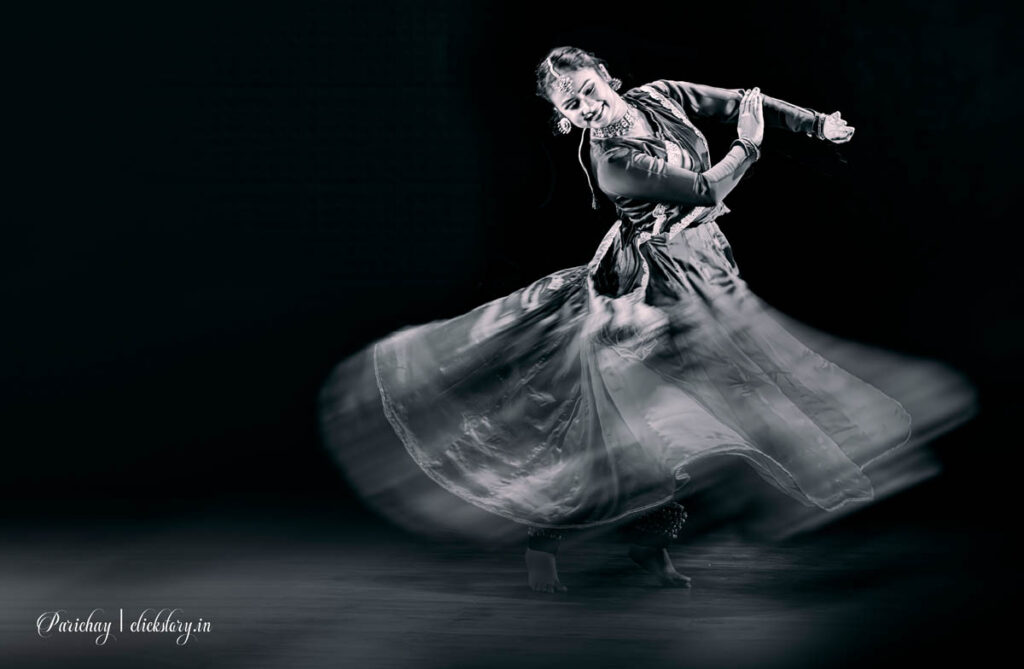
- Physical Reality: Light bounced off tangible objects, passed through glass optics, and struck a sensor.
- The Decisive Moment: An unrepeatable slice of time frozen forever.
- Imperfections: Natural optical flukes, motion artifacts, lens distortion, and unpredictable environment details.
- Provenance: The verifiable line of physical origin that ties an image to a true event.
Realness is not absolute objective truth. Photographers choose where to point the camera, what to leave out of the frame, and how to expose the shot. Realness is also not raw, unedited clinical accuracy. A black-and-white street photograph from 1950 feels deeply real, even though the world does not exist in monochrome.
A photograph feels real because it carries physical evidence of a moment that actually happened—a moment the world offered up, rather than a prompt constructed by an algorithm.
Why Does Realness Matter in Visual Storytelling?
As AI text-to-image technology advances, visually stunning images are becoming effortless to make. If anyone can generate a gorgeous image in seconds, technical perfection loses its rarity and value. What remains rare—and increasingly valuable—is authenticity.
When a viewer realizes an image was made in the physical world, their psychological relationship to the picture changes entirely:

- Viewer Trust: Trust forms the invisible bridge between a photographer and their audience. When viewers know a photo captures a genuine moment, their emotional response is grounded in empathy for a real human experience.
- Emotional Resonant Weight: A photograph of a grieving mother during a natural disaster carries genuine emotional weight because her pain actually existed in space and time. A synthetically rendered version may mimic the visual cues of grief, but once the viewer discovers it is artificial, the emotional response turns to feeling manipulated.
- Contextual Value: Photographs act as visual artifacts of human history. They record cultural nuances, architecture, changing fashions, and raw human relationships. Without physical realness, an image loses its power as a historical record.
A photograph can be technically flawless—perfectly exposed, flawlessly sharp, beautifully composed—and still fail to tell a meaningful story if it feels detached from physical reality.
How Does Realness Work?
The sensation of realness in a photograph comes from subtle physical signatures that our brains process automatically.

1. Physical Reality & Light Behavior
In real-world photography, light obeys unpredictable physical laws. It reflects off dusty mirrors, bounces off damp streets, spills through colored glass, and creates complex, subtle color casts on human skin.
AI models generate light by calculating statistical probabilities from billions of training images. While these generations look impressive at a glance, they often lack the small, chaotic light reflections that happen in real, physical spaces.
2. The Decisive Moment & Micro-Gestures
Henri Cartier-Bresson framed the concept of the “decisive moment”—the exact split-second where visual elements, light, and human emotion align.
Real life is filled with fleeting micro-gestures: a half-raised eyebrow, a slight hand tension, a wind-blown strand of hair touching a cheek. These transient micro-moments are incredibly difficult for synthetic algorithms to replicate authentically because they happen dynamically in response to physical events.
3. Imperfections & Optical Flaws
Paradoxically, perfection often feels fake. Human vision and optical camera lenses are inherently imperfect. Lens flare, motion blur, sensor grain, slight focusing errors, dust spots, and dynamic range limitations (like blown-out highlights or dark shadows) tell our brain: “This image was captured by an optical camera in a messy, real environment.”
4. The Photographer’s Presence
Every photograph carries a quiet footprint of the person holding the camera. The height at which you hold the camera, how close you step toward your subject, and how long you wait in a location all subtly signal your physical presence. An image made by a photographer who stepped into a crowded market feels visceral because their physical perspective is encoded directly into the composition.
How to Apply Realness When Shooting
To capture photographs that convey authenticity and life, shift your focus away from chasing clinical perfection. Instead, try this step-by-step shooting approach:

- Step Into Physical Chaos: Seek out environments with rich physical textures, variable lighting, and unscripted human activity—such as vibrant local markets, public transit hubs, or street festivals.
- Commit to a Physical Perspective: Avoid shooting everything standing straight up from eye level. Drop low to the asphalt, lean against a textured wall, or step close to your subject to weave your physical presence into the frame.
- Embrace Unpredictable Light: Stop shooting exclusively in soft, perfectly balanced light. Look for harsh shadows, direct backlighting, or mixed artificial lighting that creates visual complexity.
- Anticipate Micro-Moments: Keep your camera at your eye and watch for subtle human interactions—a hand resting on a shoulder, an unguarded laugh, or a quick sideways glance.
- Leave Visual Space for Context: Avoid zooming in so tightly that you crop out the environment. Let background details anchor your subject in a specific time and place.
- Capture the Unplanned: Resist the urge to fix every small distraction in your frame. An errant electrical wire, a passing bird, or a splash of water often adds genuine energy to the scene.
Camera Settings and Technical Considerations
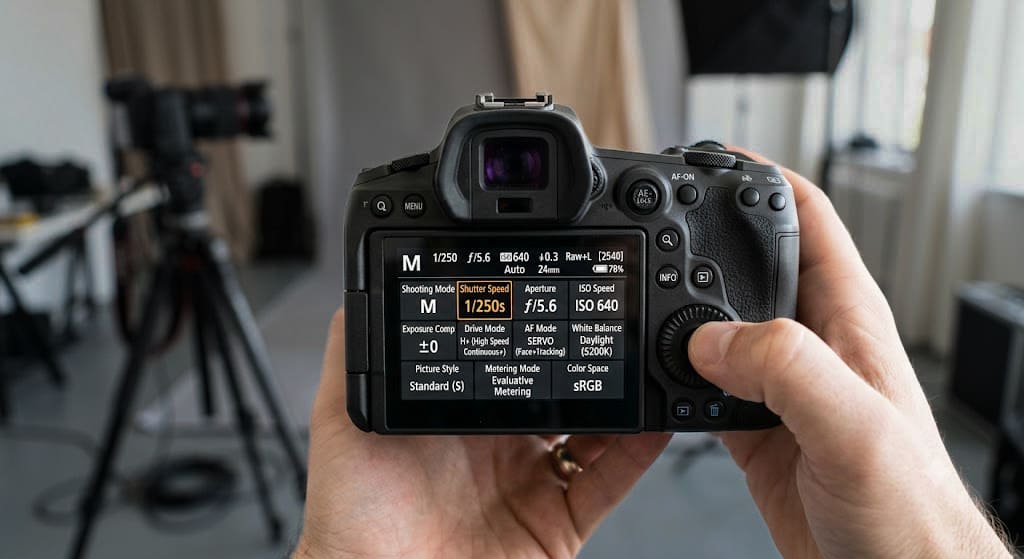
Camera settings do far more than manage exposure—they directly alter how real or synthetic a photograph feels to the viewer.
- Aperture (Depth of Field): While shooting wide open at f/1.4 creates smooth background blur, it can easily erase environmental context. Closing down to f/4 or f/5.6 keeps background elements recognizable, grounding your subject in a real setting.
- Shutter Speed: Freeze action at 1/1000s when you need sharp detail, but don’t fear a slightly slower speed like 1/30s or 1/60s. Controlled motion blur in a subject’s hand or a passing vehicle communicates physical movement far more authentically than an overly frozen frame.
- ISO and Texture: High-ISO digital grain is often viewed as a flaw, but subtle organic texture adds a tactile quality that counters the plastic-smooth look common in generated art.
- Focusing and Focal Length: Using a prime lens (35mm or 50mm) forces you to move physically within your environment rather than relying on a zoom lens. This physical movement naturally leads to more engaging, dynamic compositions.
Building a Stronger Visual Story
A single photograph can feel authentic, but a carefully edited sequence of images creates a deep, undeniable narrative truth.

When assembling a visual story or photo essay, build a varied sequence that mirrors real-world human perception:
- The Establishing Shot: Broad environmental scenes that showcase the location, weather, light, and physical atmosphere.
- The Medium Interaction: Images that focus on human relationships, work, or movement within an environment.
- The Detail Shot: Close-up photographs of physical textures—worn hands, weathered wood, water drops on metal, or chipped paint. These tactile details anchor the sequence in physical reality.
- The Quiet Moment: Unscripted pauses between major actions where subjects rest, think, or look away from the camera.

Real-World Photography Examples
Scenario 1: Street Photography in a Busy Market
- Situation: A fruit vendor working inside a dimly lit stall during peak morning chaos.
- Photographer’s Intention: Capture the authentic energy of early morning trade without staging the scene.
- What to Photograph: The vendor adjusting a pile of mangoes, backlit by morning sunlight, with dust particles swirling in the air.
- Why It Works: The dust motes, the sweat on the vendor’s brow, and the messy, unorganized background give the frame tangible proof of physical reality.
- What the Viewer Understands: The image captures a real moment of daily labor rather than a staged studio portrait.
Scenario 2: Classical Indian Dance (Bharatanatyam Performance)
- Situation: A dancer performing on stage under intense spotlights.
- Photographer’s Intention: Convey the physical intensity and emotional focus of the performance.
- What to Photograph: A close-up framing the dancer’s expressive eyes, capturing slight flyaway hair sticking to a sweaty forehead, and a hint of motion blur in her hands.
- Why It Works: Synthetic generations typically render stage dancers with flawless makeup and perfectly still poses. Capturing dynamic sweat, exertion, and speed highlights the true physical demand of the art form.
- What the Viewer Understands: The viewer witnesses the physical commitment, training, and human effort behind the dance.
Scenario 3: Rainy Day Commute
- Situation: Passengers looking out from inside an old city bus during heavy rain.
- Photographer’s Intention: Capture the quiet mood of an urban monsoon commute.
- What to Photograph: A passenger gazing out a water-streaked glass window, with their face partially obscured by droplets and reflections of red brake lights.
- Why It Works: The complex optical layering—water droplets, glass reflections, soft interiors, and outdoor light—creates an intricate visual depth that feels grounded in physical space.
- What the Viewer Understands: The viewer connects with the quiet, reflective mood of an actual rainy morning.
Common Mistakes Photographers Make
- Over-Editing Skin and Textures: Applying excessive noise reduction or skin smoothing removes natural pores and fine details, making real subjects look artificial.
- Chasing Complete Technical Perfection: Deleting frames simply because they contain slight camera shake, lens flare, or imperfect framing often destroys your most emotionally honest images.
- Removing All Background Clutter: Over-isolating subjects with extreme background blur deprives the photograph of its time, location, and storytelling context.
- Staging Unscripted Documentary Moments: Asking street subjects or documentary subjects to repeat a gesture often results in stiff, unnatural postures.
- Relying Exclusively on Heavy HDR: Over-processing shadows and highlights flattens lighting contrast, creating a hyper-processed look that mirrors low-quality synthetic art.
- Ignoring the Environment: Focusing solely on human faces while failing to capture the surrounding physical space empties the story of context.
- Deleting the “In-Between” Frames: Oversampling action shots while ignoring the quiet moments before and after the main event leaves your narrative feeling rushed.
- Chasing Trends Over Personal Observation: Copying popular color presets blindly instead of responding to the actual light in front of you creates disconnected images.
How to Improve Weak Results
- If your photographs feel emotionally flat: Stop firing from eye level while standing far away. Move closer, drop lower, and wait for genuine human interactions or facial expressions before pressing the shutter.
- If your images look like synthetic renders: Tone down your post-processing. Reduce clarity sliders, lower contrast adjustments, stop over-smoothing skin, and leave natural shadows untouched.
- If the viewer cannot understand the context: Stop using ultra-fast lenses wide open (f/1.2 or f/1.8) for every shot. Step down to f/4 or f/5.6 to bring meaningful background details back into focus.
- If your photo series feels repetitive: Mix up your focal lengths and shooting distances. Pair wide environmental shots with tight detail images to build a balanced narrative rhythm.
Creative Ways to Lean Into Photographic Realness
Beyond simply documenting events, experienced photographers intentionally use physical reality to deepen their creative storytelling:
- Embrace Optical Imperfections: Intentionally capture lens flares, light leaks, and glass reflections to add mood and a sense of physical space to your frames.
- Use Visual Juxtaposition: Frame contrasting elements within a single shot—such as an old historic door alongside a modern glass skyscraper—to ground your story in shifting historical reality.
- Leverage Environmental Frame-in-Frame: Use natural elements like torn doorways, rain-streaked windows, or crowded shoulders to frame your primary subject and heighten the feeling of being present in the room.
The Unspoken Contract of Trust
When a photographer presents an image as documentary or street photography, they enter an unwritten contract of trust with the audience. Viewers evaluate documentary photographs based on the understanding that the scene actually happened. Manipulating subjects, removing key objects digitally, or staging events breaches that core trust.
Provenance and Verification
Modern visual culture is moving rapidly toward verifying image provenance—using cryptographic metadata (such as C2PA standards) to prove an image was captured by an optical camera sensor at a specific location without synthetic manipulation. For emerging photographers, building a reputation grounded in authentic observation is becoming a defining professional asset.
How Photo Critics Analyze Realness
When visual critics, editors, and curators analyze a photograph to evaluate its realness and narrative power, they ask key critical questions:
- What physical evidence proves the camera was present? Look for complex light reflections, focus falloff, optical distortions, and micro-gestures.
- Is the moment observed or directed? Analyze human postures and eye contact to determine if the subjects were behaving naturally or posing for the camera.
- What context is included—and what is hidden? Examine how the photographer used framing to give context or intentionally narrow the story.
- Does the photograph rely heavily on post-processing? Check if heavy editing masks a weak underlying story or enhances the true atmosphere of the scene.
Practical Exercise: Create Your Own “Proof of Reality” Story
Put these visual storytelling principles into practice with this real-world assignment:
- OBJECTIVE: Document an authentic story that relies entirely on physical reality, spatial context, and micro-moments.
- LOCATION: A local public space (such as a busy neighborhood market, bus depot, tea stall, or public park).
- TIME: 1 to 2 hours during active human hours.
- EQUIPMENT: Any digital camera or smartphone.
- RULES:
- No posing or directing subjects.
- No removing background elements digitally.
- No heavy smoothing or vintage post-processing filters.
- Use a fixed focal length (or refrain from using digital zoom).
- Keep your aperture at f/4 or narrower to maintain background context.
- SHOOTING TASK: Capture a set of 30–50 frames documenting people interacting with their environment. Focus on small gestures, chaotic light, and physical textures.
- FINAL OUTPUT: Select and sequence exactly 4 photographs:
- Image 1: Broad environmental establishing shot.
- Image 2: Medium shot highlighting a human action or interaction.
- Image 3: Close-up detail showing physical texture or wear.
- Image 4: Quiet, unscripted moment between actions.
Reflection Questions
After selecting your 4 frames, ask yourself:
- Does this sequence prove I was physically present in this space?
- Did I keep enough background context to tell a clear, grounded story?
- Which frame carries the most natural, unforced human emotion?
- Would this sequence lose its emotional weight if a viewer assumed it was AI-generated?
Final Takeaway
AI image generators can synthesize stunning pixels, calculate perfect lighting, and invent intricate scenes from text prompts. But synthetic algorithms cannot step into the heat of a rainy street, feel the dynamic energy of a crowded market, or build a human connection with a subject.
What makes a photograph feel real isn’t technical perfection—it’s the visible proof of physical interaction, unrepeatable timing, optical nuance, and human presence.
When you pick up your camera, stop chasing sterile perfection. Go out into the world, embrace its beautiful chaos, and frame moments that carry the undeniable signature of real life.
Frequently Asked Questions (FAQ)
1. Does editing or color grading make a photograph lose its realness?
No. Basic editing, contrast adjustments, and color grading refine how an image feels, much like choosing a specific film stock. A photo loses its realness when post-processing digitally alters physical facts—such as manipulating bodily features, cloning out major structural elements, or artificially smoothing away skin details.
2. Can an AI-generated image ever be considered true photography?
No. While AI-generated images are compelling visual art, they are mathematically synthesized from dataset patterns rather than captured through a camera lens using light reflected off physical objects. Photography requires an optical capture of physical space and time.
3. Why do imperfections make a photograph feel more real?
Imperfections like lens flare, motion blur, organic grain, and complex lighting are physical phenomena caused by light traveling through optical glass and striking a sensor. Because synthetic generations default to calculated smoothness, these natural flaws signal authentic camera capture to our brains.
4. How can I make my smartphone photos feel less artificial?
Smartphones rely heavily on computational processing that can over-sharpen images and smooth skin artificially. To capture more authentic smartphone shots, turn off aggressive portrait smoothing modes, lower exposure slightly to preserve highlight details, and shoot in RAW mode whenever possible.
5. Why is background context so important for visual authenticity?
Background context anchors your subject in a specific time, place, and culture. Isolating subjects completely with extreme background blur removes environmental clues, making the image look like it could have been made in a sterile studio or synthesized by software.
