

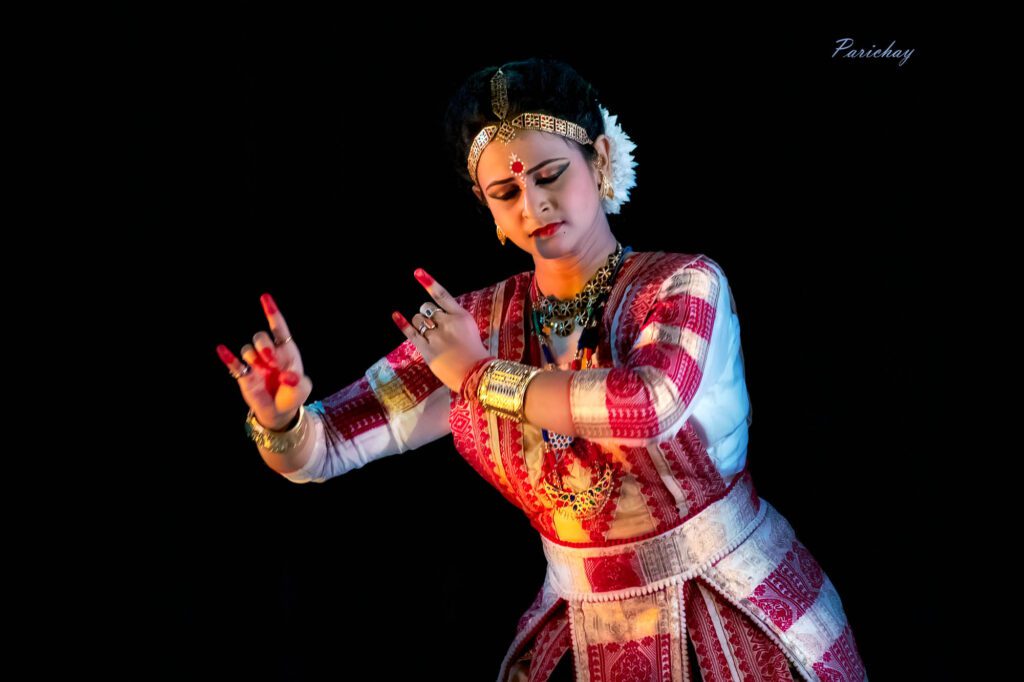
Sattriya dance is derived from Sattras. Sattras are the Vaishnava monasteries in Assam. The saint-poet Shankar Deva of the 15th century AD started this institution to bring harmony to the region of Assam through religion, Sattriya is not just a performance art—it is a devotional practice that blends music, dance, and drama to convey religious teachings and cultural values.
Historical Background
Sattriya dance was introduced in the 15th century by the saint-scholar Srimanta Sankardev, the founder of the Neo-Vaishnavite movement in Assam. He created this dance form as a medium to propagate the teachings of Lord Krishna and to bring people together through devotion and art. The dance was traditionally performed by monks (known as bhokots) in monasteries called sattras, from which the dance derives its name.
Evolution from Ritual to Stage of Sattriya Dance
For centuries, Sattriya remained confined within the walls of the sattras as a part of daily rituals and religious festivals. However, in the 20th century, it gradually moved to public stages, allowing a wider audience to appreciate its beauty. In 2000, it was officially recognized as a classical dance form by the Sangeet Natak Akademi, marking a significant milestone in its journey.
Themes and Content of Sattriya Dance
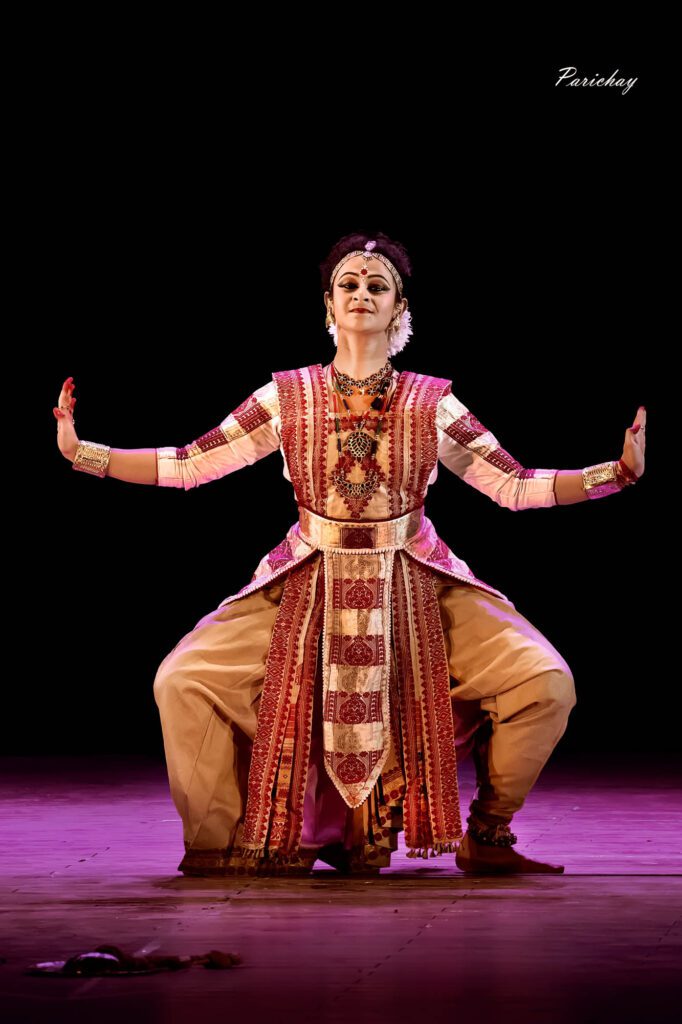
Sattriya dance primarily revolves around stories from Hindu mythology, especially episodes from the life of Lord Krishna. These narratives are often derived from texts like the Bhagavata Purana. The performances are deeply devotional, aiming to inspire spiritual reflection among viewers.
Technique and Style of Sattriya Dance
Sattriya dance is known for its distinctive combination of:
- Nritta (pure dance): Emphasizes rhythmic movements and intricate footwork
- Nritya (expressive dance): Focuses on storytelling through facial expressions and gestures
- Natya (dramatic elements): Includes theatrical representation of mythological stories
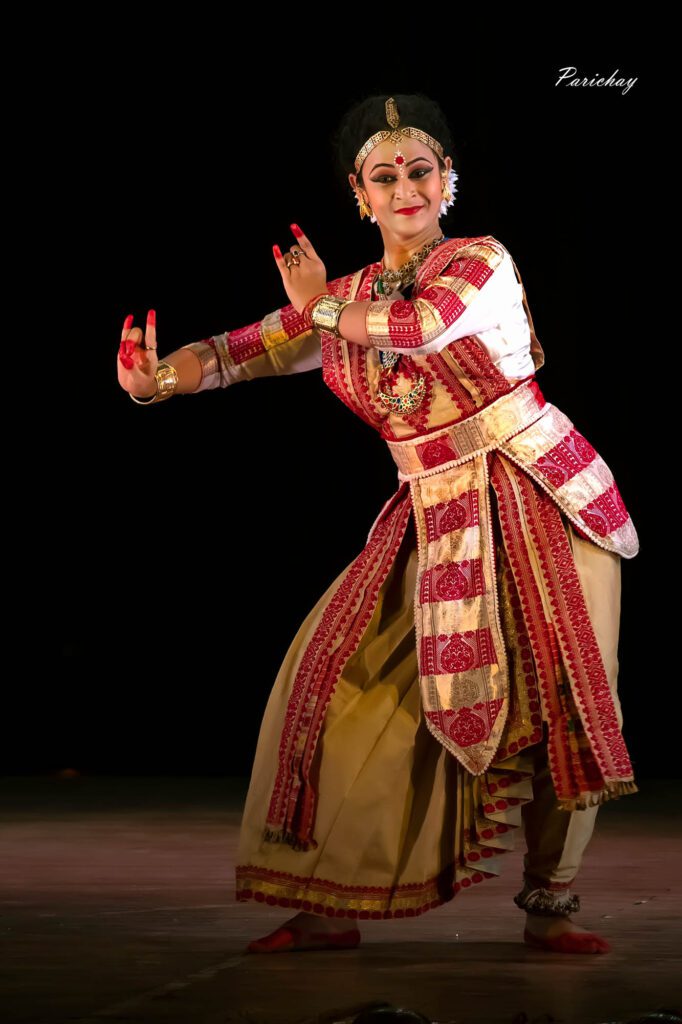
The dance features precise hand gestures (mudras), expressive eyes, and controlled body movements. The rhythm is maintained using traditional instruments like the khol (drum) and taal (cymbals).
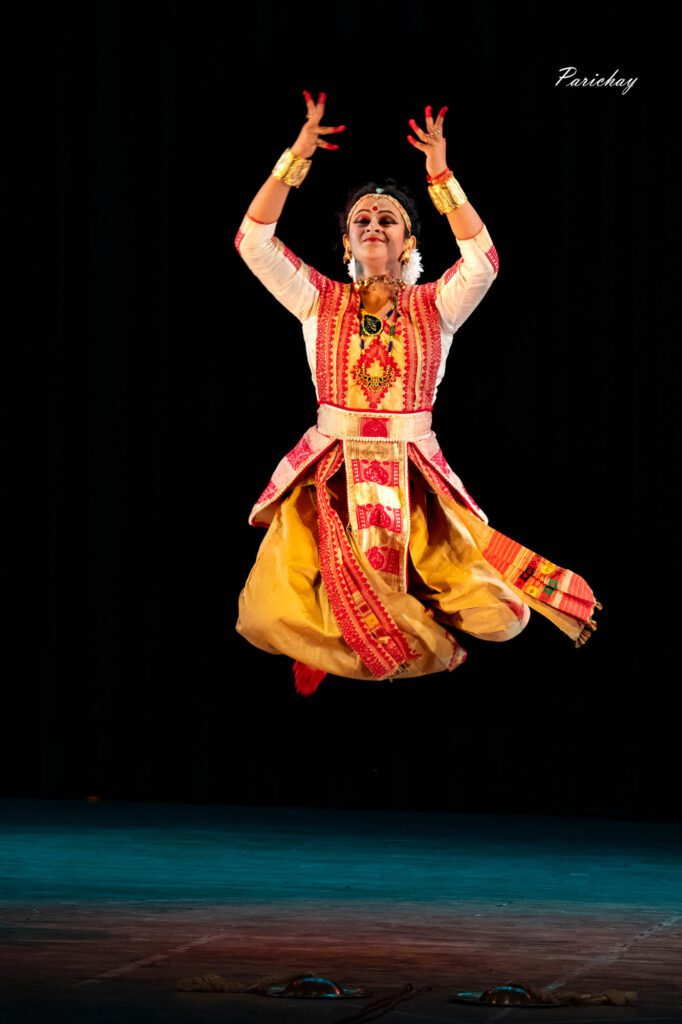
The dresses are usually made of pat, a type of silk produced in Assam, woven with intricate local motifs. The ornaments, too, are based on traditional Assamese designs.
Costumes and Makeup
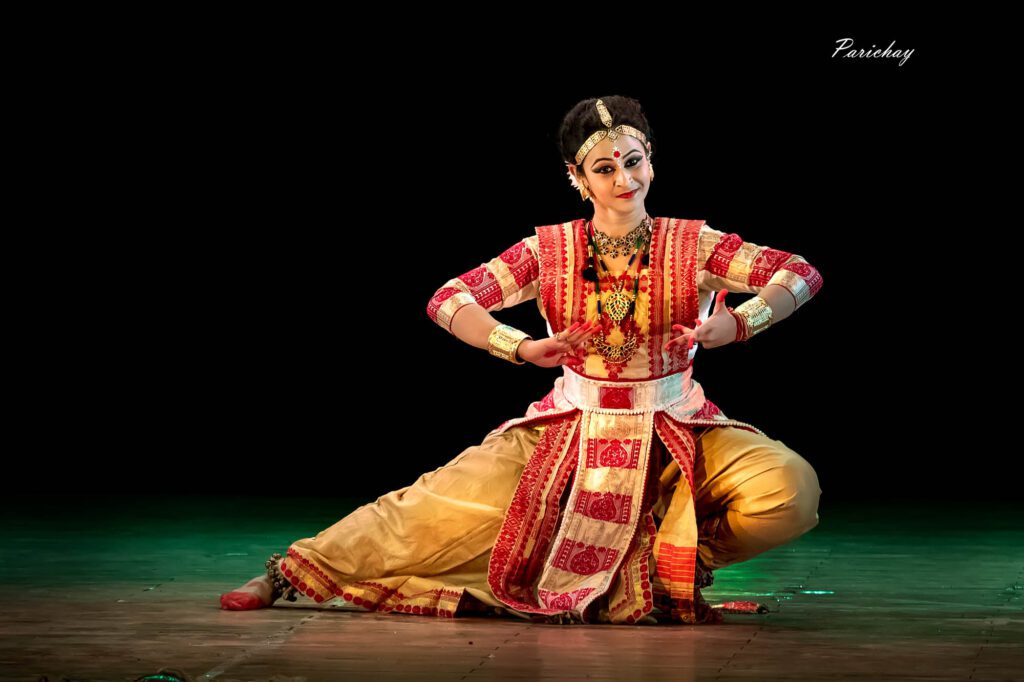
The costumes of Sattriya dancers are elegant and symbolic. Traditionally made from Assamese silk such as paat and muga, the attire includes:
- A flowing skirt (ghuri)
- A chadar (upper garment)
- Intricate jewelry
- A traditional headgear
The colors are usually bright yet graceful, enhancing the visual appeal of the performance.
Cultural Significance of Sattriya Dance
Sattriya dance holds a unique place in Indian culture as it bridges spirituality and artistic expression. It reflects the socio-religious reforms brought by Srimanta Sankardev and continues to be a vital part of Assamese identity. Today, both men and women perform Sattriya on stage, preserving its legacy while adapting it to contemporary audiences.
Final Thought
Sattriya dance is more than just a classical art form—it is a living tradition that carries centuries of devotion, discipline, and cultural richness. From the serene halls of Assamese monasteries to global stages, Sattriya continues to captivate audiences with its elegance and spiritual depth, standing as a testament to India’s diverse artistic heritage.
