

Early Life and Visual Influences
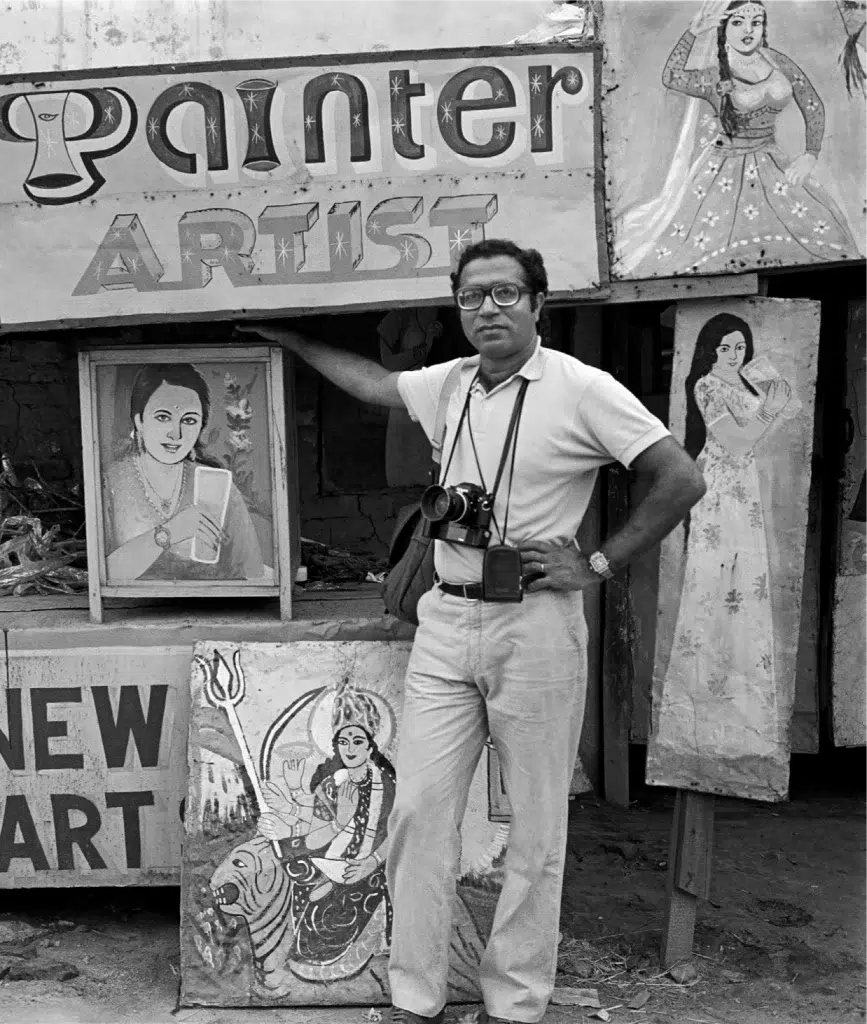
Raghubir Singh famous Indian photographer was born in Rajasthan, a region known for its intense colors, layered history, and strong visual traditions. Growing up amid palaces, streets, and rituals deeply influenced his way of seeing. From an early age, Singh developed a sensitivity to color, movement, and public life—elements that would later define his photographic approach. His education in India and exposure to international photography helped him shape a voice that was global in reach yet firmly rooted in Indian experience.
Choosing Color as a Visual Language
At a time when documentary photography was dominated by black and white, Singh made a deliberate and radical choice to work in color. For him, color was not decorative but essential to truth. He believed India could not be authentically represented without its vivid palette. His photographs use color as structure—guiding the eye, balancing the frame, and conveying emotional and cultural depth.
Street Photography and Everyday India
Singh’s primary subject was everyday life unfolding in public spaces. He photographed streets, buses, markets, temples, political rallies, and moments of quiet intimacy within crowded environments. Rather than isolating individuals, he placed them within complex social and architectural contexts. His images often contain multiple narratives happening at once, reflecting the density and energy of Indian streets.
Photographic Style and Composition
Working frequently with wide-angle lenses, Singh created immersive images that draw viewers into the scene. His compositions are layered and dynamic, with foreground and background interacting through color and form. Influenced by Indian miniature painting, cinema, and modernist photography, his frames balance chaos and order. The result is a visual language that feels spontaneous yet carefully constructed.
Joining Magnum Photos
Raghubir Singh’s international reputation grew steadily, leading to his membership in Magnum Photos. As one of the first Indian photographers to join the collective, he brought a distinctly non-Western perspective to global documentary photography. Magnum provided a platform for his work to reach wider audiences, while Singh remained committed to telling stories grounded in Indian reality rather than adapting to Western expectations.
Major Photobooks and Long-Term Projects
Singh expressed his vision most fully through photobooks. Works such as Ganga: Sacred River of India, Bombay, and A Way Into India are considered landmarks in photographic publishing. These books present India as a living, breathing entity—spiritual, political, contradictory, and constantly evolving. Sequencing and visual rhythm were central to how he shaped meaning across these projects.
Themes of Tradition, Change, and Identity
Throughout his career, Singh explored the tension between tradition and modernity in post-independence India. His photographs reflect colonial legacies, urban growth, religious life, and political presence without offering simple conclusions. He allowed complexity to remain visible, trusting viewers to engage deeply with the image rather than consume it quickly.
Cultural Impact and Legacy
Raghubir Singh’s influence extends far beyond his own body of work. He played a crucial role in legitimizing color as a serious medium in documentary and street photography. His approach inspired generations of photographers in India and internationally to embrace color as a conceptual tool. Today, his photographs are regarded as essential to understanding modern India’s visual history—bold, layered, and unapologetically rooted in lived experience.
1. Who was Raghubir Singh?
Raghubir Singh was an Indian photographer known for his vibrant use of color and documentary style, deeply influenced by Indian public life and culture.
2. Where was Raghubir Singh born?
Raghubir Singh was born in Rajasthan, India, a region famous for its rich history, vivid colors, and strong visual traditions.
3. How did Rajasthan influence Raghubir Singh’s photography?
Growing up in Rajasthan surrounded by palaces, streets, and rituals shaped Singh’s sensitivity to color, movement, and everyday public life, which became defining elements of his photography.
4. What visual elements defined Raghubir Singh’s photographic style?
His work is defined by bold color, dynamic movement, layered compositions, and an intimate portrayal of public spaces in India.
5. How did Raghubir Singh develop his photographic vision?
Raghubir Singh developed his vision through early cultural exposure in India combined with formal education and international exposure to global photography.
6. Was Raghubir Singh influenced by international photography?
Yes, his exposure to international photography helped refine his technique while allowing him to maintain a perspective rooted in Indian experience.
7. What themes are commonly found in Raghubir Singh’s work?
Common themes include Indian street life, cultural rituals, architecture, movement, and the interaction between people and public spaces.
Why is Raghubir Singh considered a global photographer?
Although deeply inspired by India, Singh’s work resonated internationally due to its universal themes, innovative color usage, and documentary depth.

Very Beautiful !
Pronam