


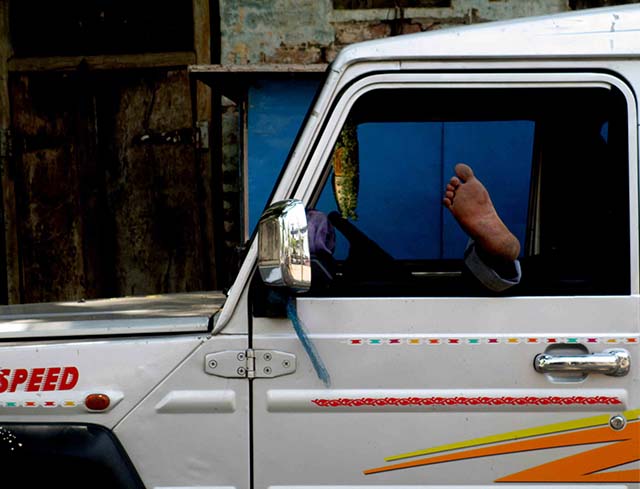
You would think that a portrait, by definition, would have to show the subject’s face? That’s certainly considered a good starting point by most photographers, but the creative photographer knows that the most interesting results often come from doing exactly the opposite of what’s expected, so for this fortnight’s theme is asking to include little, if any, of the subject’s face in the frame.
The key thing here is that we’re still trying to shoot a portrait, so you’re still trying to capture something of the character or personality of your subject, just in a slightly less obvious manner.
For me Faceless portrait is an interesting subject for me. whenever i shoot street, my eyes always keep on the person with faceless. Its fun to shoot faceless portraits.
When I saw the images mostly all peoples post the pictures like nothing link to the theme. Faceless portraits means neither cover all body with things nor silhouette of people. The change of face portion etc. are also not a good idea for faceless portrait theme. Its not even staged images which I saw in a Facebook group theme.
Faceless portraits means just cover the face with interesting objects or face gonna hide with dark side. Equation of faceless is Face+Less = Faceless.

Frequently Asked Questions (FAQs)
What is a faceless portrait?
A faceless portrait is a type of portrait photography where little or none of the subject’s face is visible, yet the image still communicates the personality, emotion, or character of the subject. The focus shifts from facial expressions to gesture, posture, clothing, light, context, and mood.
2. Does a portrait need to show the face?
Traditionally, portraits show the face—but creative portrait photography breaks this rule. A faceless portrait proves that identity and emotion can be conveyed without showing facial features, making the image more intriguing and open to interpretation.
3. What is the core idea behind faceless portrait photography?
The core idea is storytelling without facial identity. The photographer captures who the person is, not how their face looks. This is achieved through body language, environment, styling, and light rather than facial expressions.
4. Is a silhouette considered a faceless portrait?
No. Pure silhouettes usually do not qualify as faceless portraits because they often hide the entire subject, not just the face. Faceless portraits should still reveal human presence, detail, and character, not reduce the subject to a shape.
5. Are fully covered bodies considered faceless portraits?
No. Covering the entire body removes personal context and identity. A faceless portrait hides the face, not the person. The subject’s clothing, stance, or surroundings should still communicate individuality.
6. Is replacing or distorting the face acceptable in faceless portraits?
Generally, no. Face replacement, heavy distortion, or digital manipulation weakens the theme. Faceless portraits are about absence, not alteration. The face should be hidden naturally—not replaced or transformed.
7. Can staged photos be faceless portraits?
Yes, but only if they feel intentional and meaningful. Many staged images fail because they focus on gimmicks rather than character. Whether staged or candid, the image must still feel like a portrait, not a prop-based concept shot.
8. How can you hide the face effectively in a faceless portrait?
Common and effective methods include:
- Turning the subject away from the camera
- Using shadows or low light
- Blocking the face with everyday objects
- Natural obstructions like hair, hands, or clothing
The key is that the method feels organic, not forced.
9. Why are faceless portraits popular in street photography?
Street photography naturally lends itself to faceless portraits because:
- Subjects are often moving
- Faces are obscured by light, motion, or framing
- Authentic body language tells strong stories
Faceless street portraits feel raw, candid, and emotionally powerful.
10. What makes a faceless portrait successful?
A successful faceless portrait:
- Still feels like a portrait
- Communicates mood or personality
- Uses composition and light intentionally
- Avoids clichés like full silhouettes or gimmicks
If the viewer can feel the person without seeing the face, the image works.



Excellent.
thank you so much