

What Is a Weather-Sealed Camera?
If you enjoy outdoor photography, you may have heard camera manufacturers describe certain cameras as weather-sealed, weather-resistant, or weatherproof.
But what do these terms actually mean?
- Does a weather-sealed camera mean you can take pictures in heavy rain?
- Can you leave it outside during a storm?
- Can you put it underwater?
Answer: Big NO.
Weather sealing generally means that a camera has been designed with additional protection against things such as dust, moisture, light rain, and splashes.
It does not automatically mean that the camera is waterproof.
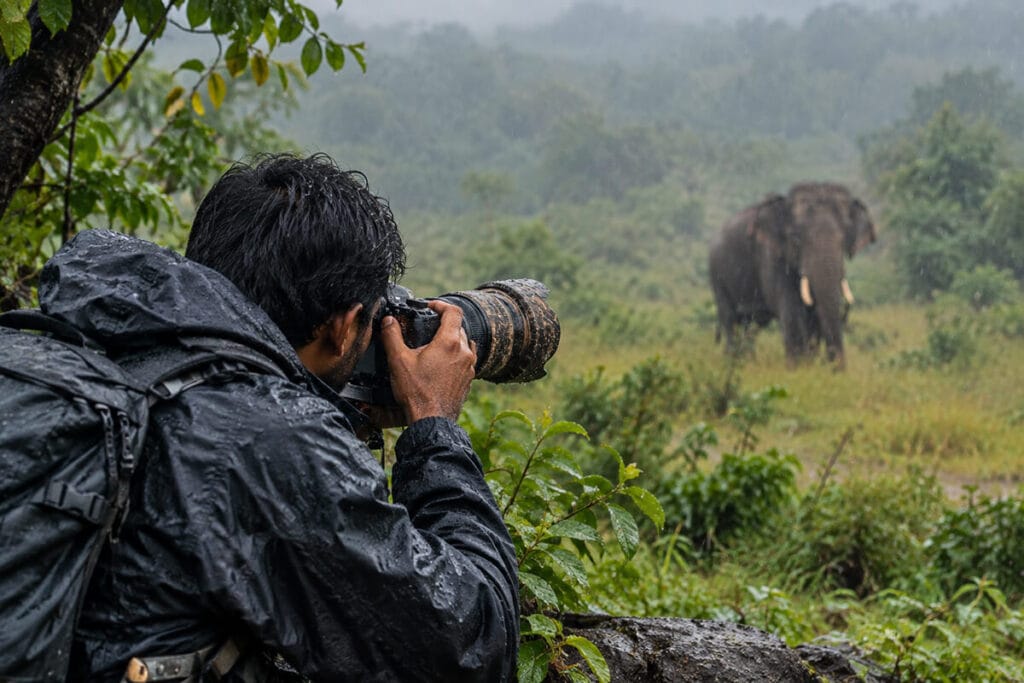
Think of weather sealing as an extra layer of protection, rather than a guarantee that your camera can survive any weather condition.
What Does Weather Sealing Actually Mean?
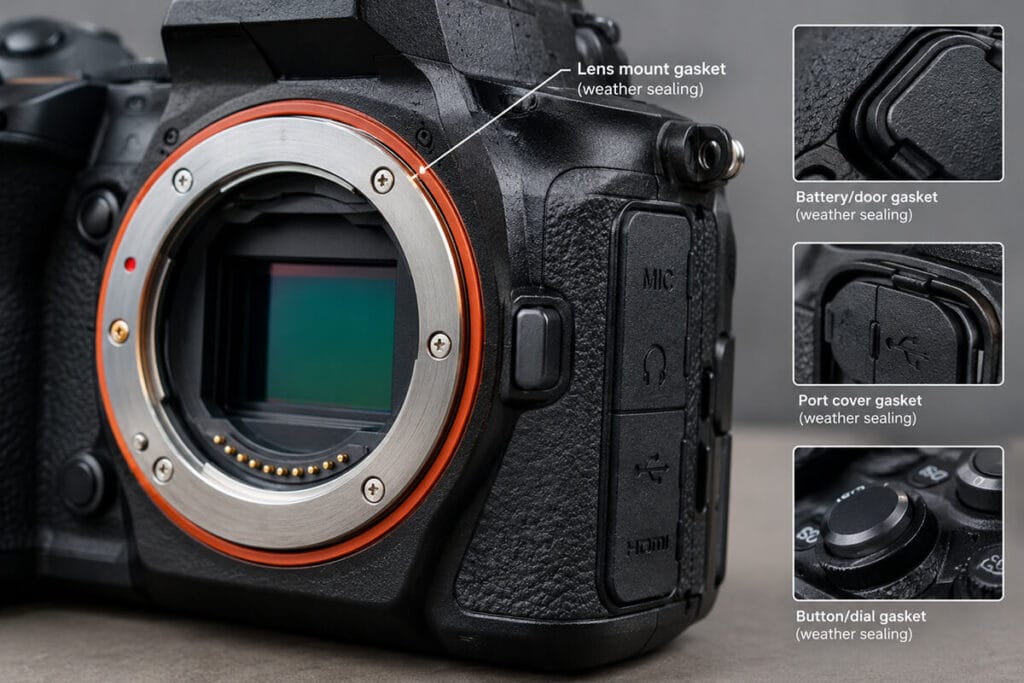
Weather sealing refers to design features that help reduce the amount of water, dust, and other environmental contaminants that can enter the camera.
Manufacturers may use things such as:
- Rubber gaskets
- Seals around buttons
- Sealed battery compartments
- Protected memory-card doors
- Sealed connection ports
- Tighter-fitting body components
- Special protection around controls and moving parts
The exact design varies from one camera to another. For example, a weather-sealed camera may have a rubber gasket around the battery compartment. When the door is closed, the gasket helps create a barrier against moisture and dust. So instead of having an open path into the camera, there is an additional layer of protection.
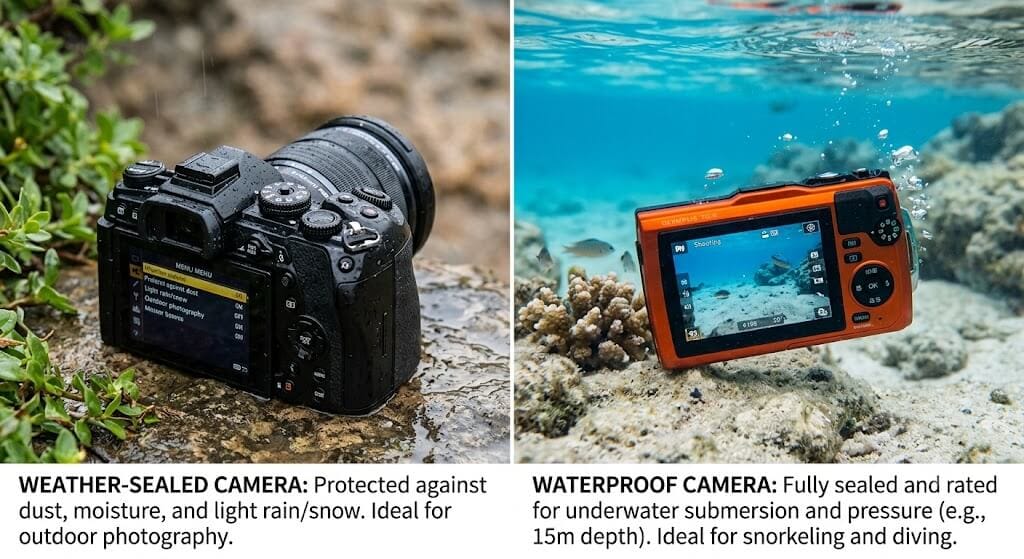
Weather-Sealed Does Not Mean Waterproof
This is probably the most important thing to understand.
Weather-sealed ≠ waterproof.
A weather-sealed camera may be designed to handle light rain or splashes.
For example:
Light rain
A weather-sealed camera may be perfectly comfortable with reasonable precautions.
Heavy rain
You should be much more careful.
Falling into a river
Weather sealing is not something you should rely on.
Underwater photography
You need appropriate underwater equipment or a dedicated waterproof camera. So, when a manufacturer says a camera is weather-sealed, don’t interpret that as–> “This camera cannot be damaged by water.“
A better interpretation is:
“This camera has additional protection against environmental exposure.”
Why Do Cameras Need Weather Sealing?
Cameras are electronic devices with many openings and moving parts.
Think about everything that can potentially enter a camera:
- Rain
- Water droplets
- Dust
- Sand
- Humidity
- Dirt
- Snow
- Fine particles
A camera doesn’t need to be submerged for moisture to cause problems. Even a small amount of water entering the wrong place can potentially damage electronic components.
Weather sealing helps reduce this risk. It is particularly useful for photographers who regularly work outdoors.
How Does Weather Sealing Work?
There isn’t one single technology called “weather sealing.” Instead, manufacturers use multiple design techniques.
1. Rubber Gaskets
Rubber seals can be placed around doors, buttons, and other areas where components meet. When the door closes, the gasket helps reduce the possibility of water and dust entering.
2. Sealed Buttons and Controls
- Camera bodies have many buttons and dials.
- These are potential entry points for moisture.
- Weather-resistant cameras may use seals around these controls to reduce exposure.
- This doesn’t make the buttons waterproof.
- It simply adds another barrier.
3. Protected Ports
Cameras often have ports for:
- USB
- HDMI
- Microphones
- Headphones
- Remote controls
These openings can be vulnerable to moisture. Weather-sealed designs may include protective covers and seals around these areas. However, you should always make sure the covers are properly closed when you’re shooting in wet conditions.
4. Sealed Battery and Memory Card Compartments
The battery and memory card compartments are another important area. Many weather-resistant cameras use seals around these doors. This helps prevent moisture from entering the camera body through the compartment.
Again, the seal only works properly when the door is correctly closed.
What About the Lens?
This is where things become particularly important.
You can have a weather-sealed camera body, but that doesn’t automatically mean every lens you attach to it is weather-sealed.
For better protection, you generally want:
Weather-sealed camera body + weather-sealed lens
For example, imagine you have a weather-sealed camera.

- You attach an older lens that has no weather-resistant design.
- There may now be an area where moisture can potentially enter.
- So camera weather protection is not necessarily just about the camera body.
- You should consider the entire camera system.
Camera Body vs. Lens Weather Sealing
Let’s make this simple.
| Camera Setup | Weather Protection |
| Weather-sealed body + weather-sealed lens | Better protection |
| Weather-sealed body + non-sealed lens | Protection may be limited |
| Non-sealed body + weather-sealed lens | Protection is still limited |
| Non-sealed body + non-sealed lens | Little additional protection |
This is why photographers who regularly work in difficult weather often pay attention to both the camera and lens.
Example: Photographing in Light Rain
Imagine you’re photographing a football match outdoors.
- It starts raining lightly.
- You have a camera and lens designed with weather resistance.
- You put the camera strap around your neck and continue taking photographs.
- The rain is light, and you occasionally wipe water from the camera.
This is the type of situation where weather sealing can be useful. But you should still take precautions.
Weather sealing doesn’t mean: “Ignore the rain.”
It means:
“The camera has additional protection if moisture gets onto or around it.”
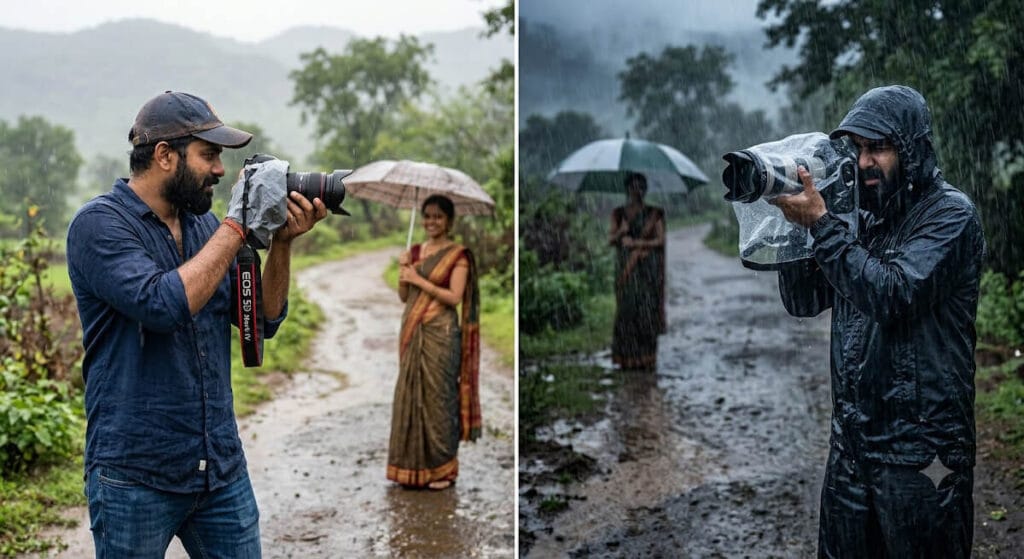
Example: Photographing During Heavy Rain
Now imagine the rain becomes much heavier. Your camera and lens are getting soaked. Water is running down the body.
At this point, you should not assume that weather sealing makes the camera completely safe.
Use additional protection such as:
- A camera rain cover
- A waterproof camera bag
- A protective sleeve
- A dry cloth
- Shelter when possible
Weather sealing should be treated as backup protection, not your only defense.
What About Dust and Sand?
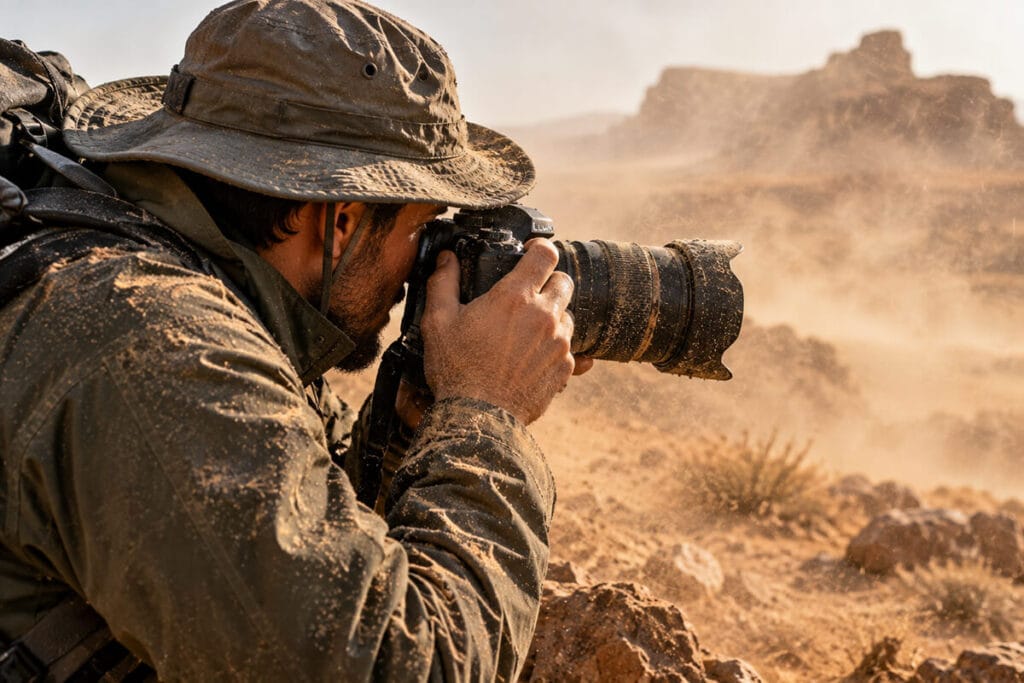
Weather sealing isn’t only about rain. It can also be useful in dusty environments. Imagine you’re photographing in a desert.
Fine sand can get into:
- Buttons
- Dials
- Lens mounts
- Battery compartments
- Memory card compartments
- Other openings
A weather-resistant camera can provide additional protection against dust entering the body.
But sand is still dangerous. Fine particles can get into moving parts, especially around lenses and zoom mechanisms. So even with a weather-sealed camera, you should avoid changing lenses unnecessarily in dusty conditions.
Weather Sealing and Humidity
Humidity is another factor photographers often overlook. Imagine you’re photographing near the coast or in a tropical environment. The air can contain a lot of moisture. A weather-resistant camera may provide some additional protection, but you still need to take care of the equipment.
One particularly important issue is condensation.
What Is Condensation?
Condensation happens when a cold camera is exposed to warm, humid air.
For example:
You spend two hours photographing outside in cold weather. Your camera becomes cold. Then you enter a warm building.
Warm, humid air can cause moisture to form on the camera and potentially inside parts of the equipment.
- It can look similar to what happens when a cold glass of water develops droplets on its outside.
- To reduce this risk, allow your camera to gradually adjust to the new temperature.
- A sealed camera doesn’t magically eliminate condensation problems.
What Does IP Rating Mean?
You may have seen something called an IP rating on electronic products.
IP stands for Ingress Protection.
An IP rating uses numbers to describe protection against the entry of solids and liquids.
For example: IP65
The first number relates to protection against solid particles such as dust.
The second number relates to protection against water.
However, many interchangeable-lens cameras are marketed using terms such as “weather-sealed” or “weather-resistant” rather than providing a simple consumer-facing IP rating.
So don’t assume that every weather-sealed camera has a specific IP rating.
Always check the manufacturer’s specifications for the exact model.
Is Every Weather-Sealed Camera Equally Protected?
No.
This is another important point.
- “Weather-sealed” is not a universal guarantee of the same level of protection across all cameras.
- Different manufacturers can use different designs.
- Even within the same brand, one camera may have more extensive environmental protection than another.
- So when comparing cameras, don’t simply look for the words: “Weather-sealed.”
- Look at the manufacturer’s specific information about the camera’s environmental resistance.
What Weather Sealing Does NOT Protect Against
Weather sealing is useful, but it has limits.
It does not mean your camera is protected against everything. Weather sealing does not automatically protect against:
- Submersion
- Strong water jets
- Swimming
- Saltwater exposure
- Long periods of heavy rain
- Major drops
- Physical impact
- Extreme temperatures beyond the camera’s operating specifications
- Improperly closed doors or ports
This is why “weather-resistant” is often a better way to think about the feature.
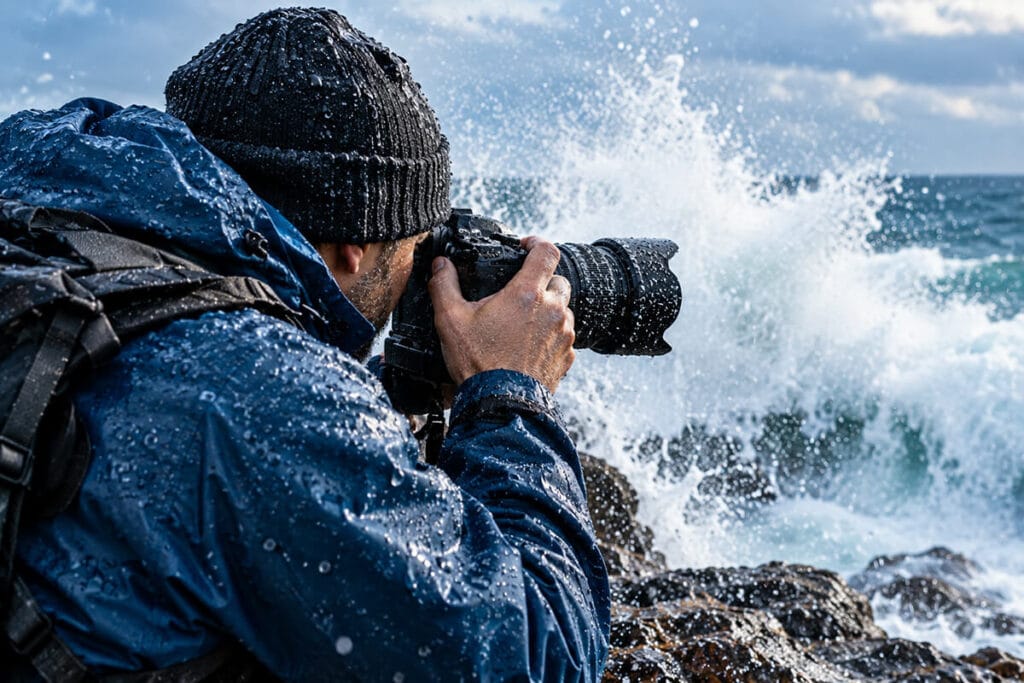
Saltwater Is Especially Dangerous
If you photograph near the ocean, take extra care.
- Saltwater is more problematic than ordinary freshwater because salt can be corrosive.
- Even if your camera has weather sealing, you shouldn’t intentionally expose it to seawater.
- If your equipment gets exposed to salt spray, clean and dry the exterior according to the manufacturer’s care instructions.
- And don’t assume that weather sealing means you can safely take the camera into the ocean.
Can You Shoot in the Rain With a Weather-Sealed Camera?
Generally, a weather-resistant camera can make outdoor photography in light rain less stressful.
But there is an important difference between:
“The camera can tolerate some moisture.”
and
“The camera is waterproof.”
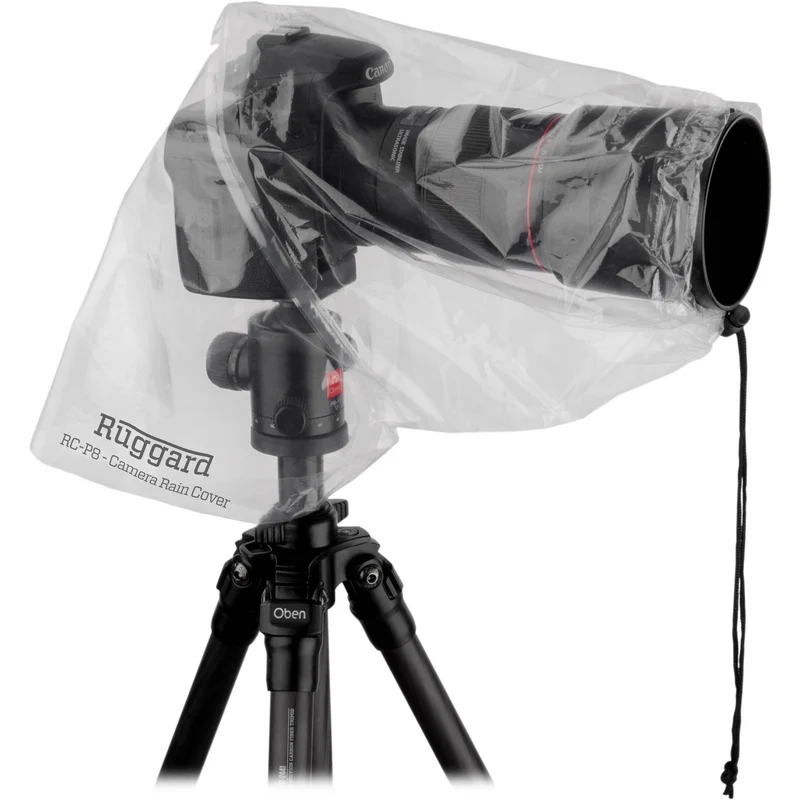
If rain is getting heavier, use additional protection.
A simple camera rain cover can provide another layer of protection.
Do You Need a Weather-Sealed Camera?
It depends on how you photograph.
A weather-sealed camera can be particularly useful if you regularly photograph:
- Landscapes
- Wildlife
- Sports
- Hiking trips
- Travel
- Outdoor events
- Street photography
- Adventure activities
- Beaches and coastal environments
If you mostly photograph indoors, weather sealing may be less important.
For example, a photographer who mainly takes portraits inside a studio may rarely encounter conditions where weather resistance matters.
Weather Sealing Is More Valuable for Some Photographers
Imagine two photographers.
Photographer A
They photograph products inside a studio. Their camera rarely encounters rain, dust, or harsh environmental conditions. Weather sealing isn’t a major part of their daily workflow.
Photographer B
They photograph wildlife outdoors. They spend hours outside in rain, snow, dust, and humid conditions. For this photographer, weather resistance can be much more useful.
So the value of weather sealing depends heavily on how and where you use your camera.
Does Weather Sealing Make a Camera More Durable?
Not necessarily in every sense.
- Weather sealing primarily concerns environmental protection.
- It does not automatically mean the camera can survive being dropped.
- A camera could have excellent weather resistance and still be damaged by a hard fall.
- Think of durability as having different categories:
- Weather resistance → protection from environmental exposure
- Impact resistance → ability to withstand physical shocks
- Temperature resistance → ability to operate in certain temperature ranges
- Dust resistance → protection from particles
These are related, but they aren’t the same thing.
How to Protect a Weather-Sealed Camera
Even if your camera is weather-sealed, a few simple habits can make a big difference.
1. Use a Rain Cover
If you expect heavy rain, use a dedicated rain cover.
2. Keep Port Covers Closed
If you aren’t using a USB, HDMI, microphone, or other port, make sure its cover is properly closed.
3. Use a Weather-Sealed Lens
For maximum system protection, pair the camera with a compatible weather-resistant lens.
4. Wipe Off Water
Don’t allow water to sit on the camera unnecessarily.
Use a clean microfiber cloth to remove moisture from the exterior.
5. Be Careful When Changing Lenses
Avoid changing lenses in heavy rain, blowing dust, or sand.
The moment you remove the lens, the camera’s interior becomes more exposed.
6. Dry the Camera Properly
If your camera gets wet, follow the manufacturer’s drying and care instructions.
Avoid using excessive heat to dry it.
What Happens If Water Gets Inside?
If water gets inside an electronic camera, it can potentially cause serious damage.
You may see problems such as:
- Camera not turning on
- Buttons behaving strangely
- Lens communication errors
- Display problems
- Memory-card errors
- Corrosion over time
If you believe significant water has entered the camera, don’t assume that it will simply dry out and become fine.
Stop using it and follow the manufacturer’s recommended procedure or seek professional service.
Weather Sealing Can Wear Over Time
Another thing beginners often don’t realize is that seals aren’t necessarily permanent.
Rubber components can age. They can become:
- Less flexible
- Cracked
- Worn
- Damaged
Frequent use can also affect doors and seals.
So a camera that was weather-resistant when new may not provide exactly the same protection years later if its seals have deteriorated.
This is one reason professional photographers should periodically inspect equipment that is frequently used in harsh environments.
Weather Sealing vs. Waterproofing
| Feature | Weather Sealing | Waterproofing |
| Light rain | Designed to provide additional protection | Generally protected |
| Splashes | Some protection | Usually stronger protection |
| Heavy rain | Additional precautions recommended | Depends on rating |
| Submersion | Not designed for it | Designed for specified depths/conditions |
| Underwater photography | Requires additional housing | Possible with suitable equipment |
| Dust | Some protection | Depends on design/rating |
The exact level of protection depends on the equipment.
Always check the manufacturer’s specifications.
A Simple Real-World Example
Imagine you’re hiking through a forest.
You have a weather-resistant camera.
Suddenly, light rain begins.
You continue photographing while keeping the camera reasonably protected.
The camera gets a few drops of water on it.
This is where weather sealing can give you extra confidence.
Now imagine the rain becomes extremely heavy.
Water is running over the camera.
Instead of thinking:
“My camera is weather-sealed, so I don’t need to worry.”
Think:
“My camera has extra protection, but I should still protect it from excessive water.”
That mindset is much safer.
What Should You Look for When Buying a Weather-Sealed Camera?
If weather resistance is important to you, look at several things.
1. Camera body construction
Check whether the manufacturer specifically describes the body as weather-resistant or weather-sealed.
2. Lens compatibility
Check whether the lenses you plan to use also have weather-resistant construction.
3. Port protection
Look at how the camera protects USB, HDMI, microphone, and other connection points.
4. Battery and card doors
These are common entry points for moisture.
5. Manufacturer documentation
Don’t rely only on marketing terms.
Read the manufacturer’s specifications and operating guidelines.
6. Your shooting environment
Consider whether you photograph in:
- Rain
- Snow
- Dust
- Sand
- Humidity
- Coastal areas
- Cold conditions
Your actual environment matters more than simply having the words “weather-sealed” on a product page.
Common Myths About Weather-Sealed Cameras
Myth 1: Weather-Sealed Means Waterproof
False.
Weather sealing provides additional environmental protection. It does not automatically make a camera safe for underwater use.
Myth 2: A Weather-Sealed Body Makes Any Lens Safe
False.
The lens can also be an important part of the camera system’s weather resistance.
Myth 3: Weather Sealing Protects Against Drops
False.
Weather sealing and impact resistance are different things.
Myth 4: Weather-Sealed Cameras Don’t Need Care
False.
You should still protect, clean, dry, and maintain your equipment.
Myth 5: All Weather-Sealed Cameras Have the Same Protection
False.
Protection varies between models and manufacturers.
Recent/current cameras where the manufacturer explicitly describes the body as weather-sealed or weather-resistant. A few good examples are:
| Camera | Type | Weather protection | Why it is interesting |
|---|---|---|---|
| OM SYSTEM OM-3 | Micro Four Thirds | IP53 | Compact body with an explicit IP rating; dust-, splash- and freeze-resistant. (OM SYSTEM) |
| OM SYSTEM OM-5 Mark II | Micro Four Thirds | IP53 | Very small 370 g body, with dust/splash/freeze protection down to −10°C. (OM SYSTEM) |
| Nikon Z6 III | Full-frame | Dust/moisture sealed | Nikon says its sealing is at the same level as the professional Z8 and rates it to −10°C. (Nikon USA) |
| OM SYSTEM OM-1 Mark II | Micro Four Thirds | IP53 | A particularly strong example for wildlife and outdoor photography; 8.5-stop stabilization plus weather sealing. (OM SYSTEM) |
| Fujifilm X-T5 | APS-C | Weather-resistant | Fujifilm says it has 56 weather-sealed points and can operate down to −10°C. (Fujifilm X) |
| Leica SL3-P | Full-frame | IP54 | A newer premium example with a sealed full-metal body and an official IP rating. (Tom’s Guide) |
| Canon EOS R5 Mark II | Full-frame | Weather-sealed | Canon’s professional/high-end body is designed for resistance to dust and water. Current reviews also describe it as fully weather-sealed. (Tom’s Guide) |
Final Thoughts
Weather sealing is one of those camera features that sounds more powerful than it actually is.
A weather-sealed camera is not an indestructible or waterproof camera.
Instead, weather sealing provides additional protection against environmental conditions such as moisture, light rain, splashes, dust, and humidity.
The exact level of protection varies between cameras, so always check the manufacturer’s specifications.
If you regularly photograph outdoors, especially in unpredictable weather, weather resistance can be a useful feature.
But think of it as an extra safety layer, not permission to ignore the weather.
The best approach is simple:
Weather sealing + weather-sealed lens + sensible precautions = better protection for outdoor photography.
And when the weather gets extreme, use additional protection such as a rain cover or waterproof housing rather than relying on the camera’s seals alone.
