

What Is a Viewfinder in a Camera?
A viewfinder is the small window you look through when taking a photo. It helps you frame and focus your shot. There are two main types of viewfinders:
- Optical Viewfinder (OVF)
- Electronic Viewfinder (EVF)
They serve the same purpose but work in very different ways. Let’s break down the difference.
What Is an Optical Viewfinder (OVF)?
An optical viewfinder lets you see the real-world scene through the camera lens using mirrors and glass. It’s a key feature of DSLR cameras.

How OVF Works:
- Light enters the camera through the lens.
- A mirror reflects the light upward into a glass prism.
- The prism sends the light into the viewfinder, directly to your eye.
You’re seeing what the lens sees, live and in real time—no screen involved.
What Is an Electronic Viewfinder (EVF)?
An electronic viewfinder shows a digital preview of the scene, just like a tiny screen inside the camera. EVFs are used in mirrorless cameras. Therefore, it helps the photographer to see the perfect exposure of the scene as camera observes.
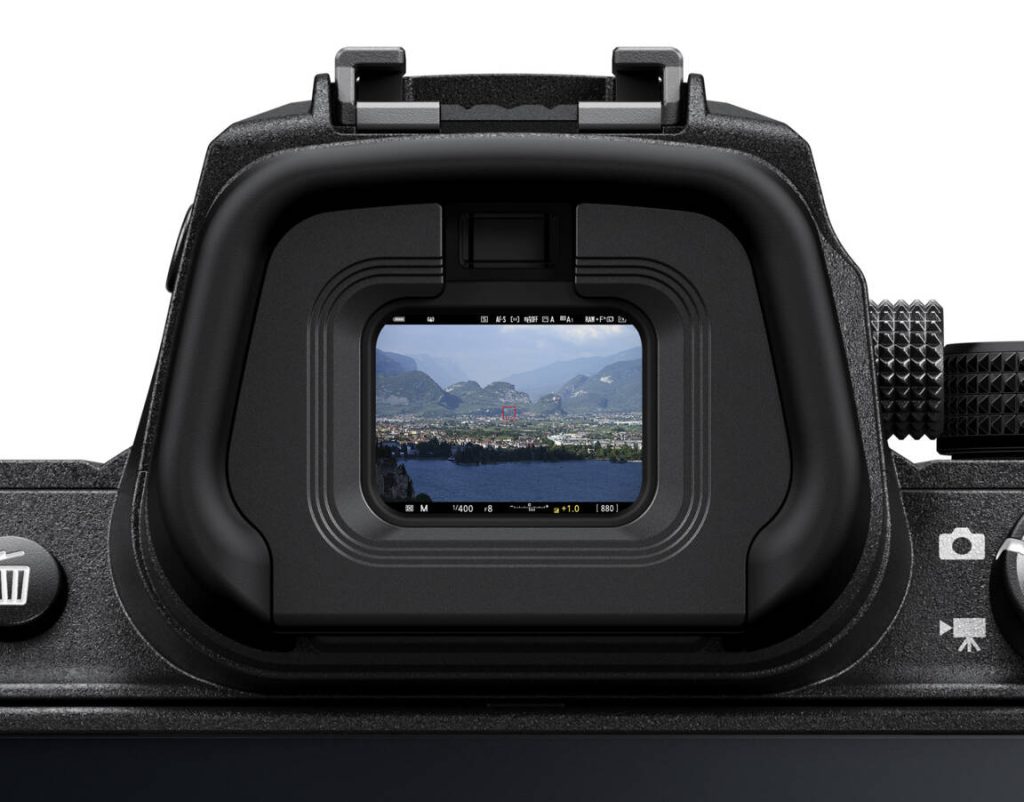
How EVF Works:
- Light goes directly to the image sensor (no mirror).
- The sensor sends a live video feed to the electronic viewfinder.
- You see a real-time digital image with added info like exposure, focus, and color effects.
EVFs let you see the final photo before you even press the shutter.
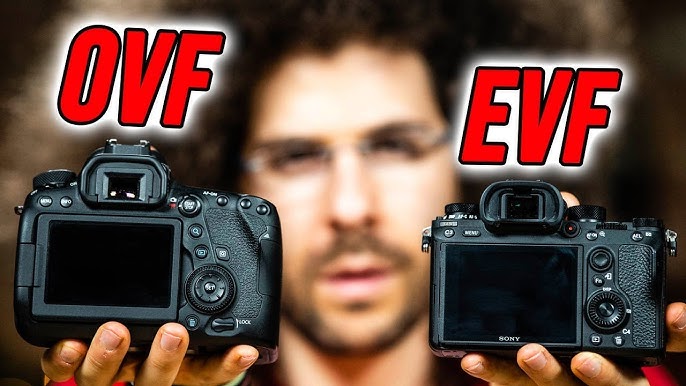
Why Mirrorless Cameras Don’t Have Real Optical Viewfinders
The name says it all—mirrorless cameras have no mirror inside. Since optical viewfinders rely on mirrors to reflect light to your eye, mirrorless cameras can’t use OVFs.
That’s why mirrorless cameras always use EVFs or the LCD screen on the back.
Canon R6 Mark II: Does It Have an Optical Viewfinder?
The Canon EOS R6 Mark II is a mirrorless camera, so:
- It does NOT have a real optical viewfinder.
- It uses a high-quality electronic viewfinder (EVF).
But here’s the cool part: Canon added a special mode to make the EVF feel more like an OVF.
What Is “OVF Simulation” on Canon R6 Mark II?
Canon includes a setting called OVF Simulation Mode (also called OVF View Assist). It’s not a real optical viewfinder, but it mimics the natural look of one using the EVF.
What OVF Simulation Does:
- Shows a more natural image (not overly bright or dark)
- Hides digital effects like color filters, picture styles, or contrast boosts
- Helps DSLR users feel more comfortable when switching to mirrorless
It’s great for photographers who miss the “real-world” feel of a DSLR.

Quick Comparison: OVF vs EVF
| Feature | Optical Viewfinder (OVF) | Electronic Viewfinder (EVF) |
| Image Type | Real, through lens | Digital live image |
| Used In | DSLR cameras | Mirrorless cameras |
| Needs Mirror | ✅ Yes | ❌ No |
| Shows Image Effects | ❌ No | ✅ Yes |
| Works When Camera Is Off | ✅ Yes | ❌ No |
| Canon R6 Mark II Compatible | ❌ Not supported | ✅ Yes |
| OVF Simulation (R6 Mark II) | ❌ Not a real OVF | ✅ Yes, digital simulation |
Final Thoughts
If you’re a photographer trying to decide between a DSLR and a mirrorless camera, understanding the viewfinder differences is important:
- DSLRs use optical viewfinders for a natural, real-time view.
- Mirrorless cameras use electronic viewfinders, which let you preview how your photo will look before you take it.
- The Canon R6 Mark II, though mirrorless, offers an OVF Simulation Mode to give you the best of both worlds.
So while the Canon R6 Mark II doesn’t have a real optical viewfinder, it comes very close—digitally.
