

Exposure compensation (EC) is a process through which we can take precedence over the automatic exposure set by our digital camera. It helps to rectify the reflected light from the subject and store the image with true colors. It prevents over and under exposure of a subject.
Exposure compensation and 18% gray
Digital camera tries to store an image based on 18% gray. The color which we look through viewfinder is altered by camera with 18% gray color. It is used since a long time ago to bring the true color of a reflected light from the subject. 18% gray is the middle point of a black and white shade. Now the question may arise in your mind that middle point and 18%! Why not 50%? The real fact is that the brightness and reflectivity are nonlinear.

For example, when our camera focusses a subject and tries to capture the true color, it takes a value of black and a value of white. Multiplying both the values and the square root of the new value brings the optimum result. It comes more or less 12.9 point. 18% gray concept came from the world of print. It is purely based on reflective light. 18% gray card reflects 18% of the light.
Mr. Ansel Adam’s zone system with 18% gray card increases the exposure half stop. So, the real difference between 12.9% and 18% gray is a gap of half stop exposure. Being a half stop increase or decrease of exposure is not a big factor for the perfect exposure. Hence, 18% gray is the middle point of black and white shades.
However, at present, the digital cameras, their technologies and EV stops are more developed. So, 18% gray is not too much valid in recent times.
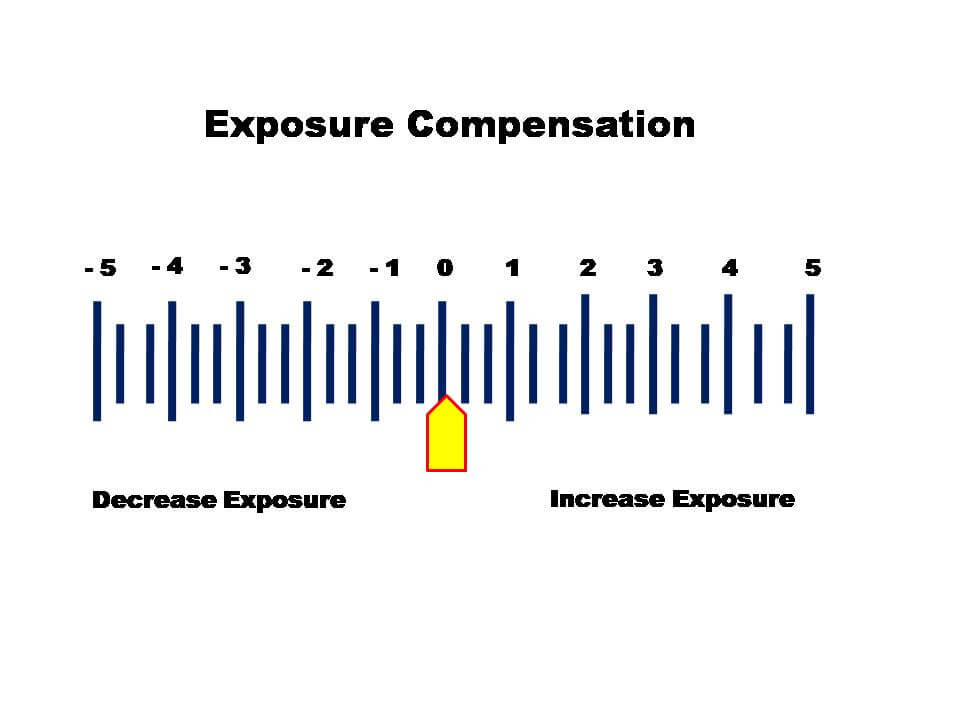
How exposure compensation works
In present time the cameras are equipped with several modes. For example, aperture priority, shutter speed priority, auto mode, manual mode, programme mode and various scene modes like day light, shade, portrait, landscape mode and so on.
EC works in all the above modes except manual mode and auto mode.
Aperture priority
Here the photographers set the aperture and shutter speed and ISO regulates by his/her digital camera itself.
Shutter priority
Here the shutter speed set by the photographers and the digital camera set the aperture to get the perfect exposure of the subject.
Programme mode
Here the shutter speed and aperture set by the photographers manually. But EC can change the exposure based on shutter speed.
Now-a-days, the EC values or exposure values (EV) stop goes up to + – 5. The positive stops indicate more exposure and negative stops for under exposure of a subject.
In aperture priority, increasing or decreasing of EV stops like +2 or -3 affect the shutter speed and it turns higher or lower stop automatically. For example, 1/250s turns to 1/1000s (+2) and so on.
In shutter speed priority, the increment or decrement of EV stops, affect the aperture value automatically to open the iris more or less but shutter speed will be remained same.
The main objective of the EC is to reach nearer to the 18% gray area and produce the perfect exposure in terms of light and color.
Exposure compensation button
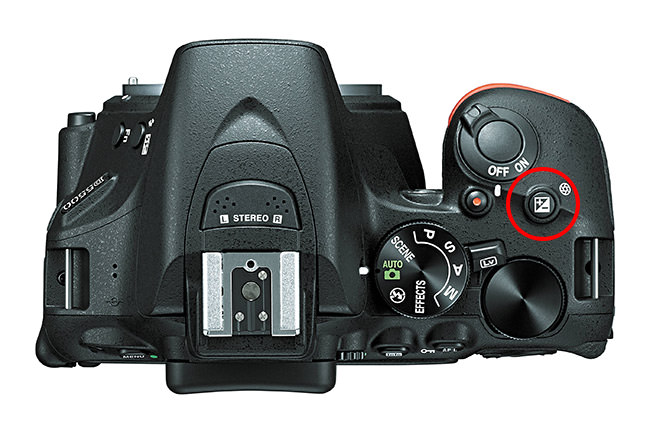
In maximum digital camera, EC button is available at the top of the D-SLR camera body near the shutter release button subscribing a + – image. Pressing the EC button, move the wheel (generally rear top portion of the digital camera) change the exposure stops or value which will be visible on the top of the LCD panel. Photographers can also notice the changes of EV stops through viewfinder.
The ISO button, shutter wheel or EV stop buttons are designed systematically to change one of them when you look through the viewfinder to notice the perfect movement or expression.
Why exposure compensation is used
Suppose in a very well-lit subject reflects maximum light and compel to store an image with over exposure. At present, the digital cameras are trying to lower the light and produce an under-expose picture.
To eliminate the above problems of EV stops helps to produce the perfect exposure or nearer to 18% gray.
Conclusion
If you set your digital camera in manual mode, then do not apply the EC. It will not work. The new zoom lens like 18-140mm or 70-300mm holds a fixed aperture in a certain distance (mm). Fixed aperture is enabled in the zoom lens increasing or decreasing. For example, 1:3.5 – 5.6 mm for 18-140mm lens states that minimum aperture at 18mm is f/3.5 and for 140mm it is f/5.6. In between 18-140mm the aperture is changing automatically as per factory setting.
For example, 18mm sets the aperture at f/3.5, 70mm sets it as f/5.0 and 140mm it is 5.6. The EC system cannot decrease the aperture value from f/5.6 when it is in 140mm. The factory setting aperture value of a moving distance zoom cannot be increased or decreased by EC system. Till date it is a drawback of exposure compensation.
You get a good result of EC with a zoom lens when the entire range of zoom may hold the aperture value as f/2.8 or f/4.0. EC is a quick way to control the exposure and produce a perfect shot. But the last word for exposure compensation is practice, practice and practice to catch the perfect exposure of a subject.







My Observation
The exposure compensation of present days digital D-SLR cameras with fixed zoom lens aperture may increase or decrease the ISO automatically to maintain the correct exposure. If the photographer disabled the auto ISO from camera settings, there will be no effect of high or low exposure on the subject.



Current Snapshot (2025–2026)
what’s actually new or changing around exposure compensation in photography — including how the technique itself is evolving in practice and tech advancements that influence it:
1. Exposure Compensation Itself — What’s Stable & What’s Evolving
Exposure compensation (EC) remains fundamentally the same core tool in photography:
• It lets you tell the camera to over- or under-expose compared with the light meter’s “perfect” exposure — usually in ± stops (EV) — so your photo isn’t too bright or too dark.
But newer trends in camera tech are subtly shifting how it’s applied and integrated:
Still Useful in Semi-Auto Modes
In aperture priority, shutter priority, or program mode the EC dial or button tells the camera’s meter how much brighter or darker to make the image by adjusting shutter speed, aperture, or ISO (depending on mode).
In Manual Mode with Auto ISO
One “recently widely-used practice” is using EC even in manual exposure mode if Auto ISO is enabled — the camera changes ISO to match the EC value, giving manual-mode users a quick way to bias exposure while keeping control of aperture and shutter. This has become more common on many mirrorless cameras.
Range & Customization Have Expanded
Many current cameras let you set exposure compensation beyond traditional ±3 EV — some allow ±5 EV or more — and in finer increments (1/3 or 1/2 stops), which helps in tough lighting (snow, night scenes, backlight).
Key takeaway: EC fundamentals remain stable, but user control and integration (especially with Auto ISO and high-range EV settings) have become more flexible.
2. How Modern Tech Influences Exposure Control
While the exposure compensation concept hasn’t been “replaced,” modern camera tech in 2025–2026 is affecting how exposure is achieved:
AI-assisted Exposure
Many new cameras include AI-based scene detection and exposure optimization — the camera analyzes the scene and can bias exposure automatically before you dial in compensation. This makes EC less about “fixing mistakes” and more about fine-tuning the camera’s intent.
Computational Photography
Computational algorithms (especially in phone cameras) are handling exposure heuristics automatically — combining exposure blending, tone mapping, and smart HDR without user intervention. This lessens the burden on manual EC but doesn’t replace it for artistic control.
Increased Dynamic Range Capture
Modern sensors with wider dynamic range (including those in current mirrorless bodies like full-frame cameras released into 2025) give photographers more headroom for exposure adjustments and allow EC to work more predictably since highlights and shadows are better preserved.

Updated information. Thank you so much.
helpful and it is the most updated info. Till date do not find such observations in other websites which is very much true.
Updated information. Thnx