

Aberration of the lens is another masked basics. Let’s unmask it. Aberration in the lens means an imperfection of lens focusing and producing an imperfect image. It occurs because light rays fail to converge in a single point. These aberrations reduce image quality by causing blur, color fringing, or distortion.
Despite the immense development in camera and lenses along with combined group of lenses element, the aberration still persists. But the deviation is decreasing day by day due to constant development of lens shape, lens coating and combing group of elements of lenses in the R&D section of big houses like Nikon, Canon, Sony and so on. Finally, the digital darkroom or post-production software helps to eliminate the blurriness of an image.
I hope you do not forget about the autofocus mechanism, various lenses, focal length, and razor-sharp focus articles.
Types of aberration in lens
Lens aberrations are broadly classified into two categories: 1) Monochromatic Aberrations and 2) Chromatic Aberrations.
1. Monochromatic Aberrations (Seidel Aberrations)
These occur even when light of a single color (wavelength) is used. They are as follows:
A. Spherical Aberration
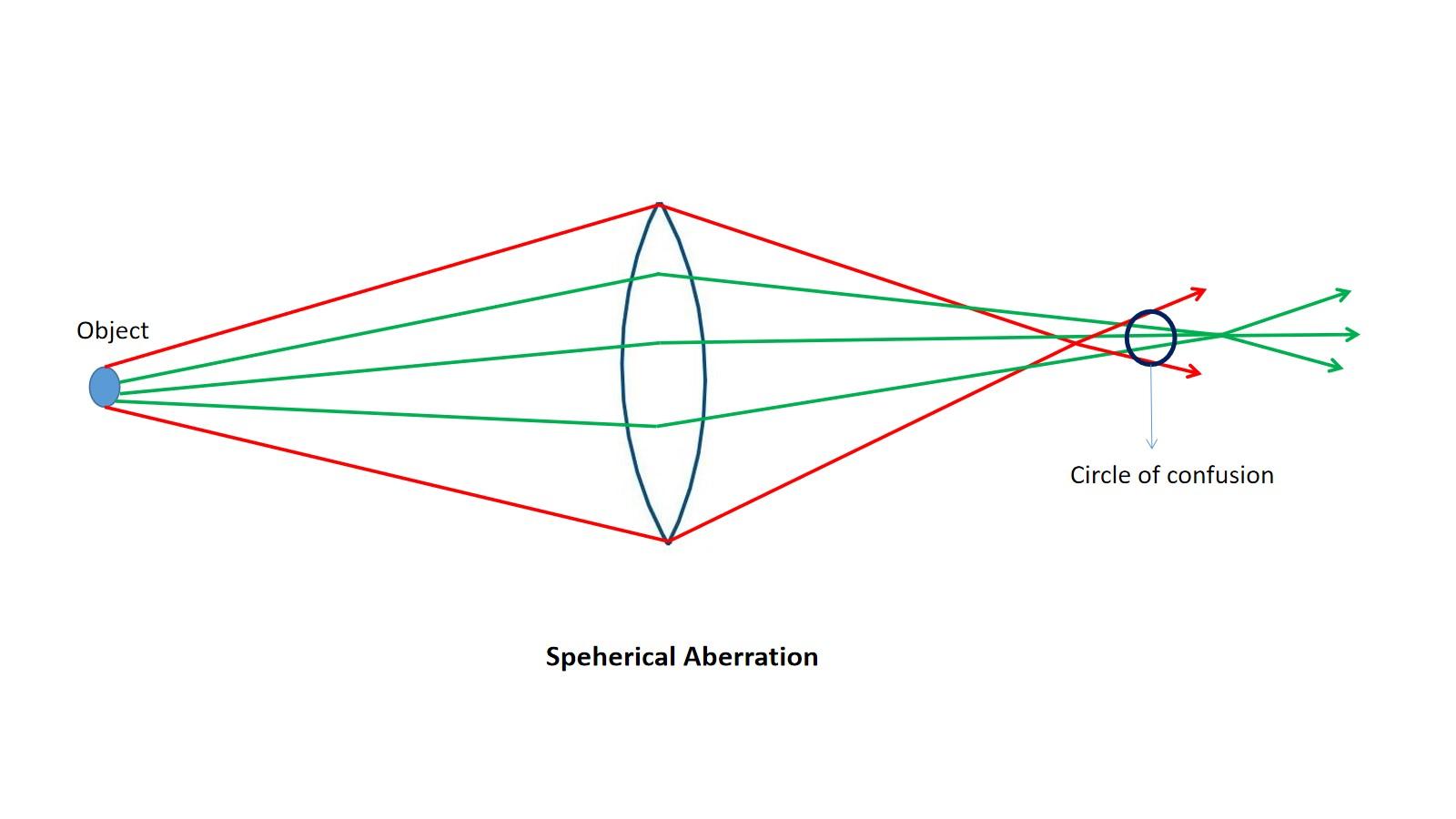
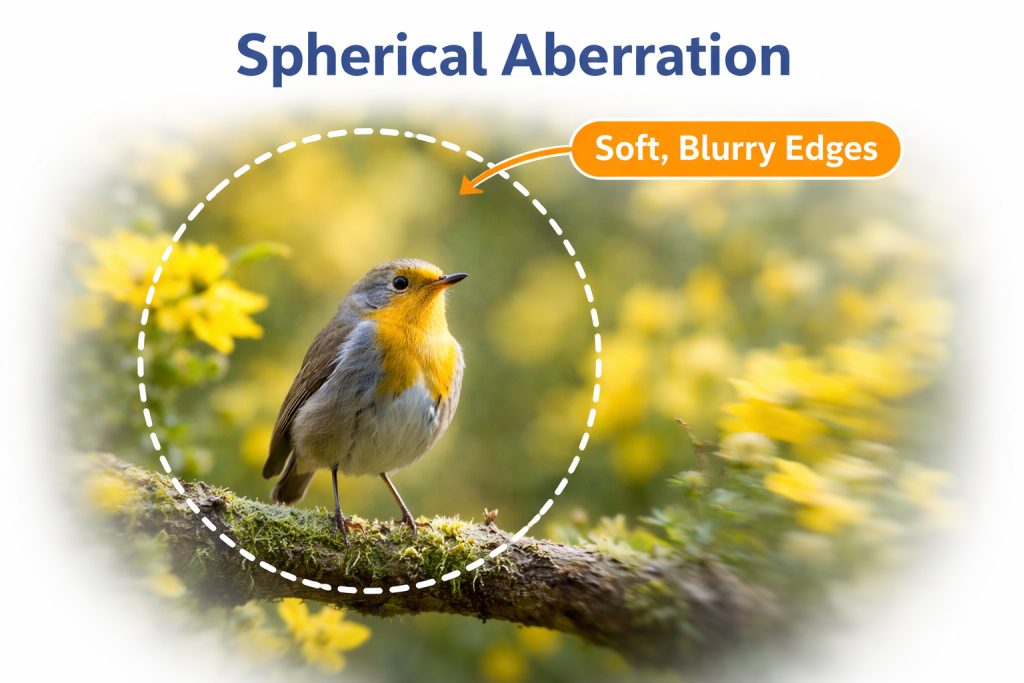
The elements in the lens cause light to converge at different places on the sensor. The lens will refract light that enters near the edge more than light that enters near the center.
Effect: image resolution, clarity, focus and blurriness of image
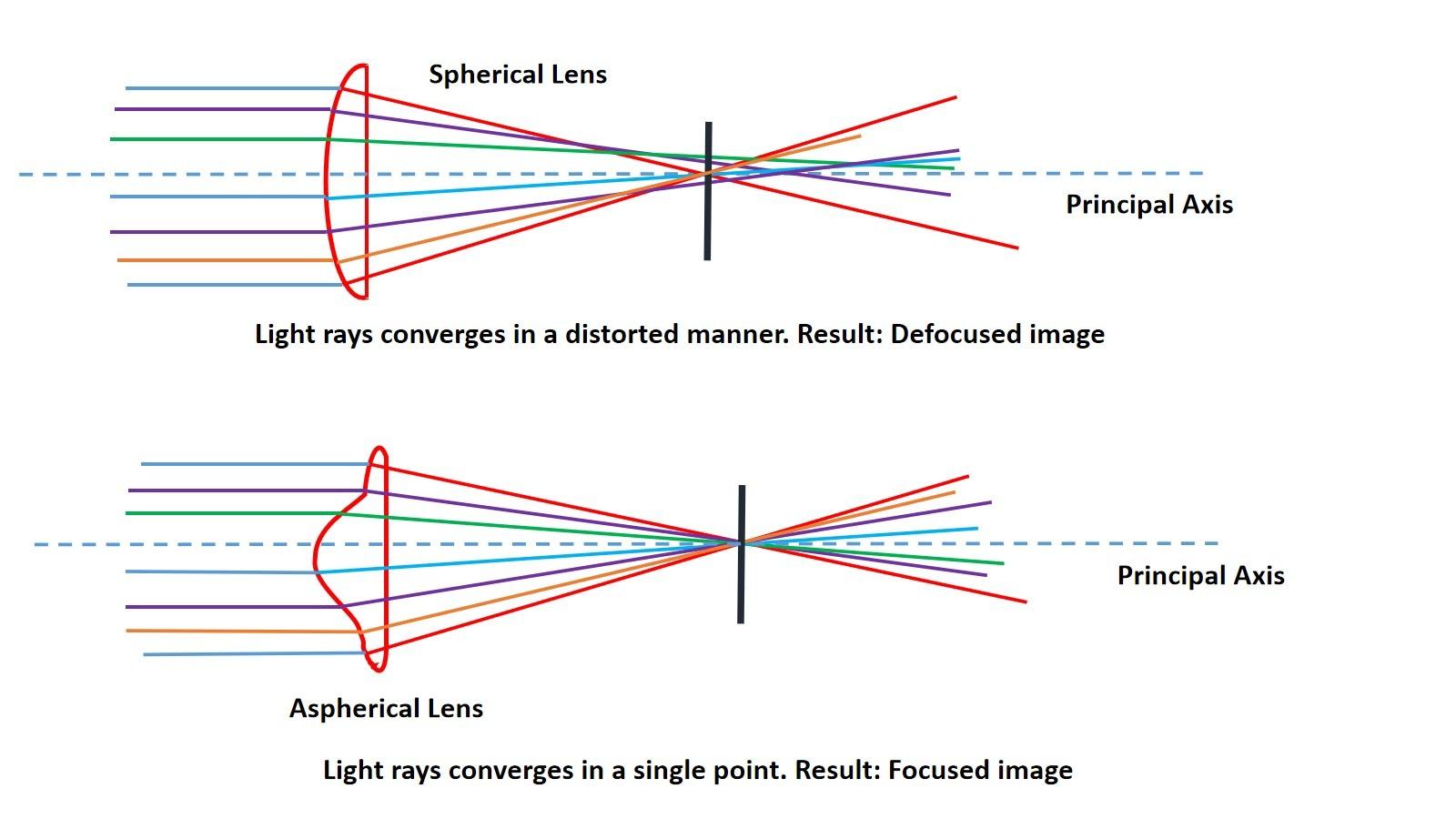
Solution: Aspherical lens is used. If it is absent in your camera lens then use smaller aperture.
B. Comatic or Coma Aberration
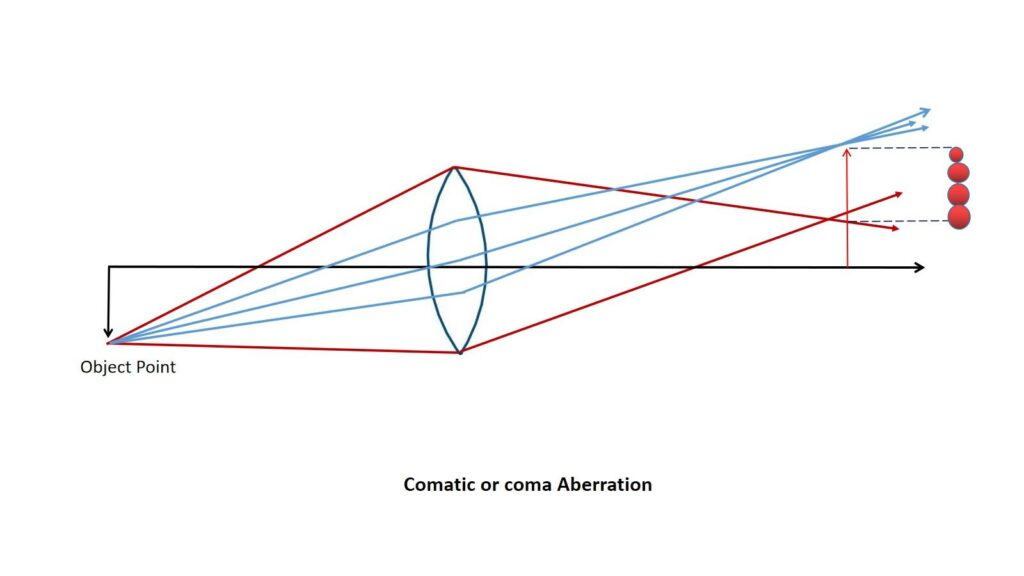
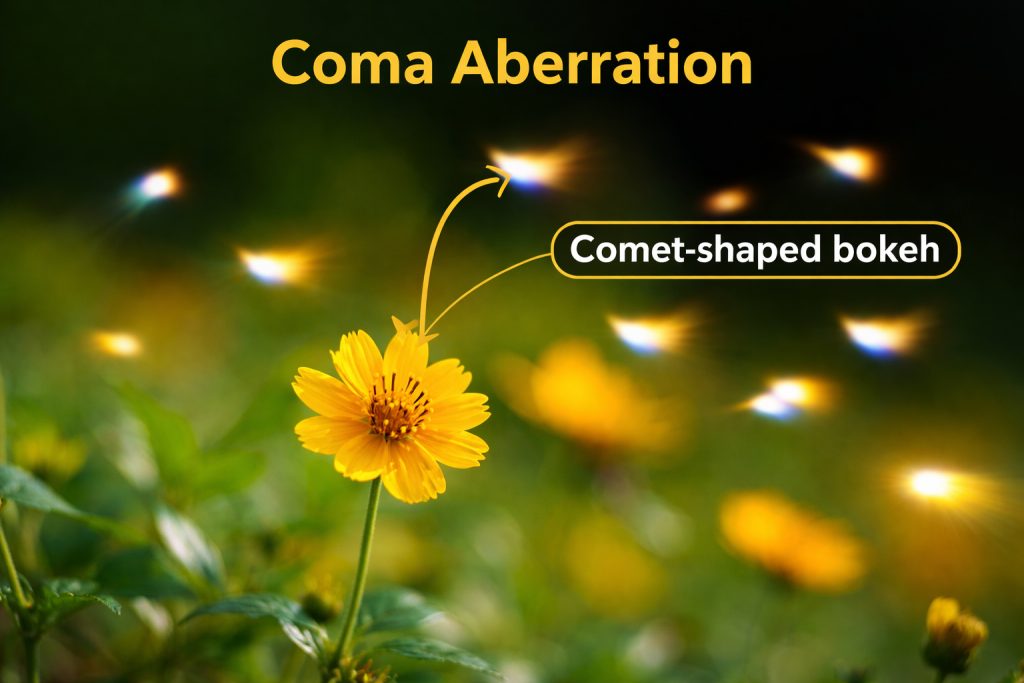
This aberration occurs when a single point of light enters a lens at an angle at its edge, rather than straight on at the center of the lens. Unable to focus angular light rays at the same point, point light sources flare out from the point.
Effect: Creating a comet-shaped highlight, rather than a circular one.
Solution: Use small aperture.
C. Tangential and Sagittal Astigmatism
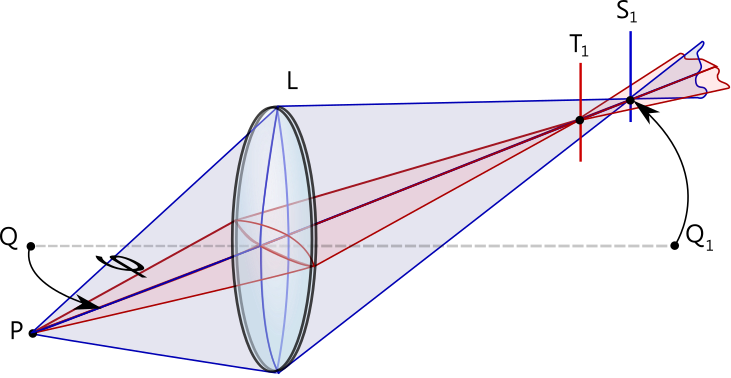
Two planes at right angles to one another passing through the optical axis are the meridian plane and the sagittal plane, the meridian plane being the one containing the off-axis object point. Rays not in the meridian plane, called skew rays, are focused farther away from the lens than those lying in the plane. In either case, the rays do not meet in a point focus but as lines perpendicular to each other.
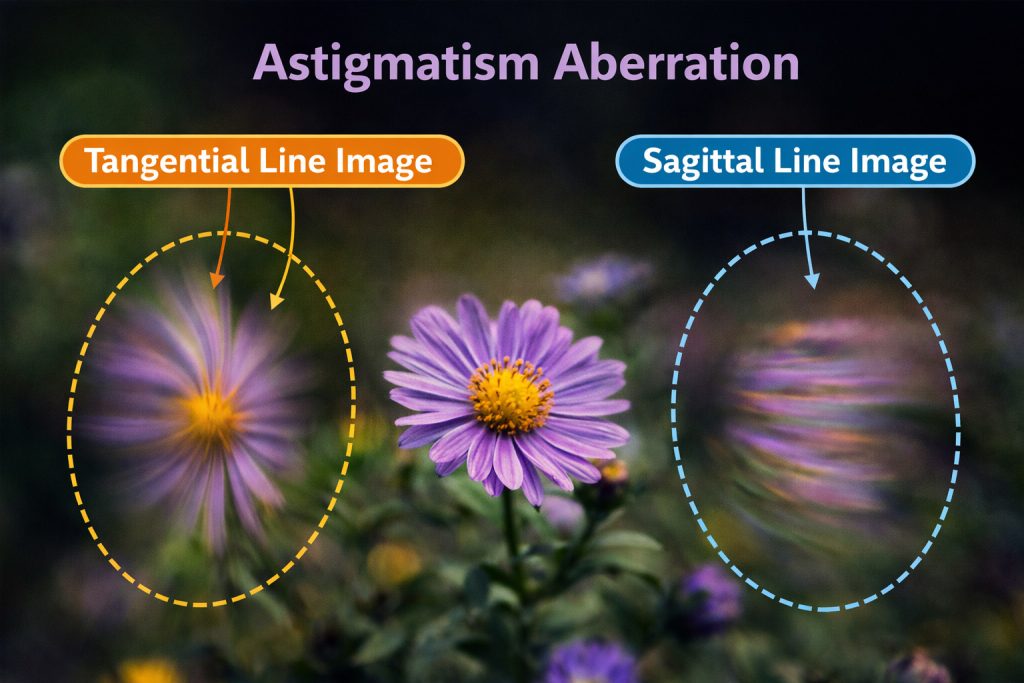
Effect: Intermediate between these two positions the images are elliptical in shape.
Solution: Use small aperture.
D. Curvature of Field
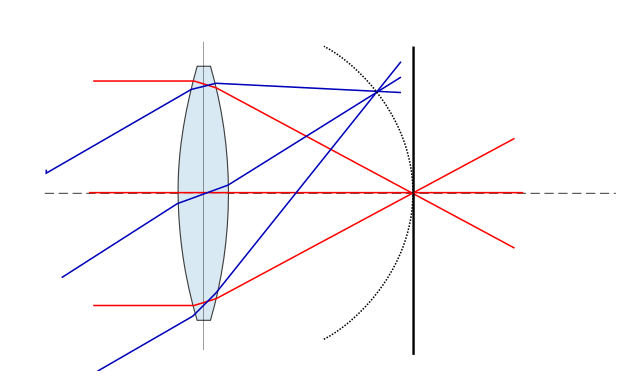
The image of a plane object perpendicular to the optical axis will lie on a parabolic surface called the Petzval surface (after József Petzval, a Hungarian mathematician). Flat image fields are desirable in photography in order to match the film plane and projection when the enlarging paper or projection screen lie on a flat surface. Distortion refers to deformation of an image.
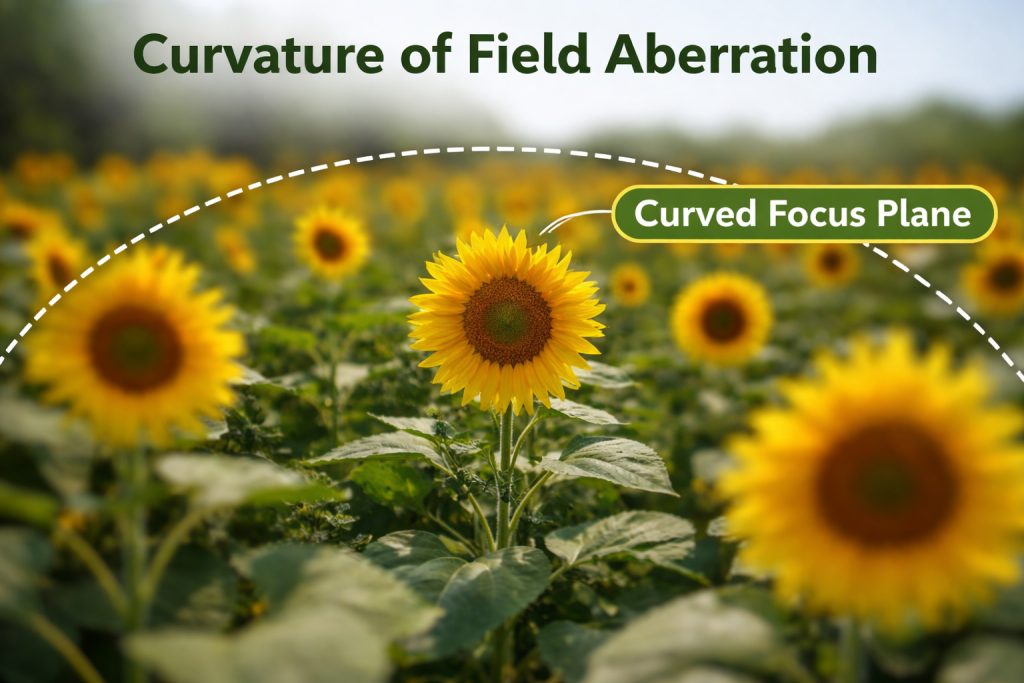
Effects: There are two kinds of distortion, either of which may be present in a lens: barrel distortion, in which magnification decreases with distance from the axis, and pincushion distortion, in which magnification increases with distance from the axis.
Solution: Rectify the problem in post production and perfect focal length based lenses. If you use zoom lens, experience is required.
E. Distortion
Distortion is a lens aberration where the shape of the image is altered, even though the image may still be in focus. In other words, straight lines in the object appear curved or stretched in the image. In an ideal lens, magnification is the same across the entire image.
In distortion, magnification varies with distance from the optical axis. Therefore, edges → stretched or compressed but center of the image → normal.
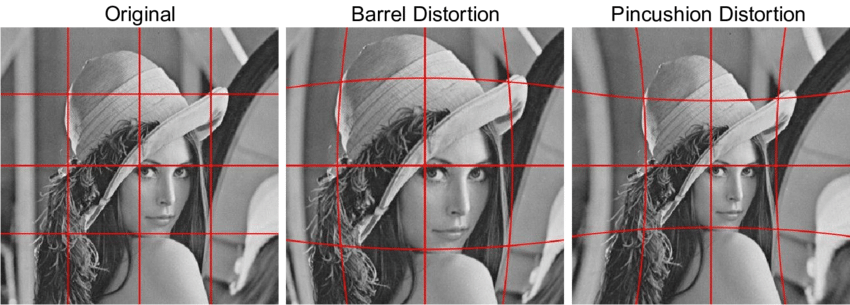
Types of Distortion
1. Barrel Distortion
- Image bulges outward like a barrel
- Straight lines curve outward
- Common in wide-angle lenses
2. Pincushion Distortion
- Image is squeezed inward like a pin cushion
- Straight lines curve inward
- Common in telephoto lenses
Example: Edges of a photo look pulled toward the center.Example: Group photos taken with wide-angle lenses where people at the edges look stretched.
3. Mustache (Complex) Distortion
- Combination of barrel + pincushion
- Lines curve outward near center and inward near edges (or vice versa)
Example: Seen in some advanced zoom lenses.
Cause of Distortion
Distortion occurs because:
- Lens elements don’t maintain uniform magnification
- Light rays at different distances from the axis are bent differently
2. Chromatic Aberration
It is the failure of a lens to focus all colours in the same plane. It is also known as color fringing. Chromatic aberration happens when the colors are incorrectly refracted (angle, curl, bent etc.) by the lens and fall in different focal points individually. The distinct colors fails to combine themselves to produce a single source of light beam.
Note
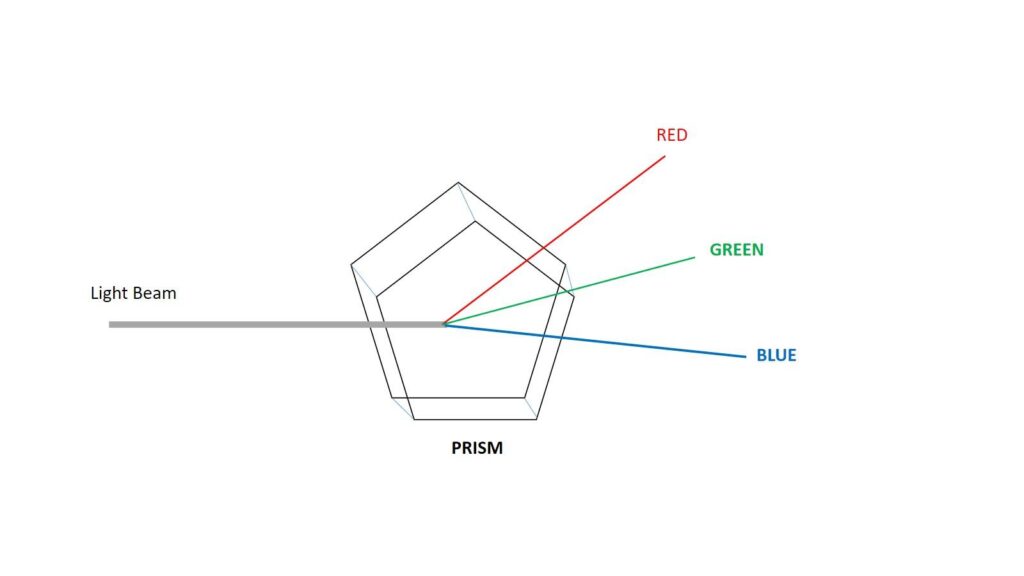

Two types of chromatic aberration may occur in the image.
i) Longitudinal chromatic aberration: It is a type of chromatic aberration in which different colors (wavelengths) of light are focused at different distances along the optical axis of a lens. This results in a blurred image with color fringes.The refractive (bent) light index is least at the red end of the spectrum and the focal length of the lens in the air will be greater for red and green than for blue and violet. When white light passes through a lens:
- Violet/blue light bends more → focuses closer to the lens
- Red light bends less → focuses farther away
So, instead of one focal point, you get multiple focal points along the axis.
ii) Lateral chromatic aberration: It is a type of chromatic aberration in which different colors (wavelengths) of light are focused at different positions on the image plane, causing color fringing at the edges of objects. It happens because:
- Different colors are spread laterally (sideways) instead of along the axis
- The magnification of the lens depends on wavelength
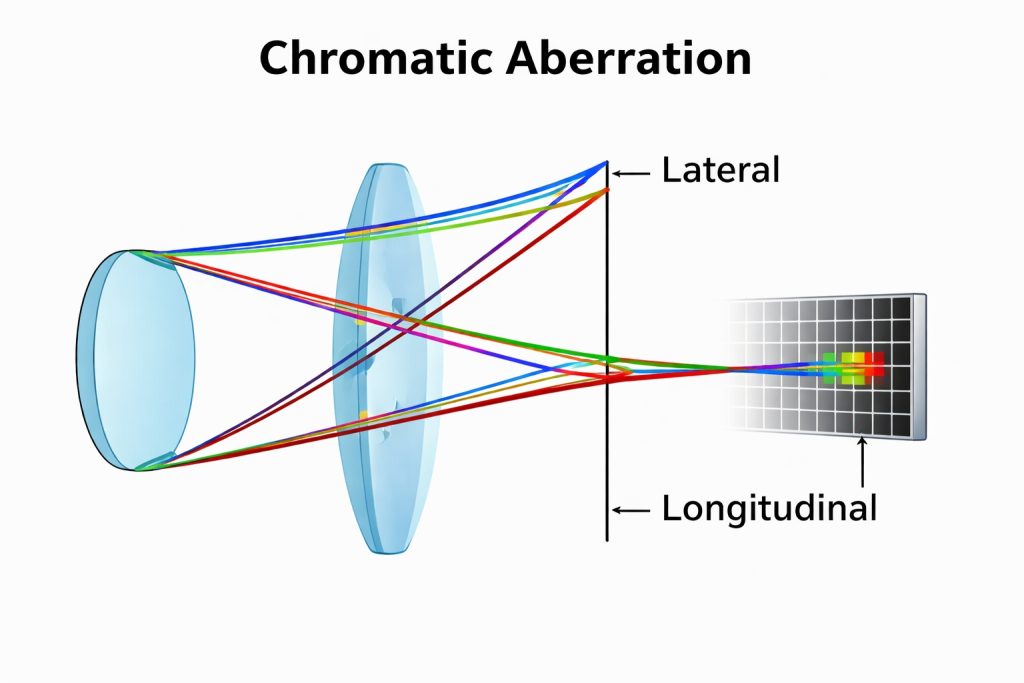

Solution: Go for wide focal length, refrain to put the image at the edge of the frame, use small aperture or solve the problem in post production.
Laminated Diffractive Optical Elements
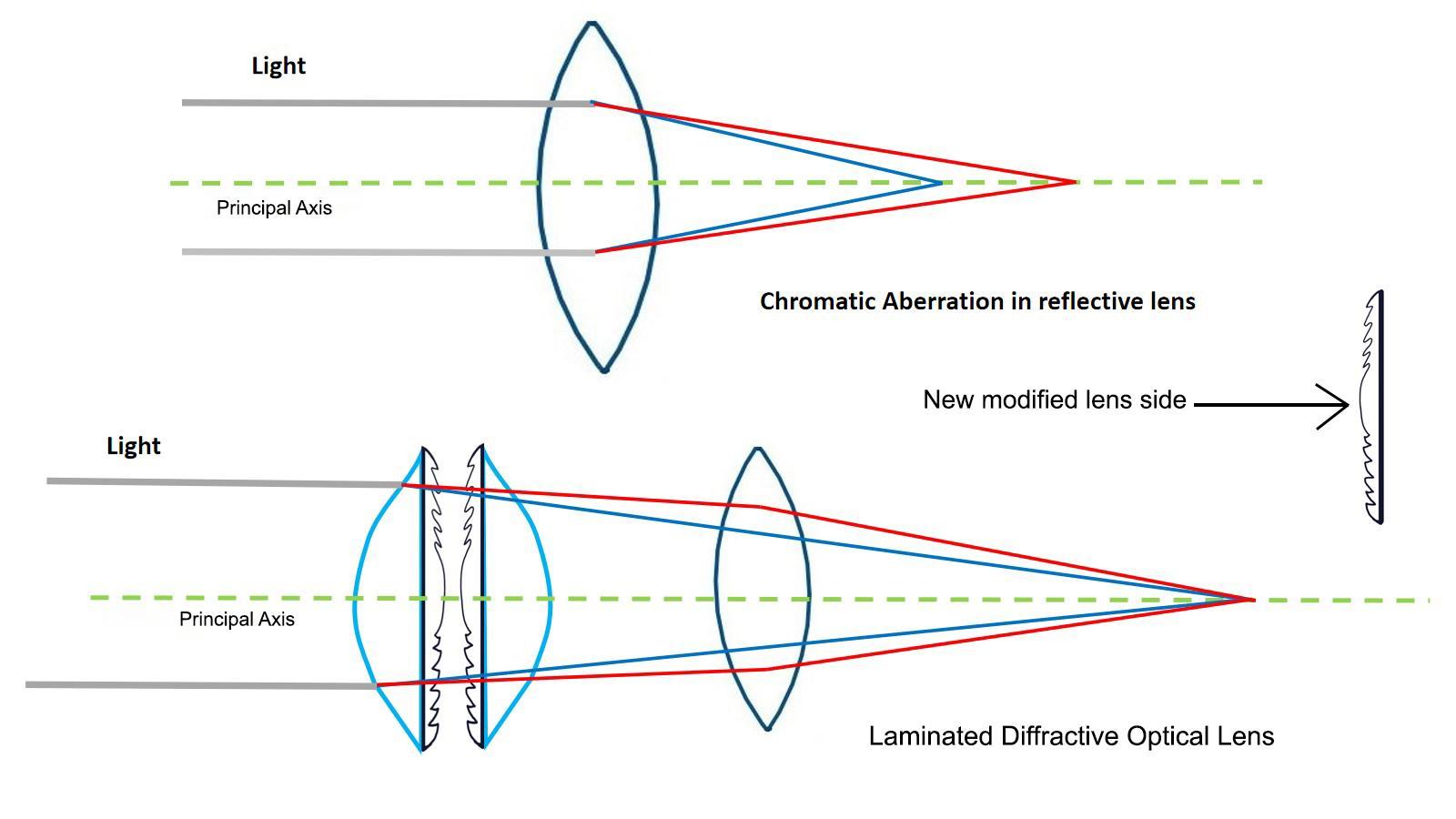
Cause of Chromatic Aberration
Unmask another basic of photography for reducing chromatic aberration of lens. Chromatic aberration is caused by refraction on one side and diffraction in the other side. It produces stray lights in the ultimate image, captured by the image sensor.
Two laminated diffract optical elements are aligned with a precision of a small micrometers. It is combined with another refractive convex lens and eliminate chromatic aberration. At present these elements are vastly used in sport photography lenses (telephoto).
Extra-low Dispersion (ED) Lens
When you go through the manual of lens you can find a bunch of optical elements are available in it. The development based on ED lens are LD (Low Dispersion), SLD (Special Low Dispersion), ELD (Extra-Low Dispersion), and ULD (Ultra Low Dispersion) are reducing the color fringing or reducing chromatic aberration. These types of lenses are responsible for making the focused image in a slightly different plane.
Therefore, a loss of contrast, resolution, and perceptual loss of image sharpness. Current generation ED-type optical components are made with rare-earth elements including zirconium dioxide, calcium fluoride, titanium dioxide, and other earthly exotica that are easier to form and polish.
The chemical makeup of ED glass compresses the distance between each color’s plane of focus, resulting in greater color saturation, contrast and image detail. ED-type lenses also perform better in terms of light transmission, which makes for quicker focusing times and brighter images in your viewfinder.
Nikon uses the coating in ED lens for reducing green and magenta colors which is commonly found in 300mm and longer telephoto lenses. Canon uses calcium fluorite-based coating for decreasing the chromatic aberration.
Silent Wave Motor (SWM)
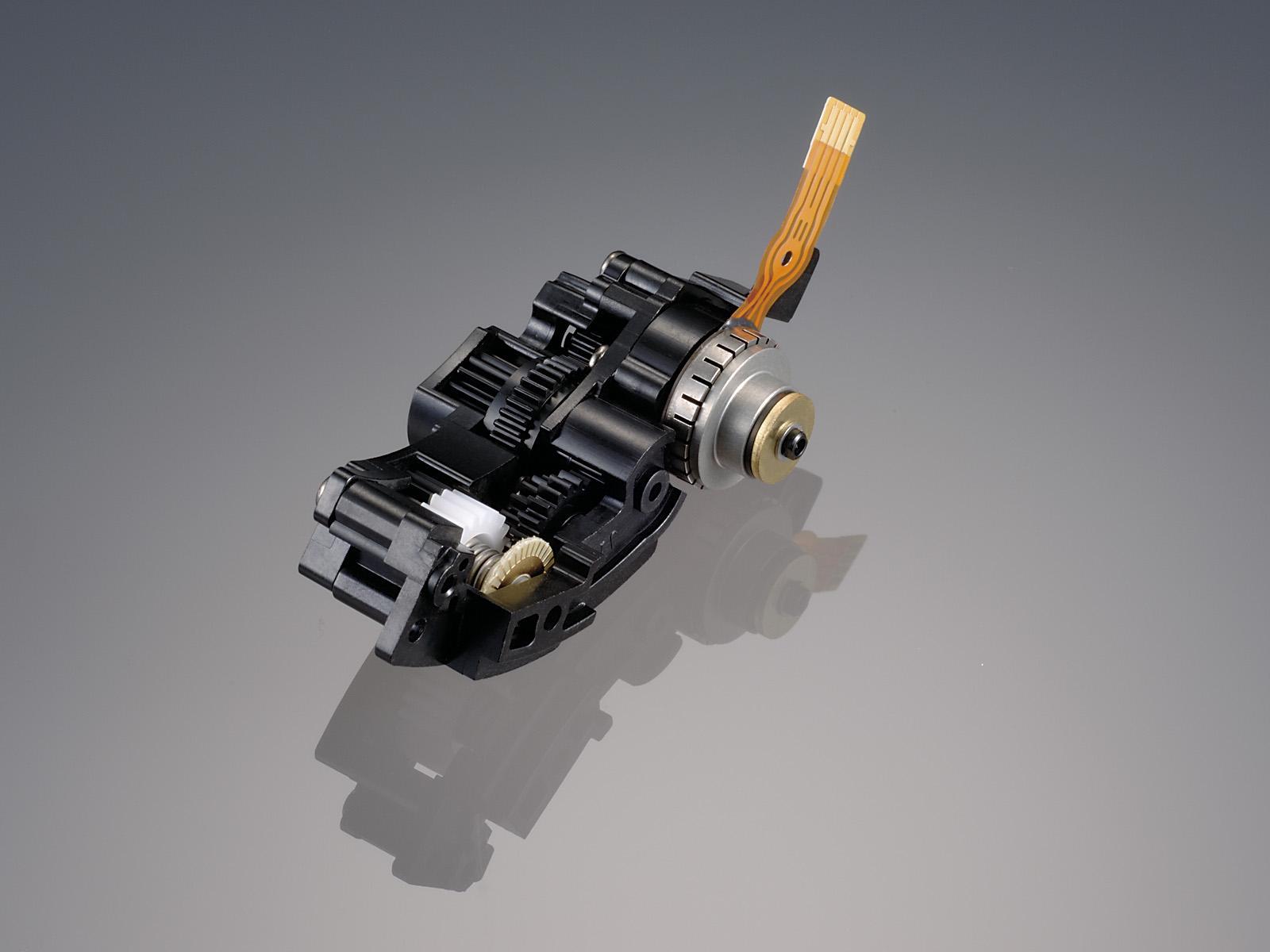
It helps to focus an object much faster with very low noise. The pro camera body and al l lenses with AF-S tagged have SWM technology. An SWM essentially converts traveling waves or vibrations into rotational energy to rotate and hence focus the optics on the lens. This results in smooth, quiet, and faster auto-focusing. This is useful when shooting sports, wildlife, stage photography, or fast-moving subjects.
There are two types of SWM.
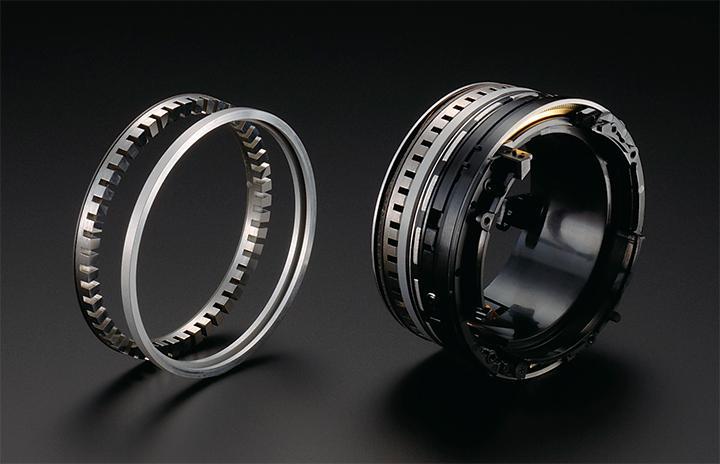
- Ring SWM: A metal ring on the motor vibrates at a higher frequency. These waves transfer an energy and help to focus very fast and accurately. It is expensive.
- Micromotor SWM: It is just like a conventional electric motor with teeth to focus the object. The entry level camera have micromotor SWM and takes longer time to focus than Ring SWM.
AF-S 17-35mm f/2.8D IF-ED
Nikon AF-S DX Zoom-Nikkor 55-200mm f/4-5.6G
Nikon 18-200mm f/3.5-5.6 G AF-S VR DX Nikkor
Each major lens manufacturer has employed a version of SWM in their lenses, and they all call it something different. For example:
Canon – Ultra Sonic Motor (USM) .
Sigma – Hyper Sonic Motor (HSM)
Tamron – Ultra Silent Drive (USD)
Minolta, Sony- Super Sonic Motor (SSM)
Olympus – Supersonic Wave Drive (SWD)
Pentax – Supersonic Dynamic Motor (SDM)
Panasonic – Extra Silent Motor (XSM)
Tokina – Silent Drive Module (SDM)
Anatomy of lens groups available in a lens are as follows:
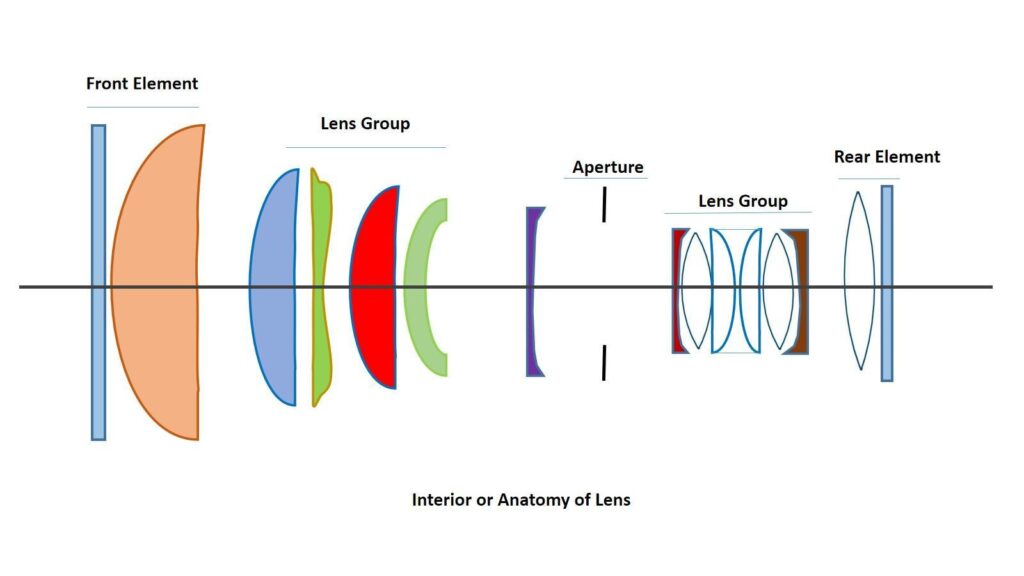
Can lens aberrations be removed completely?
No (in practice)
All real lenses have some aberrations due to physics (refraction, glass properties, shape limitations).
But modern optics can minimize them greatly
- High-quality multi-element lenses
- Special designs (aspherical, achromatic, apochromatic)
- In-camera and software corrections
So today, aberrations are often barely noticeable, but not truly zero.
Technical ways to reduce aberrations
During shooting
- Use smaller aperture (higher f-number)
→ reduces spherical aberration, coma, etc. - Avoid extreme edges of the frame
→ many aberrations are strongest there - Use high-quality lenses
- Avoid extreme zoom ranges
After shooting (software correction)
- Tools like Adobe Lightroom or Adobe Photoshop
- Fix:
- Distortion
- Chromatic aberration
- Vignetting
Distortion and chromatic aberration are very easy to correct digitally
Can composition help avoid aberrations?
Yes — very effectively! (This is the “smart” approach)
How composition helps:
1. Keep subject near the center
- Reduces:
- Coma
- Astigmatism
- Lateral chromatic aberration
2. Avoid straight lines near edges
- Reduces visible distortion
- Important for:
- Architecture photography
3. Avoid high contrast edges at frame edges
- Reduces chromatic aberration
- Example:
- Tree branches against bright sky
4. Use depth creatively
- Slight blur can hide aberrations
- Especially useful in portraits
5. Use aberrations creatively (advanced!)
Sometimes photographers use aberrations intentionally:
- Distortion → dramatic perspective
- Chromatic aberration → artistic effect
- Coma → dreamy night shots
Final Conclusion
- You cannot fully remove lens aberrations
- You can greatly reduce them with:
- Good lenses
- Proper settings
- Software correction
- Most importantly:
- Smart composition can avoid or hide them very effectively
I think you can easily identify now the concave, convex, and other formats of lenses and their working principles. Want to purchase a lens? Read carefully the review of the lens, group elements, and feedback from the amateur and expert photographers. If you have any confusion about the lens, group elements, explore clickstory.in and open the masked basics of photography (part I to V) to learn again for your benefit.
Do you want to read the previous articles on masked basics of photography? Click the following links and it will be the responsibility of clickstory.in to place you in the right article(s).
Masked Basics Of Photography – Part I
Masked Basics Of Photography – Part II

So many hidden secret. thank you so much
Awesome
an useful tutorial
Awesome article
Nice.