

Stagecraft plays a vital role in classical Indian dance and drama, often overlooked in favor of movements, expressions, and storytelling. Yet, behind every powerful performance lies a well-planned stage. The ancient Natya Shastra, authored by Bharata Muni over 2,000 years ago, doesn’t only guide dance and acting—it also provides detailed instructions on stage design to ensure the most impactful experience for both performers and audience.
This art of designing and organizing the space for performance is called stagecraft — or the “architecture of performance.”
The Perfect Stage — Layout and Design
Bharata describes the ideal stage as a square platform, divided into smaller sections or zones. This careful division helps in several ways:

- Visibility: Each part of the stage is arranged so that the audience can see the performers clearly, no matter where they sit.
- Movement: The sections guide the dancers on where to perform specific parts of the story, making the flow natural and easy to follow.
- Acoustics: The layout helps sounds from the performers’ voices or music instruments to carry well throughout the space, ensuring everyone hears clearly.
For example, in traditional Indian theaters like the ancient Sanskrit theater, the stage was often open and square-shaped, allowing the performers to move freely while the audience surrounded the space on multiple sides.
Backdrops and Props — Symbols, Not Clutter
Unlike modern theater with elaborate sets, the Natya Shastra suggests keeping props and backdrops minimal but meaningful. Instead of filling the stage with many objects, a few symbolic items are used to create the setting or mood. This minimalism helps keep the audience’s focus on the actors and the story.
For instance:
- A simple throne or cushion might represent a royal palace.
- A tree branch or a leafy plant can stand for a forest.
- A small pot or lamp might hint at a domestic home.
These props don’t just fill space; they help the audience imagine the world where the story unfolds.
Lighting — Highlighting Emotion and Focus
Bharata also understood the importance of lighting in a performance. Although ancient theaters didn’t have modern electric lights, they used natural light during the day or oil lamps and candles at night strategically placed to create moods.
For example:
- A soft, flickering lamp might create a romantic or mysterious atmosphere.
- Bright light could focus on a hero entering the stage, making their presence commanding.
- Shadows and darkness help highlight tension or danger in a scene.
Today, many classical dance performances still use diyas (oil lamps) or carefully arranged spotlights to honor this tradition and enhance the emotional impact.

Audience Arrangement — Connecting Performer and Viewer
Another important element Bharata discusses is how the audience is seated and arranged in relation to the stage.
- The proximity of the audience to the performers creates intimacy and connection.
- Seating arrangements allow the audience to see and hear clearly without distractions.
- Sometimes, the audience surrounds the stage on three sides (called thrust stage), making the experience more immersive.
For example, in some traditional Indian temples and open-air theaters, the stage is raised slightly, and audiences sit in a semi-circle, bringing them closer to the action.
The Fusion of Space, Performer, and Audience
What the Natya Shastra beautifully emphasizes is the seamless fusion of the stage, the performer, and the audience. The space is not just a place to act but an essential partner in the performance.
When the stage is designed thoughtfully — with clear layout, meaningful props, appropriate lighting, and engaged audience — it creates a magical environment where the story truly comes alive.
Modern Reflections
Many contemporary Indian dance and theater performances still follow these ancient principles. Whether it’s a Bharatanatyam recital in a theater with soft spotlights or a Kathakali drama performed outdoors with traditional oil lamps, the essence remains the same.
By respecting the architectural wisdom of the Natya Shastra, artists create a complete aesthetic experience — one that touches the senses, the mind, and the heart.
Music, Rhythm, and Traditional Theater Spaces — The Soul of Natya Shastra’s Stagecraft
In the vast world of Indian classical performing arts, the Natya Shastra stands as a timeless guide, teaching not just the art of dance and drama but also the science behind creating the perfect stage experience. While the stage layout, lighting, and audience arrangement provide the architectural foundation, it’s music and rhythm that breathe life into this space, transforming a static platform into a living, breathing world of emotions and stories.
Together, the physical stage and the sonic environment create an immersive experience where performers, space, and audience merge seamlessly. Let’s explore this fascinating relationship in detail and then take a closer look at some of India’s traditional theater spaces that beautifully embody these principles.
The Heartbeat of Performance: Music and Rhythm
Rhythm (Tala) — The Timekeeper of the Dance
In Indian classical arts, rhythm is called tala. It is a cycle of beats that repeats and structures the entire performance. Each tala has a unique pattern of strong and weak beats, guiding the dancer’s steps and gestures.
- Example: The Adi Tala (8 beats) is one of the most common rhythms in Bharatanatyam and Kuchipudi. The dancer’s footwork, hand gestures, and expressions are carefully timed to this cycle, creating a harmony of sound and movement.
- In Kathak, the dancer’s spins and quick footwork closely follow complex tala patterns, making the rhythm almost visible in their movements.
The tala acts like a clock, ensuring every movement happens at the right moment, keeping the story flowing smoothly.
Melody (Raga) — The Emotional Palette
The melody in Indian classical music is called raga. Each raga is a set of musical notes arranged to evoke specific feelings or moods — called rasas in Natya Shastra. For example:
- Raga Bhairavi often creates a mood of devotion or seriousness.
- Raga Kalyani is bright and joyful, perfect for scenes of love or celebration.
The singer or instrumentalist plays the raga to set the emotional tone of the scene. Dancers respond by matching their expressions and movements to these moods, making the music and dance feel like one seamless expression.
Key Musical Instruments and Their Roles in Classical Dance
Music is the soul of Indian classical dance. Each instrument adds a unique color and rhythm, shaping the performance’s mood and pace.
1. Mridangam
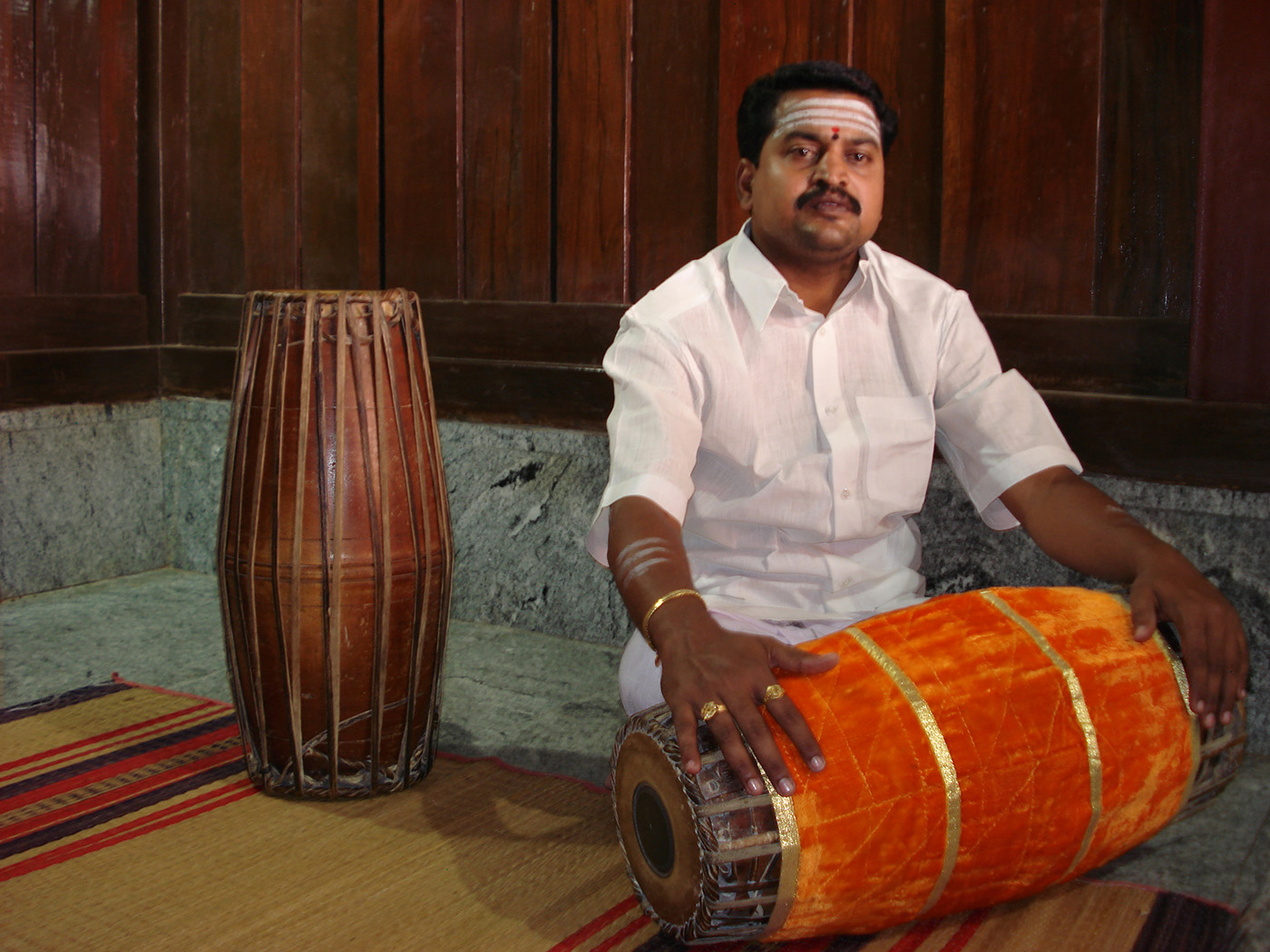
- A double-headed drum, central to South Indian classical music and dance forms like Bharatanatyam and Kuchipudi.
- It provides the main rhythmic cycle (tala), giving dancers a precise beat to follow.
- The mridangam’s complex patterns allow for improvisation and interaction with the dancer’s footwork.
2. Veena

- A plucked string instrument associated with Carnatic music.
- Its melodic tunes often accompany Bharatanatyam and Odissi performances.
- The veena’s resonant sound sets the mood (rasa) and supports the singer.
3. Sitar
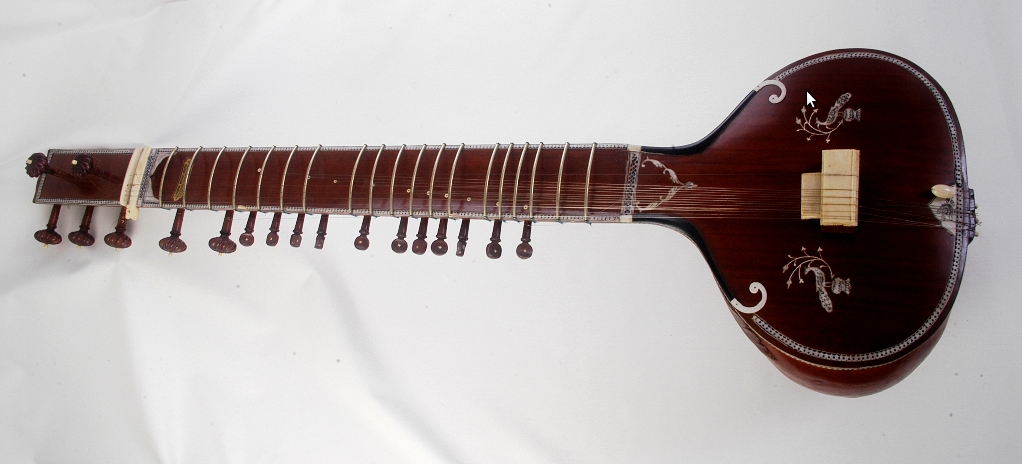
- A North Indian classical instrument used in Kathak performances.
- Its expressive melodies help narrate the story’s emotions.
- The sitar’s strings can mimic the vocal lines, enhancing the dancer’s abhinaya (expression).
4. Chenda

- A cylindrical drum used in Kerala’s Kathakali.
- Its sharp, loud beats emphasize dramatic moments and accompany vigorous movements.
- The rhythm played on the chenda guides the timing of gestures and expressions.
5. Flute

- The bansuri (bamboo flute) is common in many classical forms.
- It produces soft, soothing melodies often associated with romantic or devotional scenes.
- The flute’s sound beautifully complements the subtle hand gestures (mudras) and facial expressions in dances like Odissi and Manipuri.
How These Instruments Work Together
In a typical performance, the musicians and dancers work as a team:
- The vocalist or instrumentalist sings or plays the raga (melodic framework), setting the mood.
- The percussionists maintain the tala (rhythmic cycle), synchronizing with the dancer’s footwork.
- The dancer listens closely to the music, timing their movements, expressions, and gestures to match the beat and mood.
Integration with Stagecraft
The Natya Shastra understands that the stage’s physical design should enhance how music and rhythm are experienced:

- The square stage and its sections help dancers move in patterns that align with rhythmic cycles, making the choreography visible and meaningful.
- The acoustics of the space are designed so musical instruments and vocals carry clearly, reaching the farthest corners without distortion. This allows subtle expressions in both music and dance to be appreciated by every audience member.
- Lighting — even with oil lamps or natural sunlight — is used to highlight key moments in the music and dance, such as a crescendo or a sudden change in rhythm.
This collaboration creates a dynamic conversation between sound and movement, making the performance come alive.
Next time you watch a classical dance or drama, take a moment to notice the stage setup. You might be surprised how every element, no matter how simple, plays a vital role in telling the story!
Traditional Theater Spaces in India — Living Stages of the Natya Shastra
Over centuries, Indian theater spaces have evolved to reflect the Natya Shastra’s principles, creating environments where stagecraft, music, rhythm, and audience connect harmoniously.
1. Ancient Sanskrit Theater Spaces
In ancient India, drama was often performed in large, open-air theaters called Natya Mandapas attached to royal courts or temples. These theaters were typically:
- Square or rectangular with a raised stage.
- Surrounded by stone pillars and open colonnades, enhancing natural acoustics.
- Seating arranged in tiers or semicircles, bringing the audience close to the action.
Famous ancient theaters, like the one at Takshashila (modern Pakistan) and Kushinagar (India), allowed thousands to enjoy drama and music in grand but intimate settings.
2. Temple Courtyards — Sacred Stages
Many temples built in South India and Odisha have special courtyards designed as performance spaces. For example:
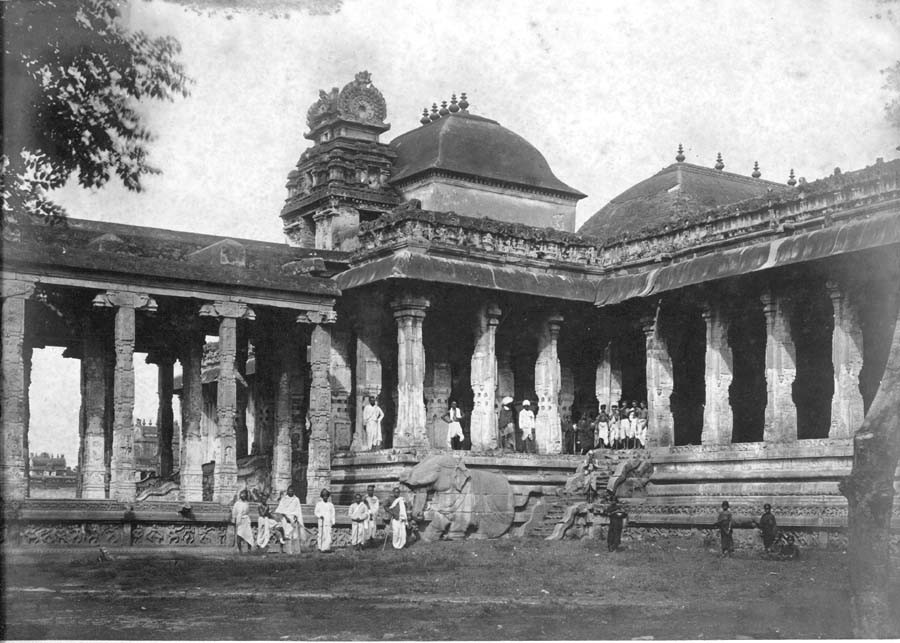
- The Chidambaram Temple’s Natya Mandapa is a dedicated hall where dance and drama, especially Bharatanatyam, are performed during religious festivals.
- The Jagannath Temple in Puri holds annual dance dramas depicting Lord Jagannath’s stories, combining religious devotion with artistic expression.
These temple spaces are designed to harmonize the spiritual and the artistic — the architecture itself feels alive, supporting music and dance with natural light, sound, and sacred ambiance.
3. Kerala’s Kathakali Amphitheaters
Kathakali, with its larger-than-life characters and dramatic stories, thrives in specially designed open-air amphitheaters or temple courtyards. Key features include:
- A raised wooden stage surrounded by the audience on three sides (called a thrust stage), ensuring visibility of intricate hand mudras and facial expressions.
- Oil lamps arranged around the stage provide moody, flickering lighting that shifts with the story’s emotional beats.
- Musicians sit near the stage, playing chenda, maddalam, and cymbals, creating a powerful rhythmic foundation.
The intimacy of the space, combined with the deep sounds of percussion and expressive gestures, makes Kathakali performances unforgettable.
4. Folk Theaters and Regional Spaces
India’s rich folk traditions like Ramlila (Uttar Pradesh), Yakshagana (Karnataka), and Bhavai (Gujarat) also showcase vibrant stagecraft tuned to local music and rhythm traditions.
- These performances often use temporary stages in village squares or temple grounds, designed for maximum community participation.
- Music and rhythm, often using folk instruments like dholak, ektara, or nadaswaram, energize the storytelling and engage audiences closely.
The Perfect Performance Triangle
The Natya Shastra teaches that for a performance to truly succeed, three elements must work together beautifully:
- The Performer — who uses dance, drama, mudras, and abhinaya to tell a story.
- The Stage and Space — carefully designed for movement, sound, and audience connection.
- Music and Rhythm — the invisible thread that ties emotion, timing, and expression together.
When these come together — like the hand, the heart, and the soul of Indian classical arts — they create a magical experience where time seems to pause, and the audience is transported into another world.
Famous Traditional Performance Spaces in India
India’s rich cultural heritage is reflected not only in its classical dance forms but also in the unique venues where these arts come alive. Here are some renowned traditional performance spaces that have stood the test of time and continue to celebrate the spirit of Indian classical dance and drama.

1. Kalakshetra Foundation, Chennai
- Founded by Rukmini Devi Arundale in 1936, Kalakshetra is one of the most prestigious institutions for Bharatanatyam and other classical arts.
- The main auditorium is designed to optimize acoustics and visibility, allowing audiences to fully appreciate the intricate footwork, mudras, and abhinaya.
- It blends modern amenities with traditional stagecraft principles inspired by Natya Shastra.
2. Rang Mandapam, Odisha
- Located in Bhubaneswar, this venue is dedicated to Odissi dance and music.
- The stage and seating arrangements follow traditional layouts to create an immersive atmosphere.
- Festivals like the Mahari Festival are held here, showcasing classical performances in a setting inspired by temple architecture.
3. Kerala Kalamandalam, Thrissur
- The premier institute for Kathakali and Mohiniyattam.
- Its open-air amphitheater respects the traditional design with a wooden stage and oil lamps, allowing the audience to experience the authentic Kathakali performance as it was centuries ago.
4. Jaipur’s Jawahar Kala Kendra
- Designed by architect Charles Correa, this modern complex includes a theater inspired by ancient Indian architectural concepts.
- It hosts classical and folk performances from Rajasthan and across India.
5. Sri Krishna Temple Courtyard, Udupi
- Famous for Yakshagana dance-drama performances, this temple courtyard is a vibrant cultural hub.
- The open courtyard space supports lively interaction between performers and audience, enriched by traditional music and vibrant costumes.
Acknowledgment:
I would like to acknowledge the works of Bharata Muni and scholars such as Manomohan Ghosh, Kapila Vatsyayan, G.K. Bhat, Leela Venkataraman and Ananda Lal whose translations and interpretations of the Natyasashtra have greatly contributed to the understanding of classical Indian theatre and dance. Their research provided the foundational knowledge for this article.
You might like to read:


