
Predicting moments in Indian classical dance is one of the most powerful skills a photographer can develop. Each dance form carries its own rhythm, grammar, and visual language, creating unique “peak moments” that appear for only a fraction of a second. For a dance photographer and archivist like PC (:D), the ability to anticipate these fleeting instants transforms ordinary documentation into expressive visual storytelling.
When you learn to read the dancer’s body cues, musical patterns, and choreographic structures, you start seeing the moment before it arrives. This anticipation is the key to capturing images that feel alive, emotional, and perfectly timed.
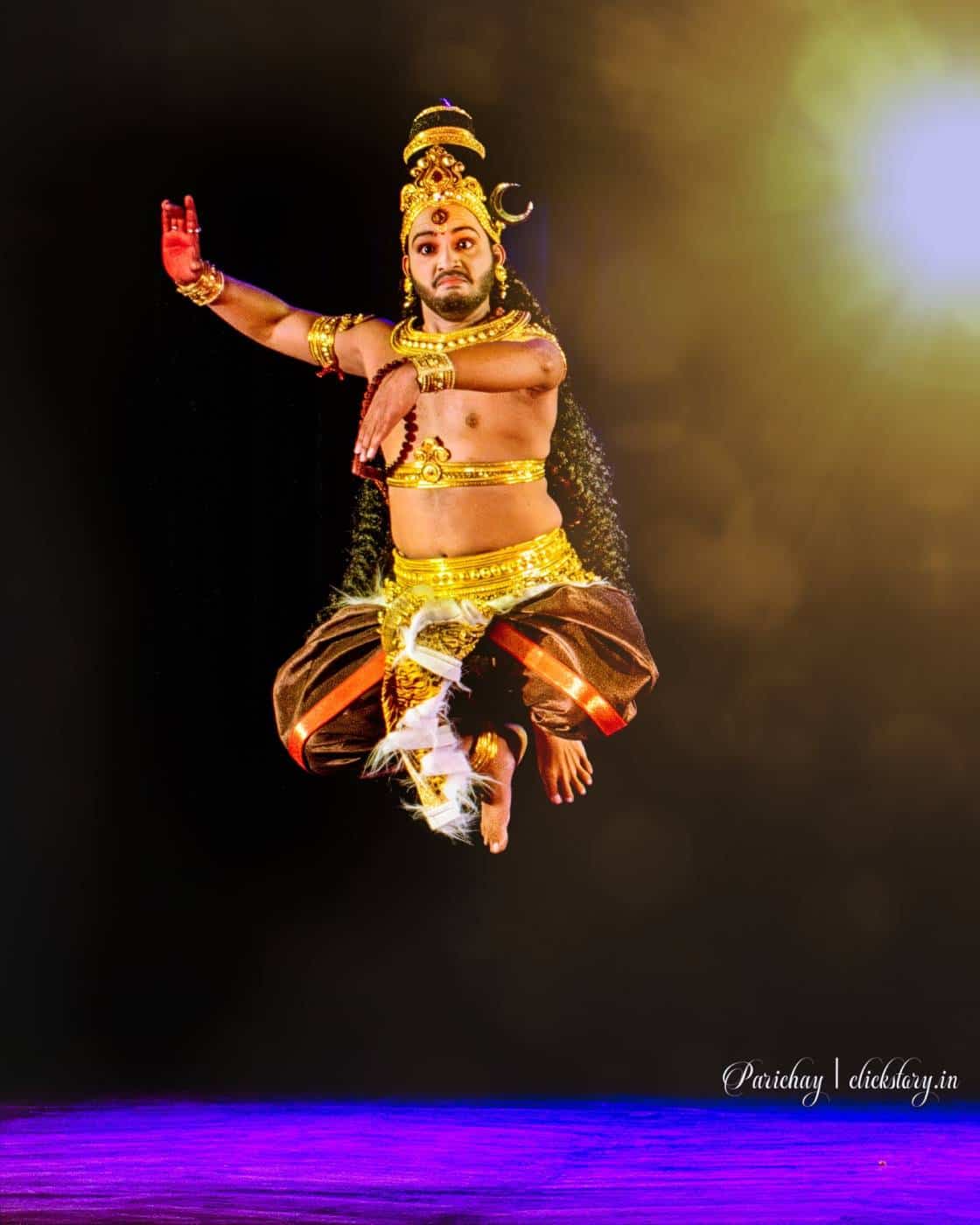
Below is a detailed guide by dance form and by movement type to help you pre-visualize and capture the perfect moment.
1. BHARATANATYAM
Key Predictable Moments
- Araimandi freeze – symmetrical, stable pose with mudra
- Natta adavus – legs strike the floor → apex of extension
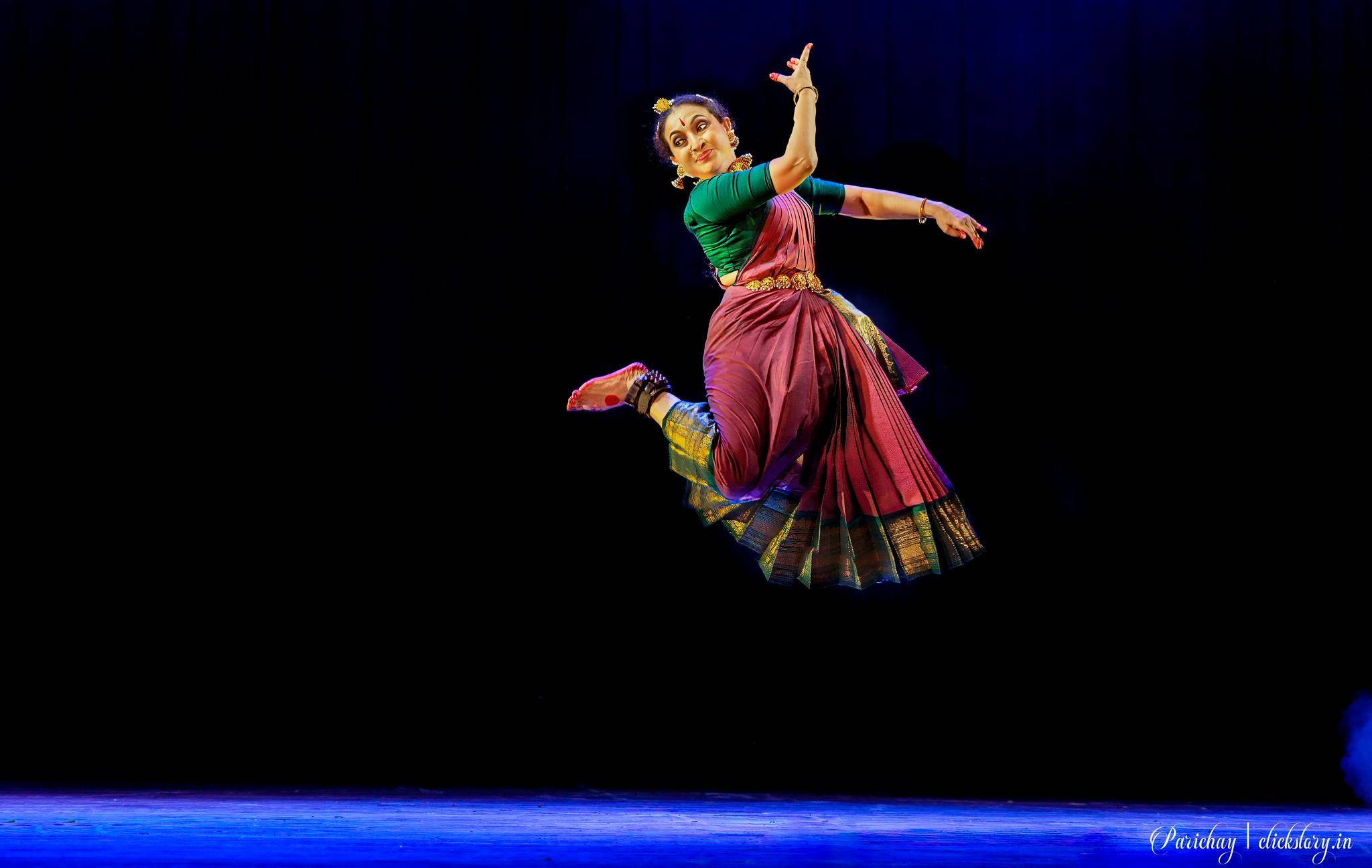
- Kudhitam jump – apex lasts ~0.2 sec
- Nritta poses with precise neck/eye movements
How to predict
- Watch the shoulder lift + knee bend → the jump is coming next.
- When hands form a mudra and extend outward, the peak pose arrives just after the extension.
Best capture moments
- The moment of full symmetry (hands and legs aligned)
- Eye glance with a completed neck movement (alapadma → drishti finish)
2. ODISSI
Key Predictable Moments
- Tribhangi completion
- Chauka stance – stable, geometric form
- Torso waves (Bhangi) – the moment just after the sway reaches its end
How to predict
- Odissi movements often have a “swing–pause–swing” rhythm.
The “pause” is your photo moment.
Best capture moments
- The end of a torso movement
- The graceful extension when the dancer just finishes a mudra
- The slowest point in the movement (Odissi is full of these micro-pauses)
3. KATHAK
Key Predictable Moments
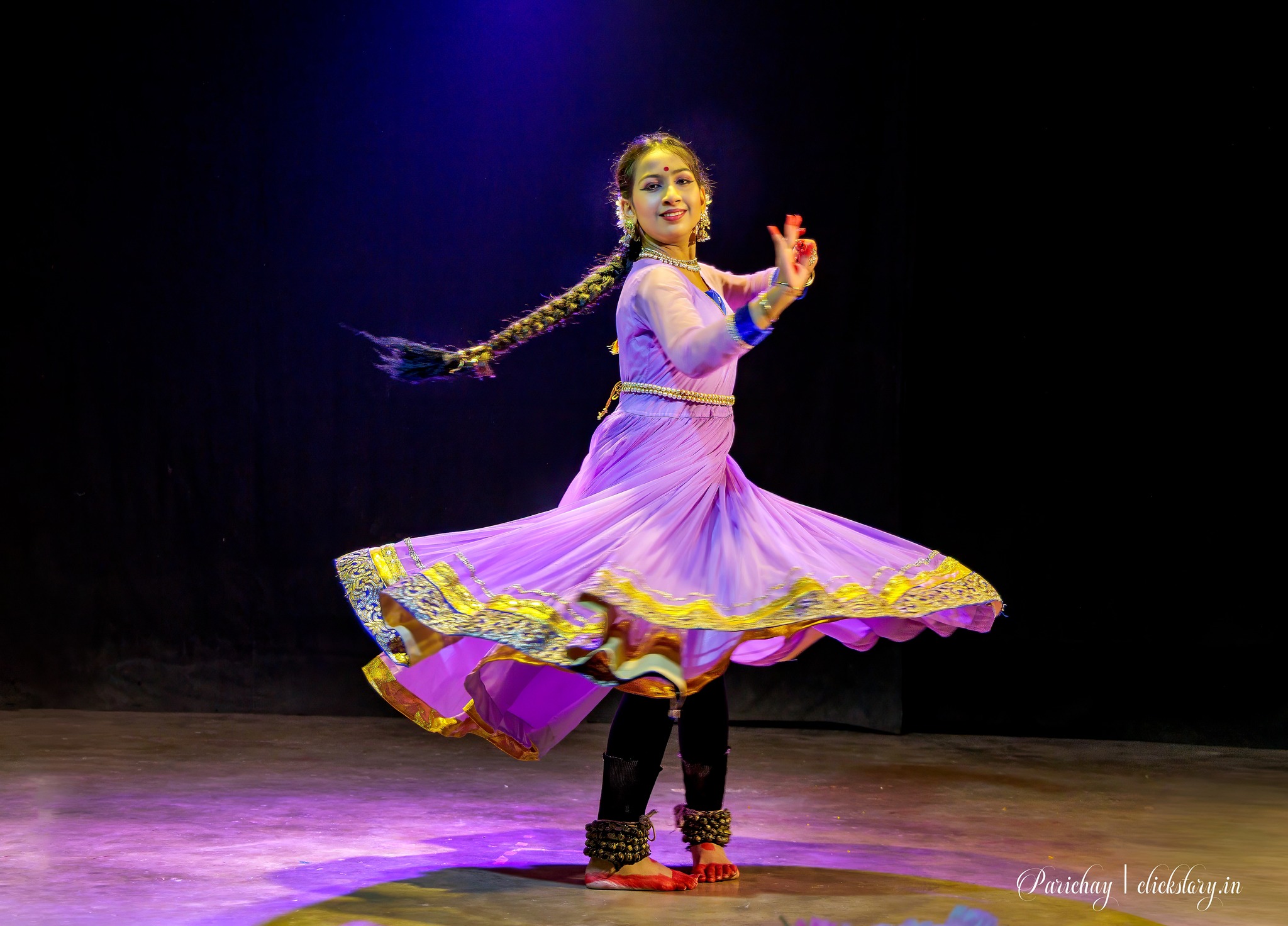
- Chakkars (spins) – moment when head returns toward the audience
- Footwork stamps at som (the downbeat)
- Hand flourish after completing a tatkar phrase
How to predict
- Listen to the tihai (a phrase repeated 3 times).
The “som” — the final beat — is the photographic climax.
Best capture moments
- The instant the dancer opens her spin facing front
- A precise foot stamp on the som
- The finishing pose after a chakkar
4. KATHAKALI
- Predict during full mudra extension → poses freeze beautifully
- Expression (rasas) often reaches a peak with eye accent
5. MOHINIYATTAM
- Movements are circular and slow
- Best moment is the soft completion of a sway (lasya)
6. KUCHIPUDI
Predictable Moments
- Jumps (Terigi step)
- Tarangam dancing on the brass plate — rhythmic peaks
- Sharp arm extensions after flowing sequences
Predicting
- Watch the preparation steps (slight squat or weight shift).
That usually signals the take-off for a jump.
7. MANIPURI
- Dancers move like floating — no sharp stops.
- Best moments are profile views when hands and torso align.
- Predict when the arm reaches the end of its arc.
8. SATTRIYA
Sattriya (from Assam’s Vaishnav monasteries) has a strong rhythmic base, clear adavus, and expressive storytelling. Its movements have both vigorous masculine elements (from Gayan-Bayan and Chali Nritya) and soft lasya (from Nachi and Krishna themes). This makes its “peak moments” very predictable once you understand the structure.
Key Predictable Moments
1. Chali (walking sequences)
- Steady, rhythmic footwork
- Hands and torso move in geometric patterns
- The peak moment occurs when the hand extension completes outward
2. Mati Akharas (foundational movements)
These are like “adavus”. Each has:
- A prep movement
- A climax position
- A recovery phase
The climax position is the photographic moment.
3. Krishna-based Nritta
When depicting Krishna:
- Flute-playing mudra
- Tribhangi-like posture
- Tilting neck gestures
The moment is the completion of the posture, especially when the face turns toward the audience.
4. Jumps (Bhuyan Nritya / vigorous items)
Jumps have a clear preparatory dip.
At the apex (highest point), hands and legs align beautifully — perfect for framing.
How to Predict Moments
- Torso tilt → indicates the dancer is about to complete a circular movement
- Quick shoulder rise → prep for hand flourish
- Foot press → just before a directional shift
- Slight pause after an angular arm extension → best photographic point
Sattriya movements often have a rhythm–completion–pause pattern.
Capture at the completion or the pause.
Best Capture Moments
- Finishing point of a sharp diagonal hand movement
- Full expression during abhinaya (Sattriya storytelling is expressive but not overly dramatic)
- End of a semi-tribhangi posture in Krishna portrayals
- Mid-air during light jumps
- Freeze after a circular torso movement
9. GAUDIYA NRITYA
Gaudiya Nritya (from Bengal’s spiritual tradition) mixes nritya, abhinaya, and devotional elements. Movements are circular, lyrical, and full of bhava. Peaks are often emotional as well as physical.
Key Predictable Moments
Lyrical Hand Arcs
Hands move in smooth arcs.
The photo point is when the arc finishes and the hand reaches full extension.
Lasya-based Torso Movements
Gaudiya has strong torso expressiveness:
- Gentle bends
- Body curves
- Chest and shoulder soft expansions
The “moment” comes after the curve reaches its fullness.
Abhinaya Poses
During storytelling:
- Eye settle
- Mudra completes
- Neck movement ends in a glance
That glance is the perfect photographic climax.
Rhythmic Patterns
Footwork is softer compared to Bharatanatyam or Kathak, but it follows:
- Som (downbeat)
- Chhanda (metrical cycles)
The arrival on the som often coincides with a finished pose.
How to Predict Gaudiya Movements
Look for:
- Mudra formation → extension will follow
- Neck movement (griva bheda) → pose settles just after completion
- Breath-like torso sway → the still moment after the sway is ideal
- Lower-body push → indicates a weight shift into a beautiful stance
Gaudiya Nritya has a flow-climax-flow pattern.
Photograph at the climax or the moment of gentle stillness.
Best Capture Moments
- Completion of hand arcs
- End of a hip or torso curve
- Full bhava expression during abhinaya
- Pose held at som
- Symmetric stances with both hands extended
- Slight pauses after circular movements
GENERAL RULES FOR ALL CLASSICAL FORMS
A. Watch for the “Preparatory Motion”
Before every big moment, a dancer gives small hints:
- shoulder rise
- knee bend
- weight shift
- mudra formation
- expansion of chest
This tells you “the pose is coming.”

B. Listen to the Music — It Guides the Moment
- Som (downbeat)
- Tihai completion
- Climax of jathi or sollukattu
- Crescendo
Dance is music in visual form. If you know the rhythm, you can see the moment before it happens.
C. Learn the Grammar of Each Dance
Every classical dance use:
- Adavus (basic building blocks)
- Karana / Nritta sequences
- Choreographic patterns
Once you know the grammar, prediction becomes natural.
D. Watch for “Freeze Points”
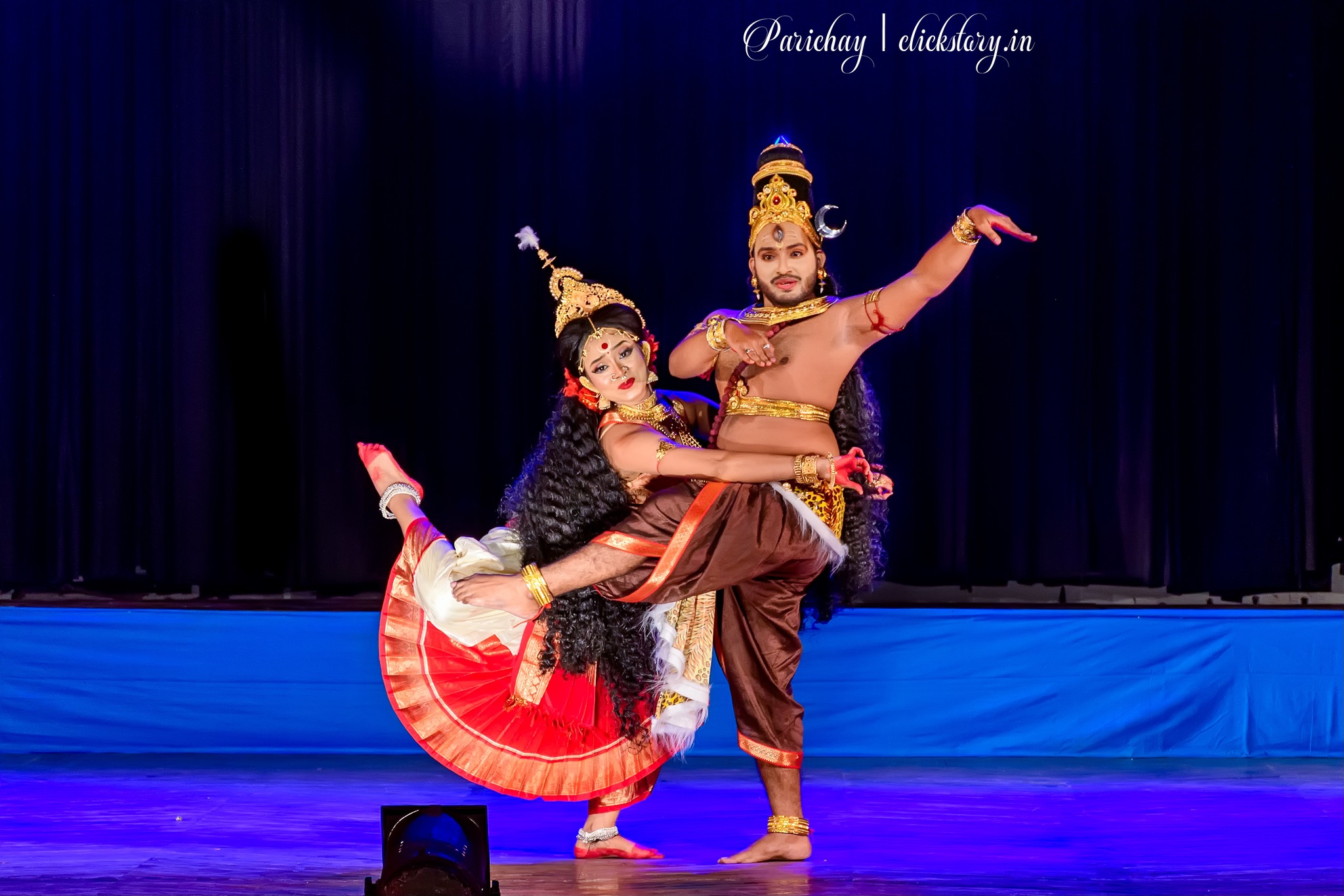
Many classical dances have micro-pauses after:
- Finishing a hand extension landing from a small jump
- Achieving a symmetric pose completing a spin
- These freeze points are golden for photography.
Technical Tips for Capturing the Moment
Shutter Speeds
- Fast nritta: 1/800 – 1/1250
- Spins/jumps: 1/1250 – 1/2000
- Expressive abhinaya: 1/320 – 1/500
Focus Mode
- AF-C / Continuous
- Eye tracking if available
- Back-button focus gives better timing
General Timing Principles for All Dance Forms
- Preparation → Peak → Release
- Look for micro-pauses after major movements
- Listen closely to rhythm: sam, accents, tihais
- Anticipate based on body cues: shoulder rise, knee bend, weight shift
Camera Settings Quick Reference
- Fast nrittya: 1/800–1/1250
- Spins/jumps: 1/1250–1/2000
- Abhinaya/expressions: 1/320–1/500
- Use AF-C / Continuous Focus
- Back-button focus recommended
Conclusion
Pre-visualization is the quiet skill that transforms a photographer from an observer into a creator. Whether it is a swift sports movement, a dynamic leap, or the subtle grace of Indian classical dance, the ability to sense a moment before it unfolds is what leads to truly extraordinary images. It is not guesswork — it is the result of understanding rhythm, body mechanics, lighting, timing, and the emotional heartbeat of the performance.
With practice, you begin to recognize patterns: the preparatory bend before a jump, the final breath before a pose freezes, the musical cue before a spin opens, or the tiny shift in energy that signals the arrival of the perfect frame. Your camera becomes an extension of your perception, responding instinctively to what your mind has already seen.
In the end, pre-visualization is a dialogue between intuition and technique. The more you immerse yourself in the art form — its music, its movements, its moods — the clearer the future moment becomes. And when you learn to anticipate that fleeting instant, you don’t just capture a photograph; you preserve a story, a gesture, a memory that lives long after the performance ends.