

Manipuri is one of the most beautiful dance styles of India. Nurtured in the mountainous region of the northeast, it takes its name from the name of the place Manipur, which is now a state. Manipur literally means a jewel of a land, and the state is set like a gem in the verdant hills. The legend goes that the Gods drained a lake in the beautiful countryside in order to find a place to dance. No wonder then, that dance is the part of the rituals of daily life, such as weddings and homage to ancestors.
Themes and Spiritual Essence
Manipuri dance is deeply connected with devotion and spirituality. Unlike many other Indian classical dances that focus heavily on dramatic facial expressions, Manipuri dance is gentle and calm, expressing emotions through flowing body movements.
The main themes of Manipuri dance are:
- Love stories of Radha and Krishna
- Raslila performances
- Devotional songs and bhajans
- Mythological episodes from Hindu scriptures
The dance often represents divine love and the eternal bond between Radha and Krishna, which is considered the highest form of spiritual devotion in Vaishnavism.
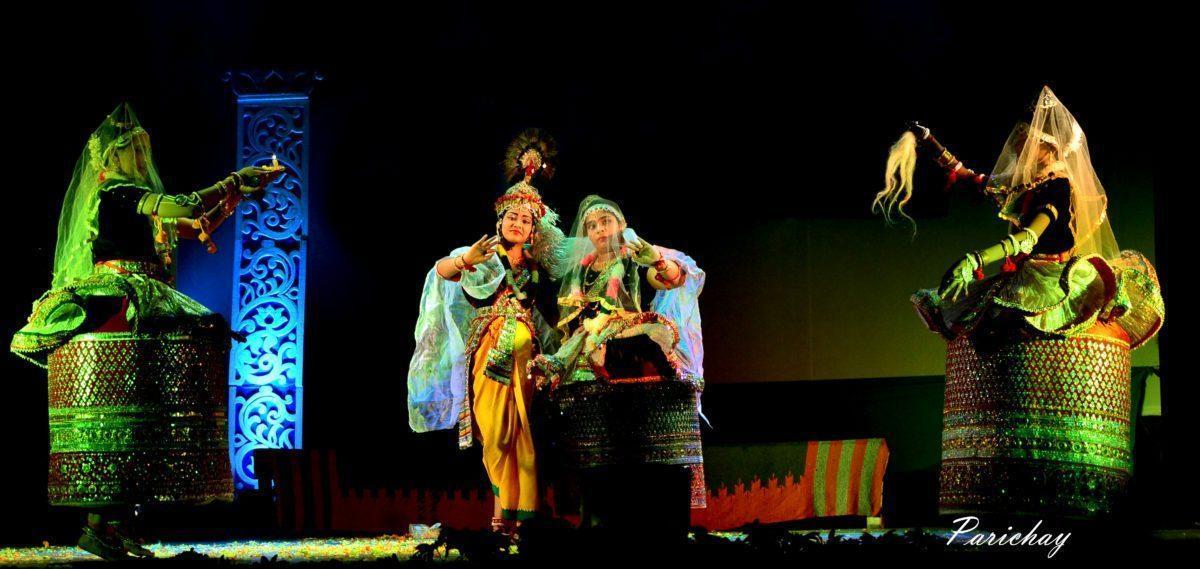
Among the important feature of the Manipuri repertoire are the Sankirtana and the Raas Leela, based on the devotional theme of Krishna and Radha. The Raas Leela depicts the cosmic dance of Krishna and the cowherd maidens. The beautiful, embroidered skirts of the dancers, long and flared from the waist, and the veils, along with Krishna’s costume with the tall peacock feather crown, add to the radiant appearance of this dance, as the performers sway and twirl to an ascending tempo.
Unique Features of Manipuri Dance
Manipuri dance is known for its distinctive style, which makes it different from Bharatanatyam, Kathak, Odissi, or Kuchipudi.
1. Soft and Rounded Movements
Manipuri dance movements are slow, smooth, and circular. The dancer appears to float like a gentle breeze, creating a peaceful visual effect.
2. Delicate Expressions
Unlike other dances where facial expressions are sharp and dramatic, Manipuri dance uses subtle expressions, making it look calm and divine.
3. Graceful Footwork
Footwork in Manipuri dance is light and soft. The dancer’s feet often do not strike the ground forcefully, which gives it a silent and flowing charm.
4. Musical and Rhythmic Beauty
The dance is performed in perfect harmony with traditional Manipuri music, creating a soothing spiritual atmosphere.

Costumes of Manipuri Dance
The costumes of Manipuri dance are among the most attractive aspects of the art form. They are colorful, traditional, and beautifully designed.
Female Costume
Women wear a special cylindrical skirt called “Potloi” or “Kumin”, decorated with embroidery and mirror work. The costume includes:
- A stiff, decorative skirt
- A velvet blouse
- A translucent veil
- Traditional jewelry
The costume makes the dancer look like a divine figure, often representing Radha or the gopis.
Male Costume
Male dancers usually represent Lord Krishna and wear:
- A dhoti
- A crown decorated with peacock feathers
- Traditional ornaments
The costume enhances the mythological storytelling of the performance.
Musical Instruments Used
Manipuri dance is performed with traditional music that includes devotional songs and rhythmic beats. Some important instruments used are:
- Pung (a Manipuri drum)
- Kartal (cymbals)
- Flute
- Harmonium
- Violin
The Pung is especially important, as it gives the dance its rhythmic foundation.
Types of Manipuri Dance
Manipuri dance is not limited to Raslila. It has several forms that reflect both religious and cultural traditions.
1. Raslila
The most famous dance-drama based on Radha-Krishna themes.
2. Pung Cholom
A vibrant dance performed by male dancers while playing the pung drum. It is energetic and highly skillful.
3. Lai Haraoba
An ancient ritual dance performed to please local deities, especially Umang Lai (forest gods). It reflects pre-Vaishnav traditions.
4. Thang Ta
A martial dance form involving swords and spears, showcasing Manipur’s warrior heritage.
Cultural Importance of Manipuri Dance
Manipuri dance is not only a performing art but also a symbol of Manipur’s identity and spiritual life. It plays an important role in:
- Religious festivals and temple rituals
- Cultural celebrations
- Preserving Manipuri traditions
- Promoting unity and devotion
It also helps in passing cultural values from one generation to another.
Manipuri Dance in Modern Times
Today, Manipuri dance is performed not only in Manipur but also across India and the world. Many dance schools and cultural institutions teach this art form. It has gained global recognition for its elegance and spiritual charm.
Several famous artists have contributed to popularizing Manipuri dance, including:
- Guru Bipin Singh
- Rajkumar Singhajit Singh
- Charu Sija Mathur
Modern Manipuri dancers have also adapted the form for stage performances while keeping its classical purity intact.
Conclusion
Manipuri dance is a divine blend of grace, devotion, and artistic beauty. Its gentle movements, elegant costumes, and spiritual themes make it one of the most unique classical dances of India. More than just a dance, it is a sacred expression of love and devotion that connects humans with the divine.
In a world that is rapidly changing, Manipuri dance continues to shine as a timeless symbol of India’s rich cultural heritage, reminding us of the beauty of tradition, faith, and art.
Frequently Asked Questions (FAQs)
1. What is Manipuri dance?
Manipuri dance is one of the major classical dance forms of India, originating from Manipur. It is known for graceful movements, devotional themes, and soft expressions.
2. Which state is Manipuri dance from?
Manipuri dance comes from the northeastern Indian state of Manipur.
3. What is Manipuri dance famous for?
Manipuri dance is famous for its smooth and flowing movements, Raslila performances, and its devotional connection with Radha and Krishna.
4. What is Raslila in Manipuri dance?
Raslila is a traditional dance-drama in Manipuri dance that depicts the divine love story of Radha and Lord Krishna along with the gopis.
5. Who is the founder of Manipuri dance?
Manipuri dance has ancient roots, but it was greatly developed and promoted by King Bhagyachandra of Manipur in the 18th century.
6. What are the main themes of Manipuri dance?
The main themes include:
- Mythological and spiritual stories
- Radha-Krishna love stories
- Vaishnav devotion
- Raslila performances
7. What are the main features of Manipuri dance?
The main features are:
- Devotional storytelling
- Gentle footwork
- Circular and flowing body movements
- Subtle facial expressions
- Graceful hand gestures
8. What is the costume of Manipuri dance called?
The traditional female costume is called Potloi or Kumin, which is a stiff, decorative cylindrical skirt with a veil and ornaments.
9. Which musical instruments are used in Manipuri dance?
Common instruments used are:
- Violin
- Pung (drum)
- Kartal (cymbals)
- Flute
- Harmonium
10. What is Pung Cholom in Manipuri dance?
Pung Cholom is a vibrant form of Manipuri dance where male dancers perform energetic movements while playing the Pung drum.

thanks for the information