

India is known for its rich culture, and one of the most colorful aspects of its heritage is its folk dances. These dances are an important part of festivals, celebrations, and rituals across the country. Each region has its own unique folk dance, often reflecting the local traditions, history, and lifestyle.
Bhangra (Punjab)
Festival: Baisakhi, Lohri
Costume: Bright turbans, colorful kurta for men, salwar kameez for women.
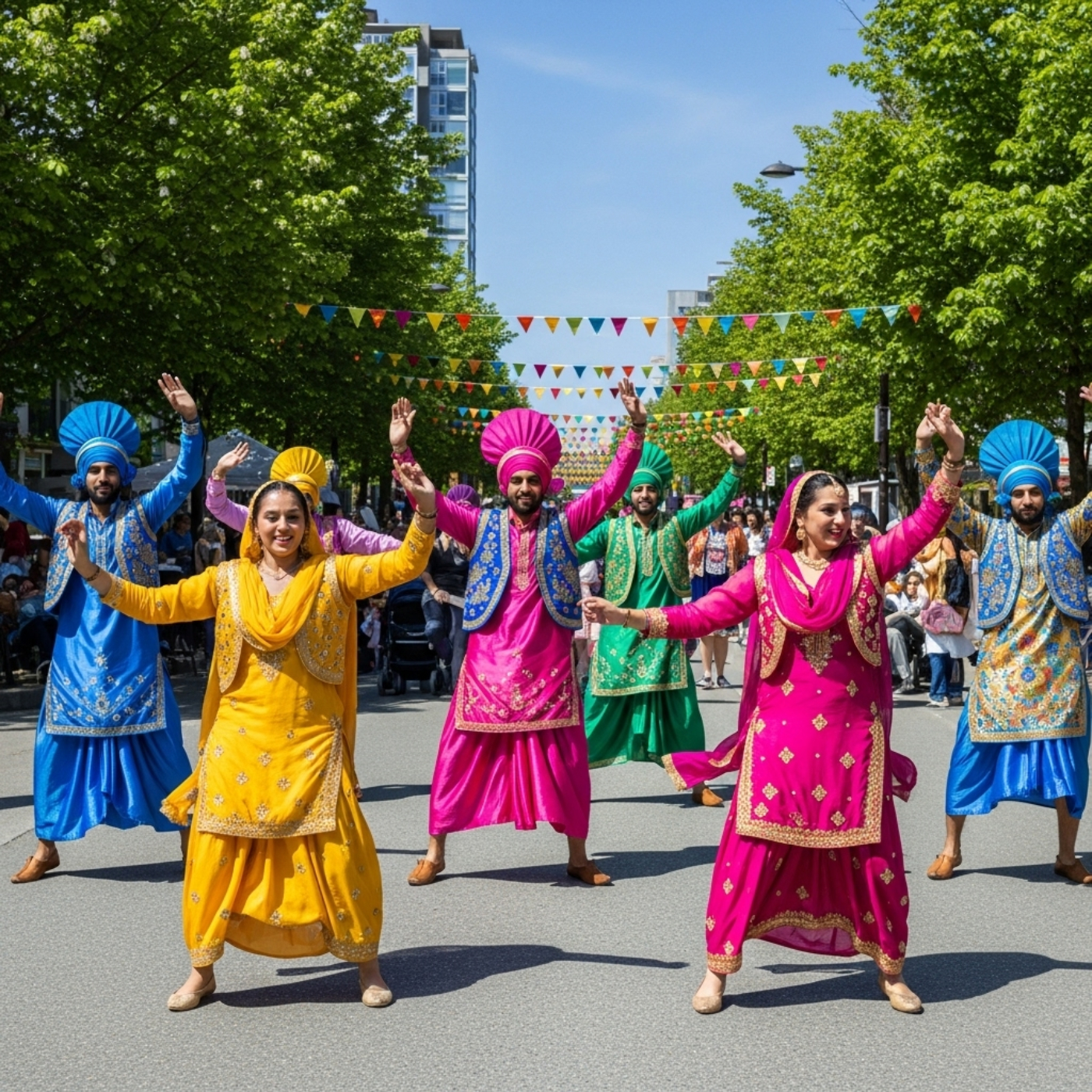
Bhangra is an energetic and joyous dance from Punjab, usually performed to celebrate the harvest season. The dancers use large dhol drums and clap their hands in rhythmic patterns. The outfits are bright, with men wearing traditional turbans and women wearing colorful salwar kameez. The vibrant energy and beats of the dhol make this dance unforgettable!
Garba (Gujarat)
Festival: Navratri
Costume: Women wear chaniya choli (colorful skirts), men wear kediyu (shirt) and dhoti.
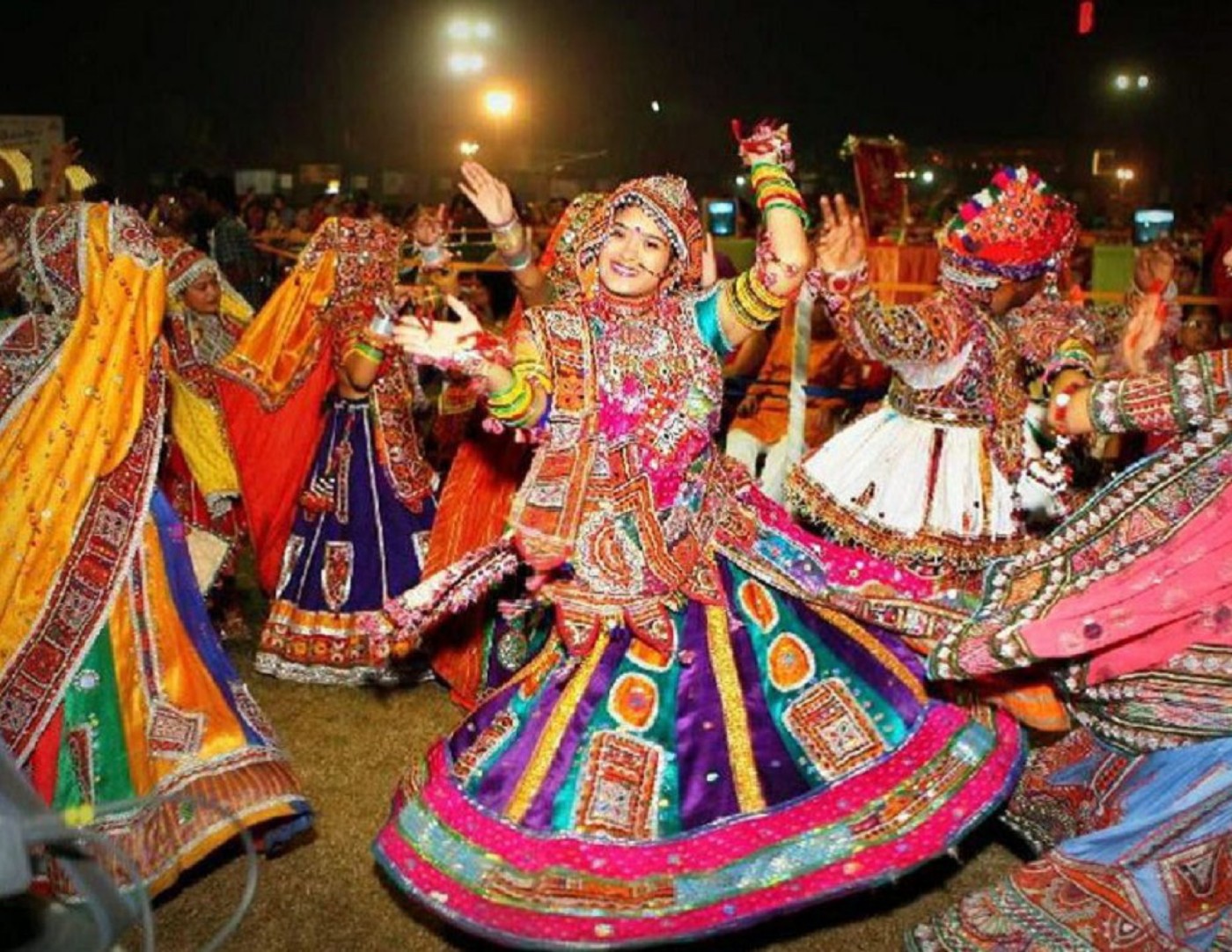
Garba is performed during Navratri to honor Goddess Durga. It involves circular dancing where participants clap and move in rhythm. The women’s attire is full of colors, often with mirror work that reflects the light, adding to the festive atmosphere. The beat of the dhol and tabla music gets everyone involved.
Dandiya (Gujarat)
Festival: Navratri
Costume: Similar to Garba, with women in chaniya choli and men in dhoti and kediyu.
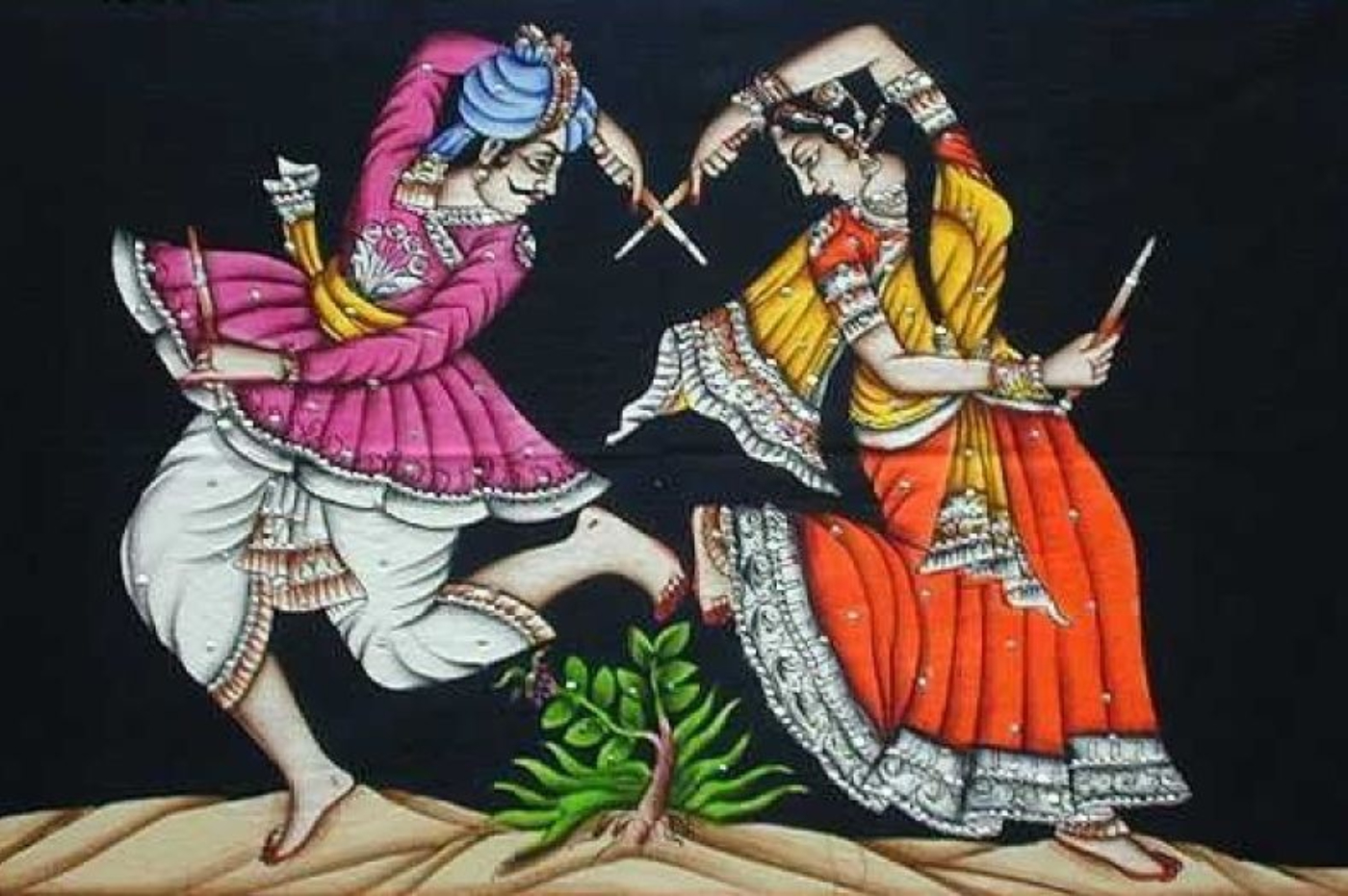
Dandiya is another dance from Gujarat that’s often seen during Navratri. The key difference is that dancers hold colorful sticks called dandiyas and strike them together as they move in a circle. It’s energetic and rhythmic, making it a lot of fun.
Bihu (Assam)
Festival: Bihu
Costume: Muga silk sarees for women, dhoti for men.
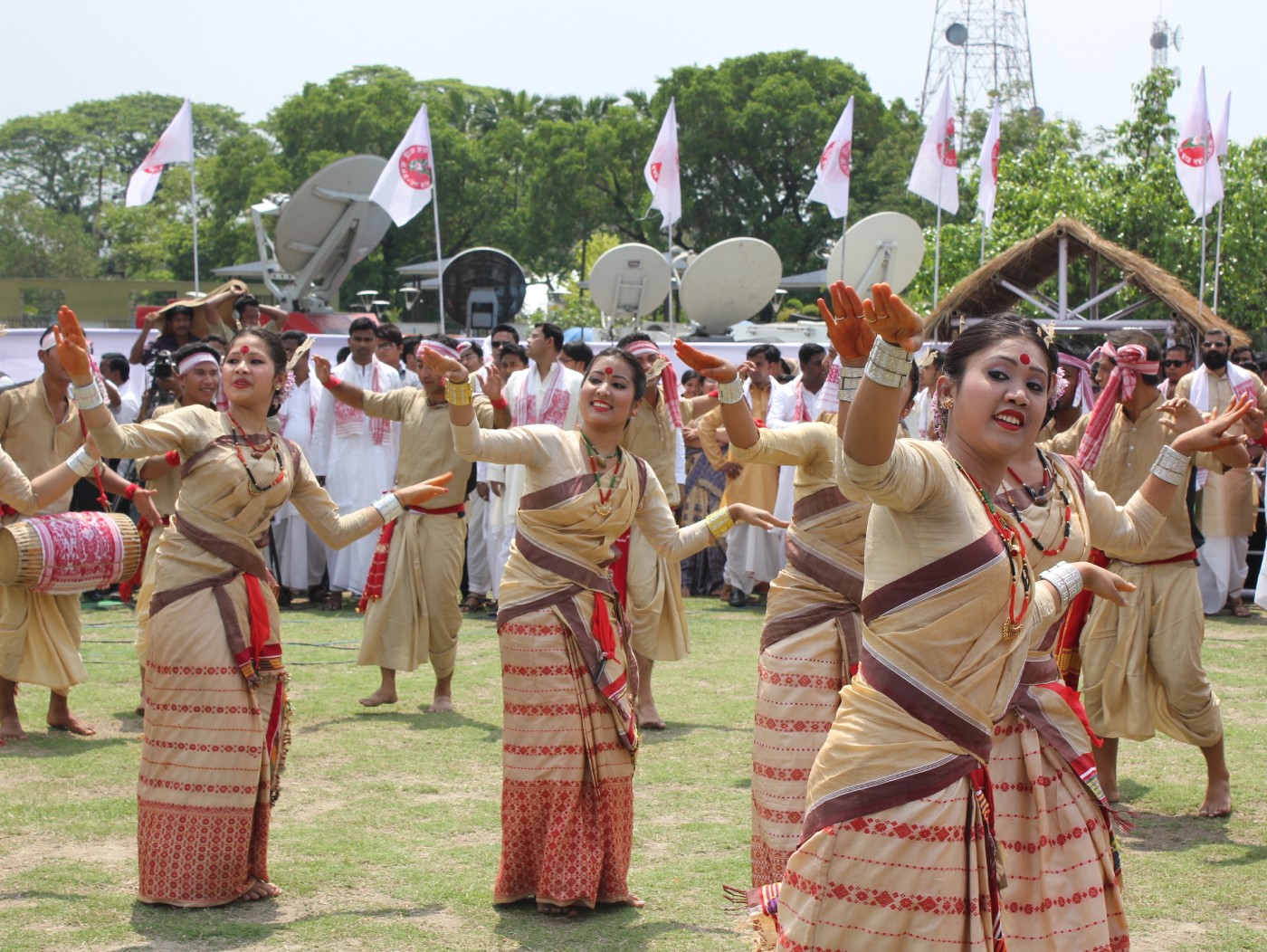
Bihu is the dance of Assam, celebrating the Assamese New Year and the arrival of the harvest season. The dancers wear elegant muga silk attire, known for its golden color. The dance involves rhythmic footwork and hand movements to the beats of traditional drums, symbolizing the joy and prosperity of the harvest.
Lavani (Maharashtra)
Festival: Gudi Padwa, Makar Sankranti
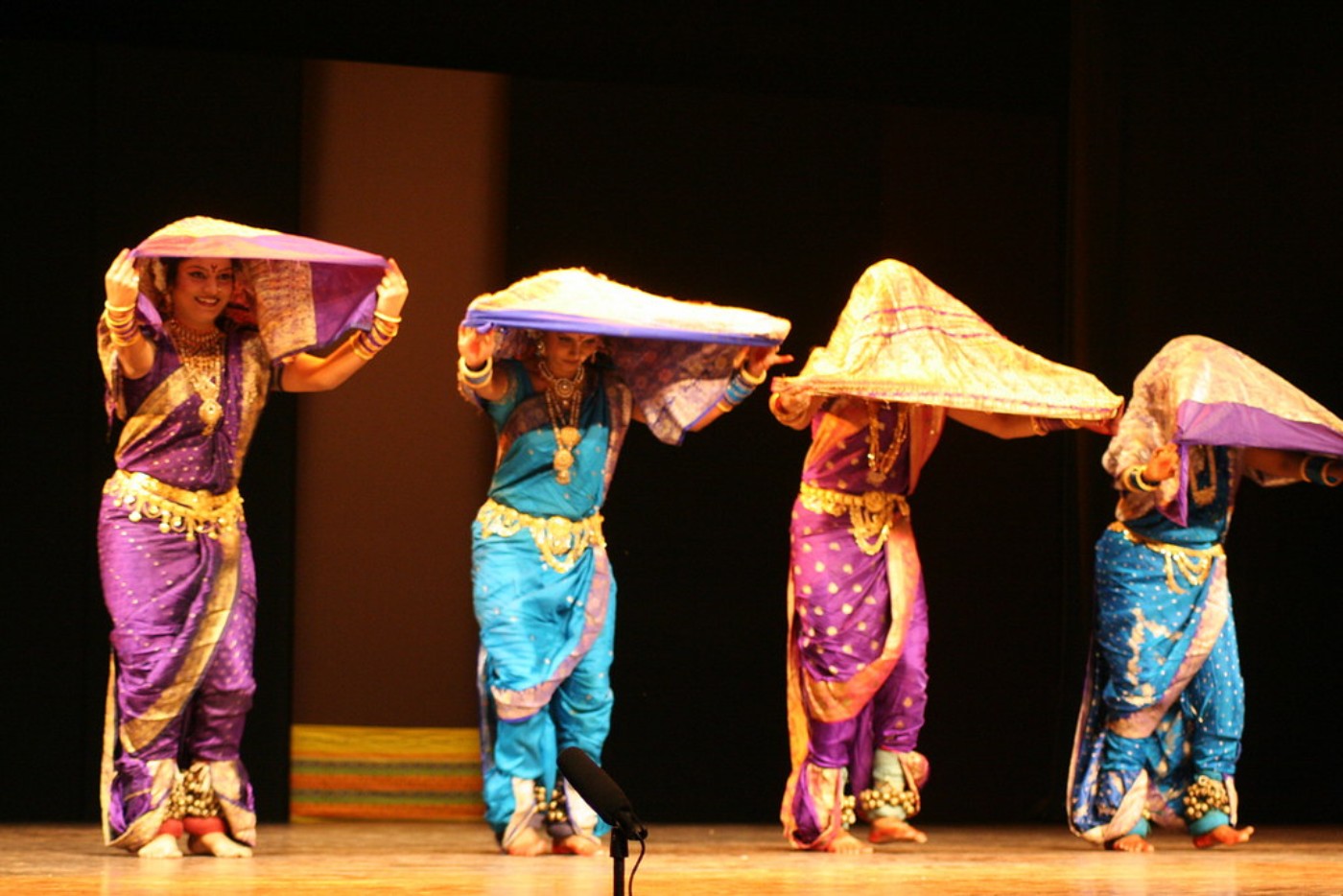
Costume: Traditional nine-yard saree, jewelry.
Lavani is a passionate and energetic dance from Maharashtra. It’s performed by women in traditional nine-yard sarees and is usually accompanied by the sound of the dholki (a traditional drum). Lavani is performed during festivals like Gudi Padwa and Makar Sankranti, and it often includes playful movements and dramatic expressions.
Koli (Maharashtra)
Festival: Ganesh Chaturthi, Diwali
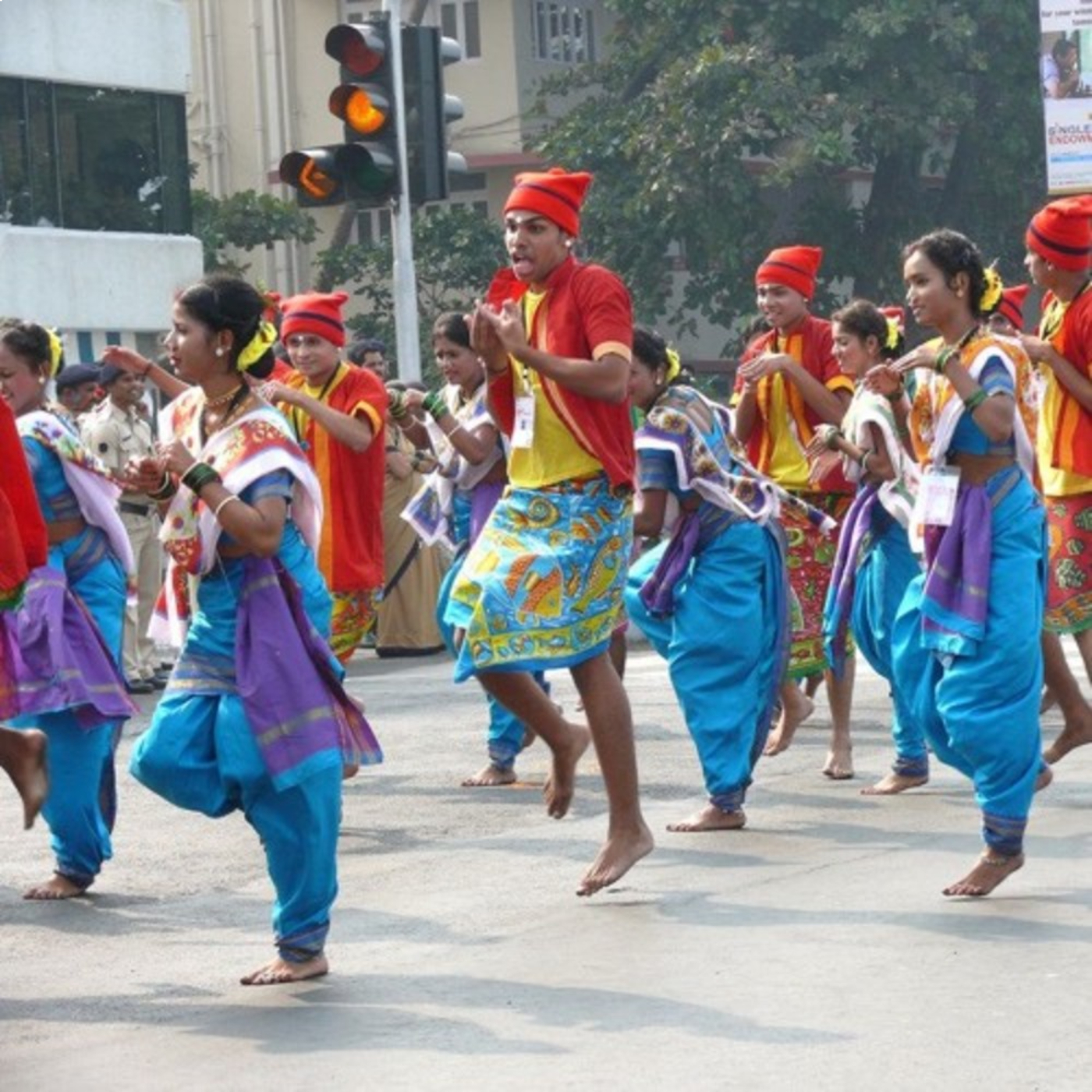
Costume: Bright saris and colorful outfits, often in shades of blue and white.
The Koli dance is performed by the fishing community of Maharashtra, and it reflects their lifestyle and daily routines. Dancers wear colorful costumes, often inspired by the colors of the sea, and use bamboo sticks as props. The dance is lively and performed with fast-paced rhythms.
Kalbelia (Rajasthan)
Festival: Teej, Holi
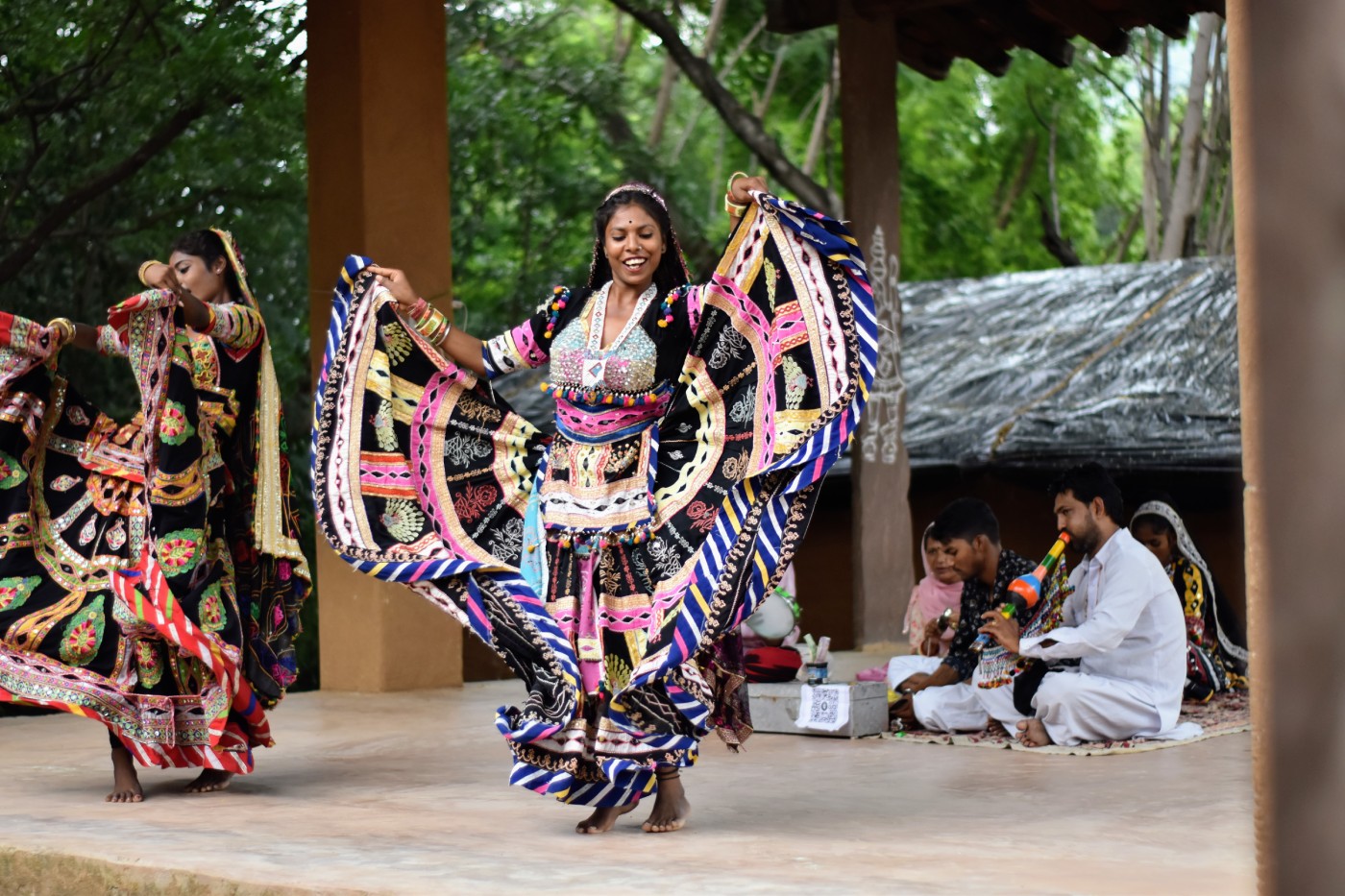
Costume: Ghagras (long skirts) and cholis with mirror work.
Kalbelia is a traditional dance of Rajasthan, performed by the Kalbelia community (snake charmers). It’s known for its graceful, serpentine movements that mimic the movements of a snake. The costumes are bright and adorned with mirror work, which sparkles as dancers twirl.
Chhau (Bihar, Jharkhand, Odisha)
Festival: Chhau FestivalCostume: Elaborate masks, warrior attire.
Chhau is a martial art-based dance that is practiced in Bihar, Odisha, and Jharkhand. The dancers wear large masks and costumes representing various animals and warriors. It tells the stories of heroes, gods, and legends, often with powerful, acrobatic movements.
Yakshagana (Karnataka)
Festival: Sri Krishna Janmashtami, Deepavali
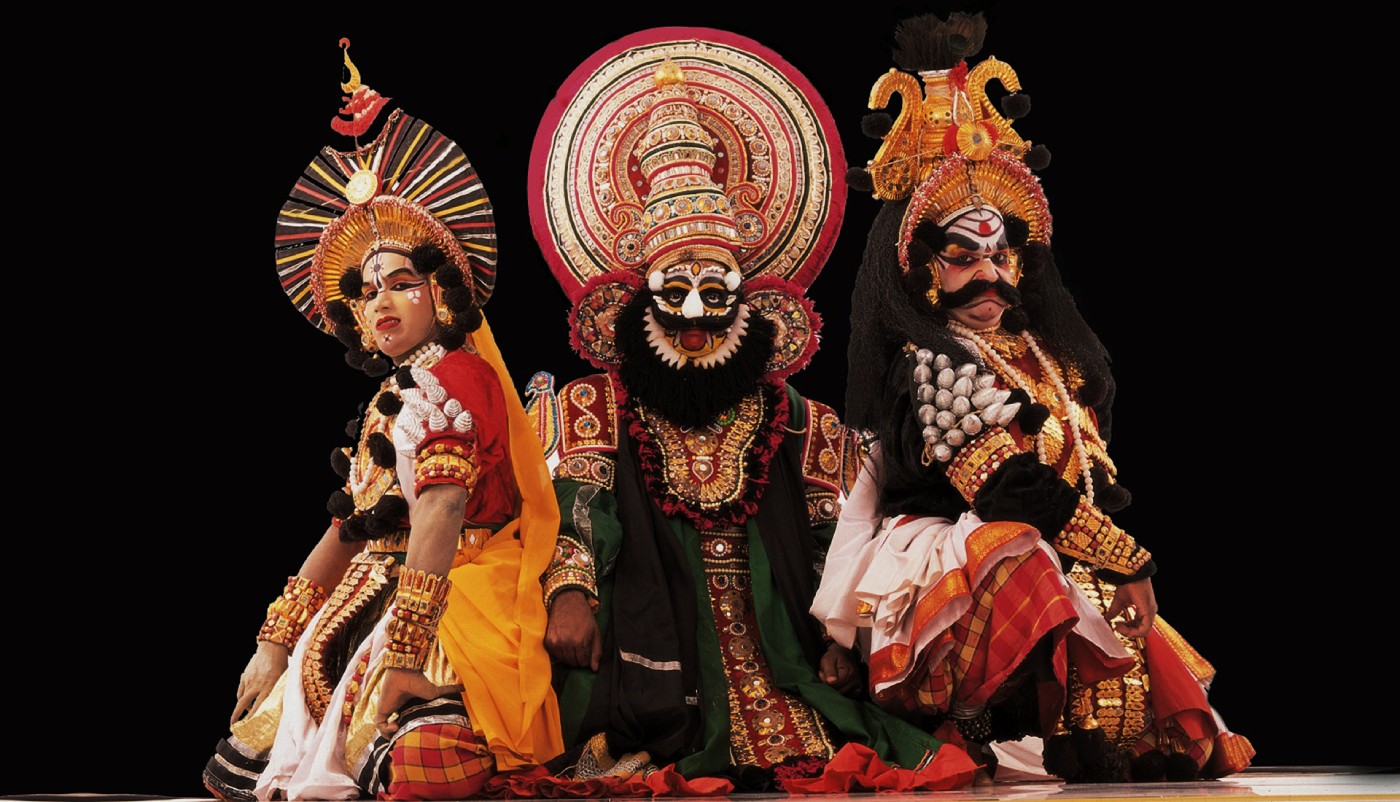
Costume: Bright costumes, heavy makeup, and elaborate headgear.
Yakshagana is a unique blend of dance, music, and drama from Karnataka. It’s performed with dramatic storytelling, often depicting episodes from Hindu mythology. The costumes are vibrant, with heavy makeup and large headgear. It’s usually performed in open-air theatres during festivals.
Ghoomar (Rajasthan)
Festival: Gangaur
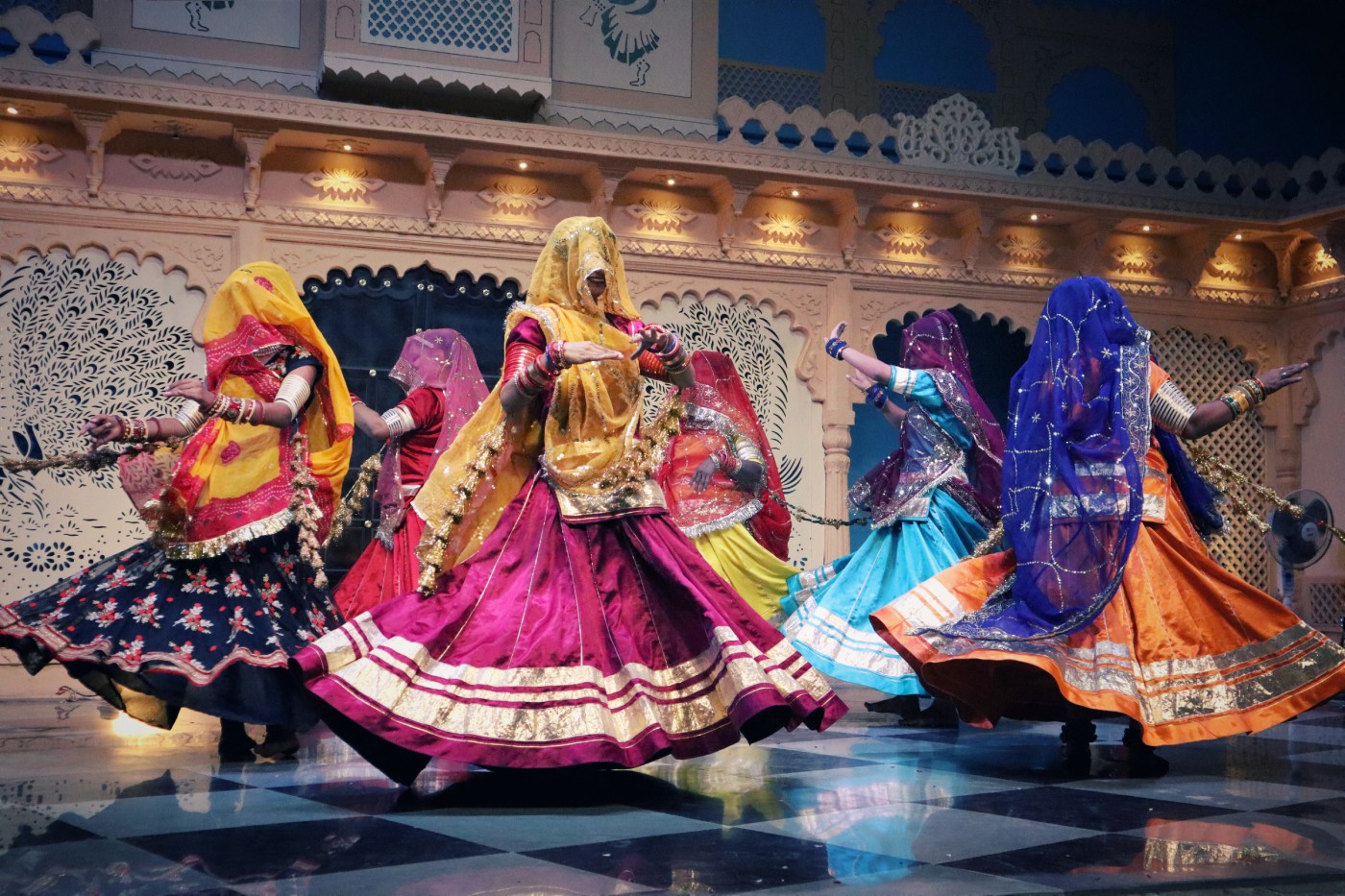
Costume: Ghagras (long skirts) with mirror work.
Ghoomar is a traditional dance from Rajasthan, performed by women in colorful ghagras and cholis. The dance is characterized by spinning in circles, creating a mesmerizing effect with the swirling skirts. Ghoomar is commonly performed during the Gangaur festival, which celebrates the goddess Gauri.
Tungri (Uttarakhand)
Festival: Makar Sankranti
Costume: Simple, natural attire, often with floral decorations.
Tungri is a folk dance from Uttarakhand, performed to celebrate the harvest festival of Makar Sankranti. Dancers move in circles, wearing simple, natural costumes, often decorated with flowers. It’s a joyful and energetic dance that marks the end of winter and the beginning of a new harvest.
Choliya (Uttarakhand)
Festival: Baisakhi
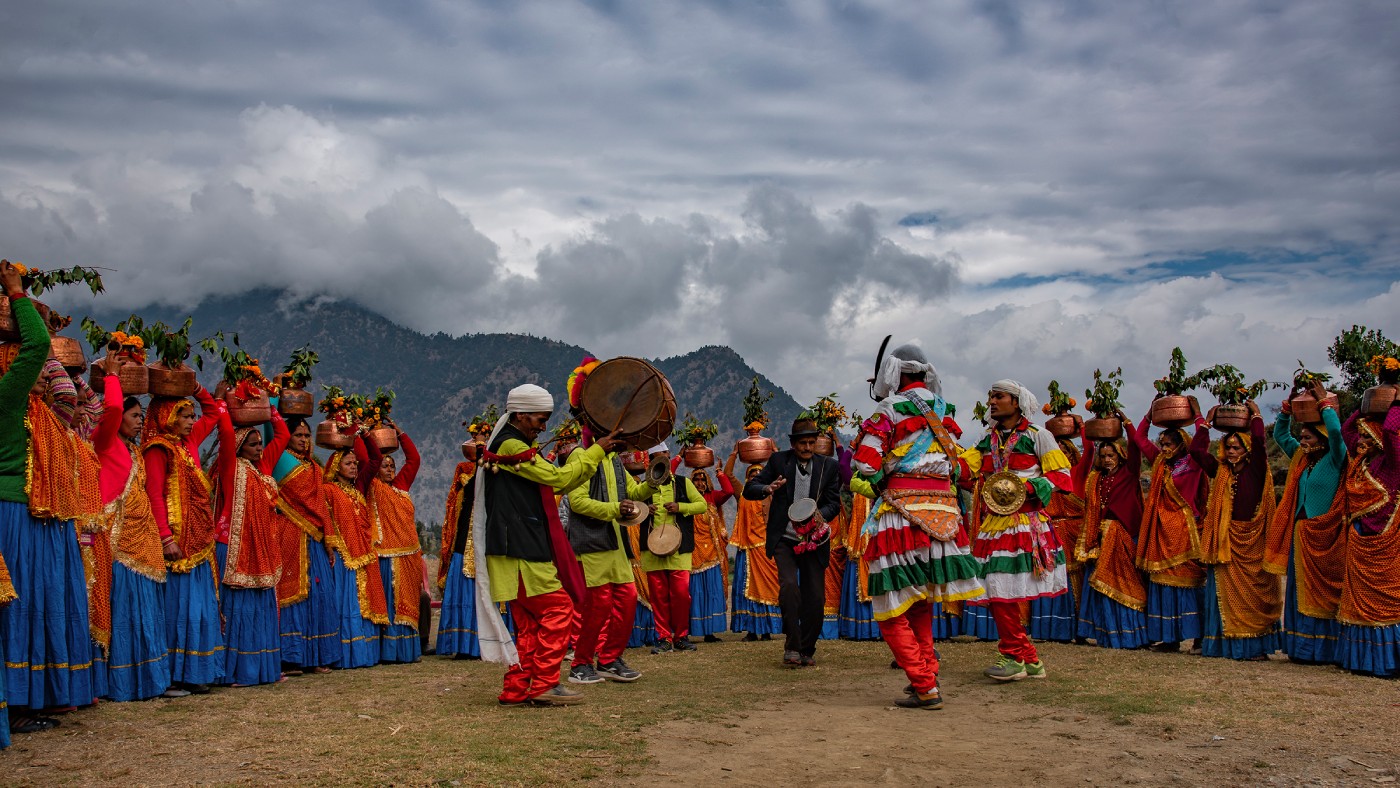
Costume: Traditional dhoti and kurta for men, colorful attire for women.
Choliya is a martial folk dance from Uttarakhand, where the dancers dress like warriors in traditional dhoti and kurta. The dance involves swift movements with sword fighting, making it quite powerful and unique. It’s performed during festivals like Baisakhi, celebrating the harvest and new beginnings.
Badhai (Madhya Pradesh)
Festival: Weddings, New Year
Costume: Traditional sari for women and kurta-pajama for men.
Badhai is a traditional dance performed during weddings and festive occasions in Madhya Pradesh. The dance is joyous, with clapping and singing, often celebrating important life events. The dancers wear traditional outfits, and the rhythms are lively and fun.
Baul Dance (West Bengal)
Festival: Makar Sankranti, Poila Boishakh (Bengali New Year)
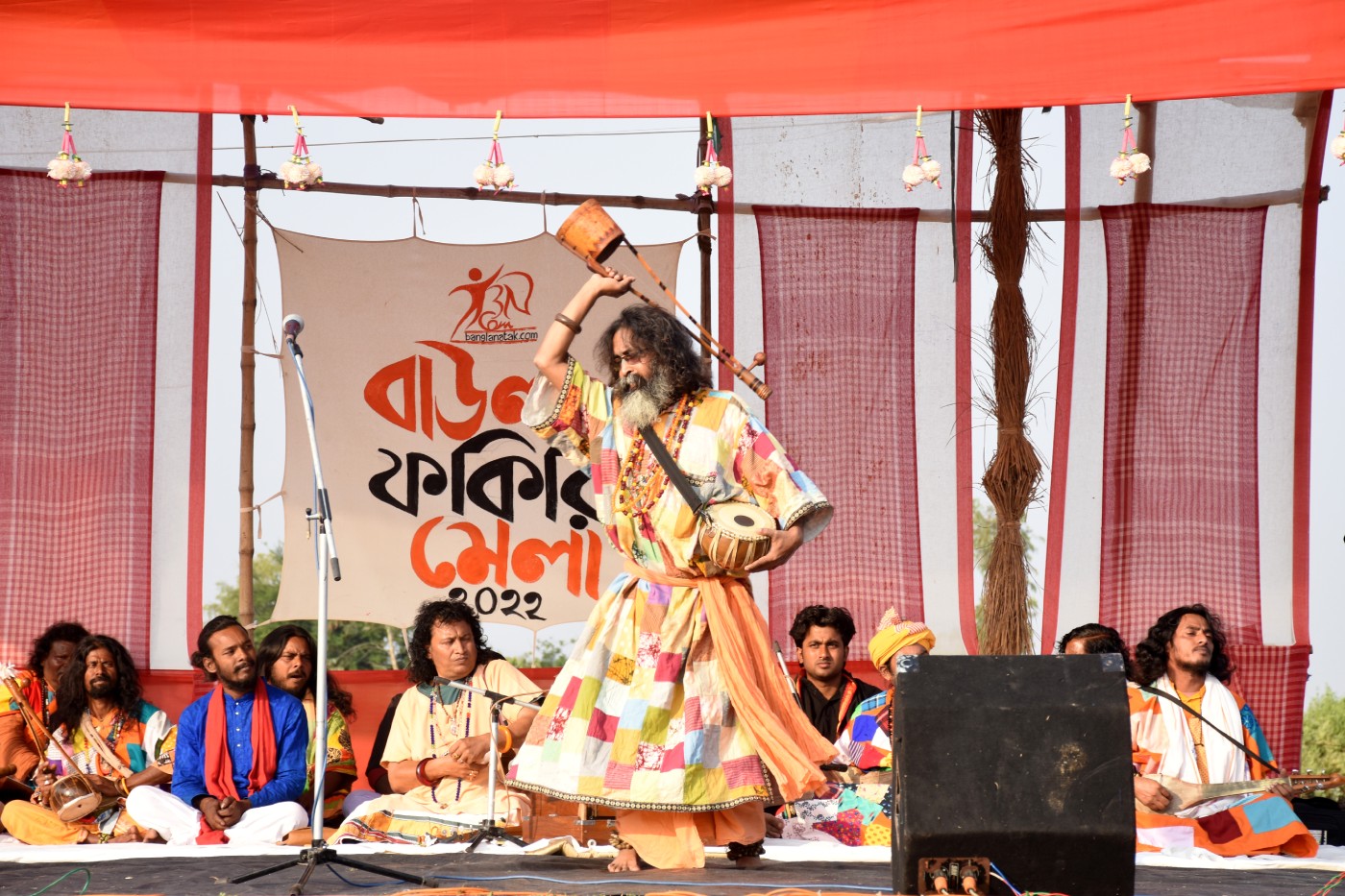
Costume: Simple, colorful clothing, often with long flowing robes, and a ghungroo (bell anklets) for dancers.
Baul is a spiritual and soulful folk dance and music tradition of Bengal, often associated with the Baul community, known for their distinctive philosophy and devotion to universal love. The dancers, usually accompanied by the Baul singers who play traditional instruments like the ektara (a single-string instrument), perform simple yet expressive movements, sometimes swaying to the rhythm of the music. The costume is typically simple but colorful, symbolizing the humble lifestyle of the Baul people.
Chhau Dance (West Bengal)
Festival: Chhau Festival
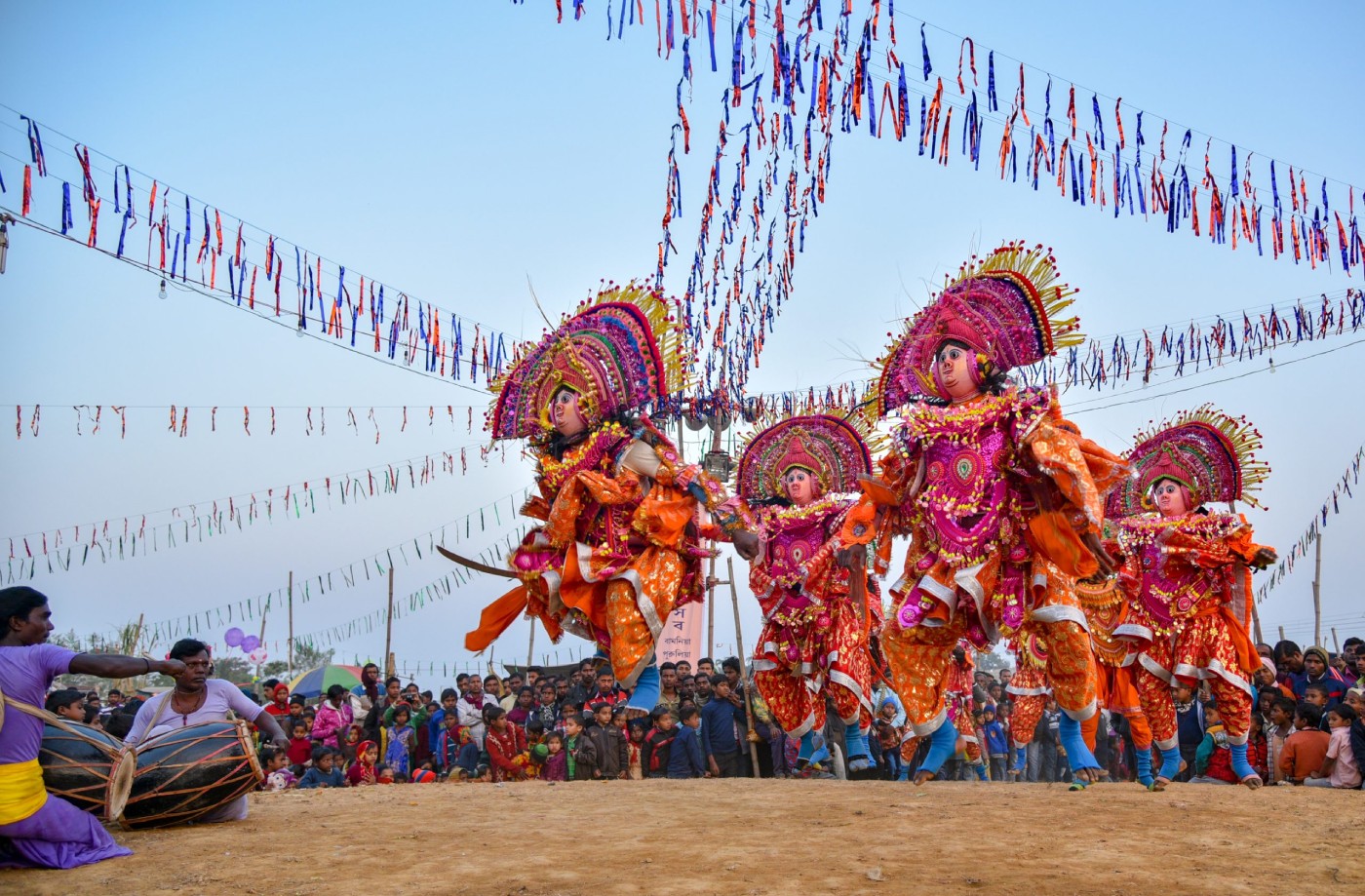
Costume: Elaborate masks, warrior attire, including armor and headgear.
While Chhau is commonly associated with the states of Bihar, Odisha, and Jharkhand, the version performed in the Purulia district of West Bengal is also extremely famous. This dance form combines martial arts, acrobatics, and storytelling, and is performed by male dancers who wear elaborate masks and warrior attire. The performance is accompanied by intense drum beats, and it often portrays stories from Hindu mythology, particularly the battle between good and evil. Chhau is performed during the Chhau Festival, which celebrates the arrival of spring and marks the beginning of harvest seasons.
Jhumur Dance (West Bengal)
Festival: Makar Sankranti, Poila Boishakh (Bengali New Year)
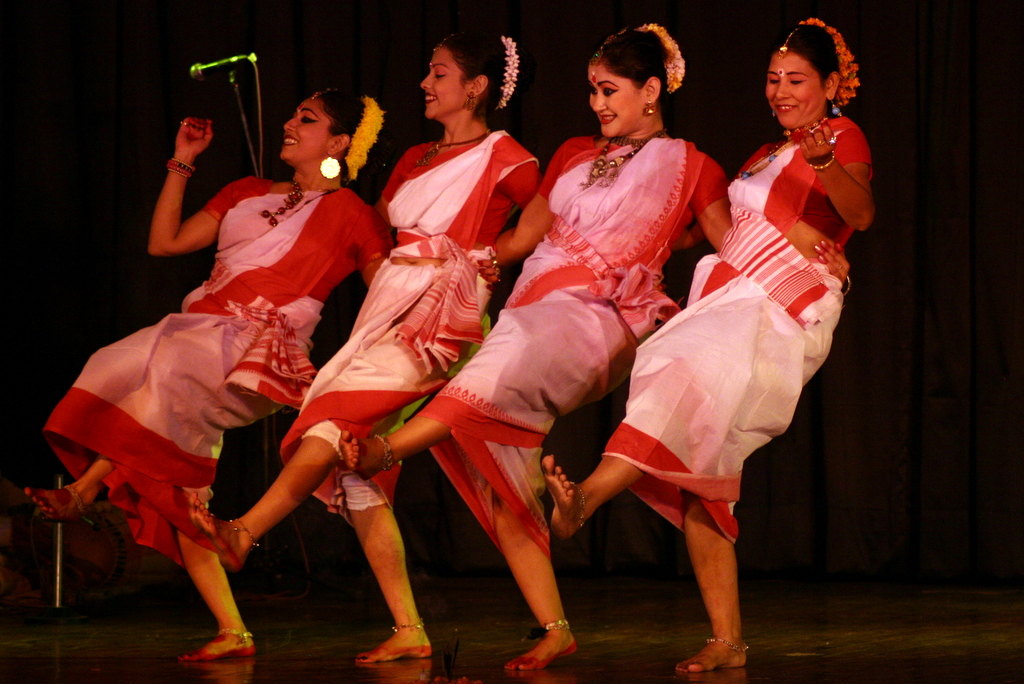
Costume: Traditional sari for women and dhoti for men, often decorated with bright, reflective mirror work.
Jhumur is a popular folk dance from the tribal communities of West Bengal, particularly in the districts of Purulia and Bankura. The dance is a celebration of agricultural work and is performed by men and women during the harvest season. The dancers form a circle and sway to the rhythm of the music, often with hand gestures and foot stamping. The costumes are bright and colorful, reflecting the joy of the harvest season, with women wearing colorful sarai (saris) and men in traditional dhoti.
Santali Dance (West Bengal)
Festival: Karam Festival, Sohrai Festival

Costume: Traditional tribal attire, often made from animal skins, beads, and colorful cloth.
Santali is a tribal dance that is an essential part of the cultural heritage of the Santhal community, who are predominantly found in the tribal regions of West Bengal, Jharkhand, Bihar, and Odisha. The dance is performed to celebrate various seasons, especially the harvest, and it plays a significant role in the Karam festival, which honors the god of fertility. The dancers wear traditional attire made from animal skins, beads, and colorful cloths. The dance involves intricate footwork and synchronized movements in a circle.
Kirtan Dance (West Bengal)
Festival: Durga Puja, Poila Boishakh
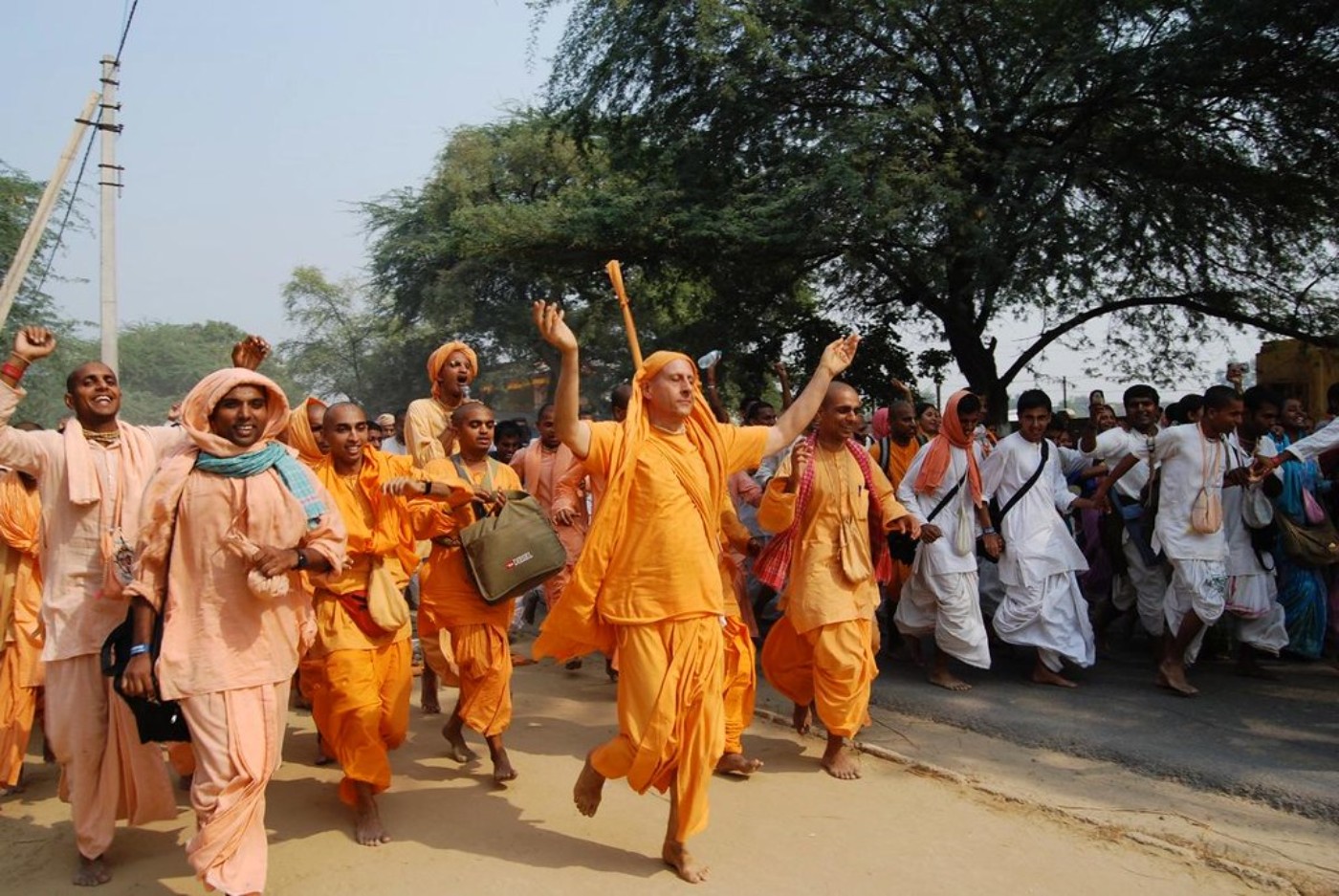
Costume: Bright colored sarees for women and kurta-pajama for men.
Kirtan is both a form of devotional singing and a folk dance performed in West Bengal, particularly during the Durga Puja and Poila Boishakh (Bengali New Year) festivals. It is characterized by group singing of religious hymns and the rhythmic clapping of hands, often accompanied by simple dance movements. The dance involves graceful, slow swaying motions to the rhythm of the devotional music, symbolizing devotion and reverence for deities. The dancers wear vibrant traditional outfits, often adorned with gold jewelry.
Tusu Parab Dance (West Bengal)
Festival: Tusu Festival
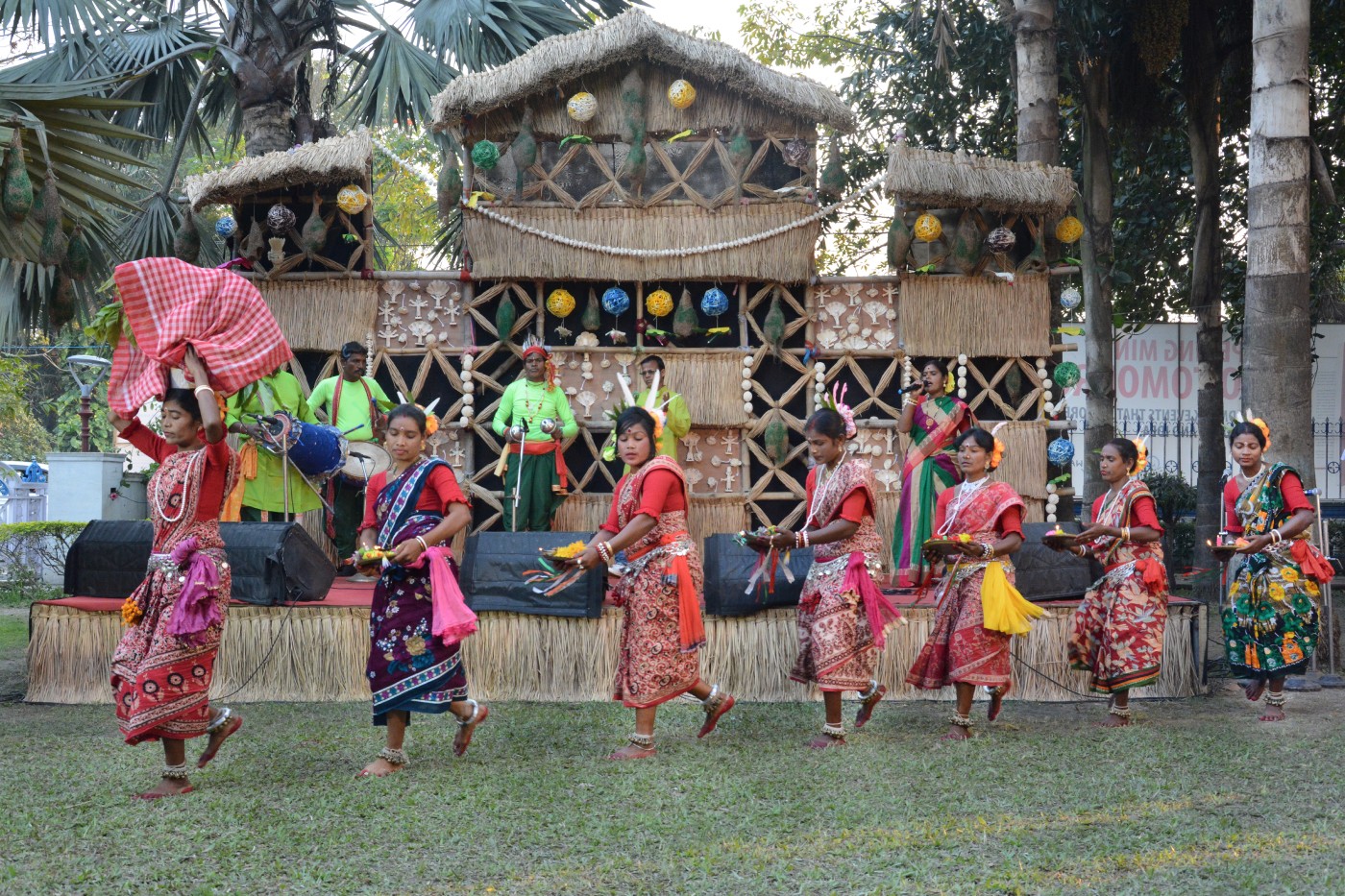
Costume: Colorful sari for women and kurta for men.
Tusu Parab is a folk dance performed during the Tusu Festival, primarily in the rural areas of Bengal. The festival is dedicated to the harvest season and is celebrated by the farming community. The dance is performed by women, who gather in circles and dance to rhythmic beats, often singing traditional Tusu songs. The dance represents the joy and gratitude of the community for a bountiful harvest. The costumes are colorful, with women wearing saris and adorned with traditional jewelry.
Chandimangal Dance (West Bengal)
Festival: Durga Puja
Costume: Bright saris and festive jewelry.
The Chandimangal dance is traditionally performed in rural Bengal during the Durga Puja festival. It’s a dance dedicated to Goddess Durga and is often performed to mark the end of the Puja. The dance incorporates devotional music, with dancers performing rhythmic steps and hand gestures. The performers wear bright-colored saris and traditional jewelry, and the music is generally provided by a dhol and flute.
Raslila (West Bengal)
Festival: Janmashtami
Costume: Traditional dhoti for men, lehenga and choli for women.
Raslila is a traditional dance that tells the story of Lord Krishna’s playful exploits with the Gopis (milkmaids). It is performed with devotional singing, and the dancers mimic the divine love between Lord Krishna and Radha. The dance is popular during the Janmashtami festival, the celebration of Lord Krishna’s birth. The costumes are vibrant, with men wearing traditional dhoti and women in lehenga and choli, and the performance is accompanied by rhythmic drumming and singing.
Goria Dance (West Bengal)
Festival: Makar Sankranti, Holi
Costume: Bright, colorful traditional outfits, often with floral or mirror embellishments.
The Goria dance is a traditional dance of the rural Bengali community, especially during Makar Sankranti and Holi. The dance is usually performed by women and involves intricate footwork, where the dancers move in circles, clapping their hands, and singing traditional folk songs. The dancers wear bright and colorful costumes, often with floral embellishments or mirror work. The dance is a celebration of the harvest and a joyous way to mark the seasonal changes.
Bhatiali Dance (West Bengal)
Festival: Poila Boishakh
Costume: Traditional Bengali attire, often with sarees for women and kurta for men.
Bhatiali dance is a traditional form of Bengali folk dance that has its roots in the boatmen’s community. It is associated with songs of the river and the life of boatmen, capturing the beauty and serenity of nature. The dance is slow and melodic, often performed during Poila Boishakh, the Bengali New Year. The performers wear simple, traditional attire with flowing garments, and the dance is accompanied by soulful baul songs.
Bhand Pather (Jammu & Kashmir)
Festival: Shikara Festival
Costume: Traditional Kashmiri outfits, often with colorful shawls.
Bhand Pather is a unique folk theater form performed in Jammu and Kashmir. It involves singing, dancing, and dramatic storytelling, typically reflecting social issues and humor. The dancers wear traditional Kashmiri attire, with men in Pherans (long coats) and women wearing colorful Kashmiri shawls and phiran.
Nati (Himachal Pradesh)
Festival: Dussehra, Diwali
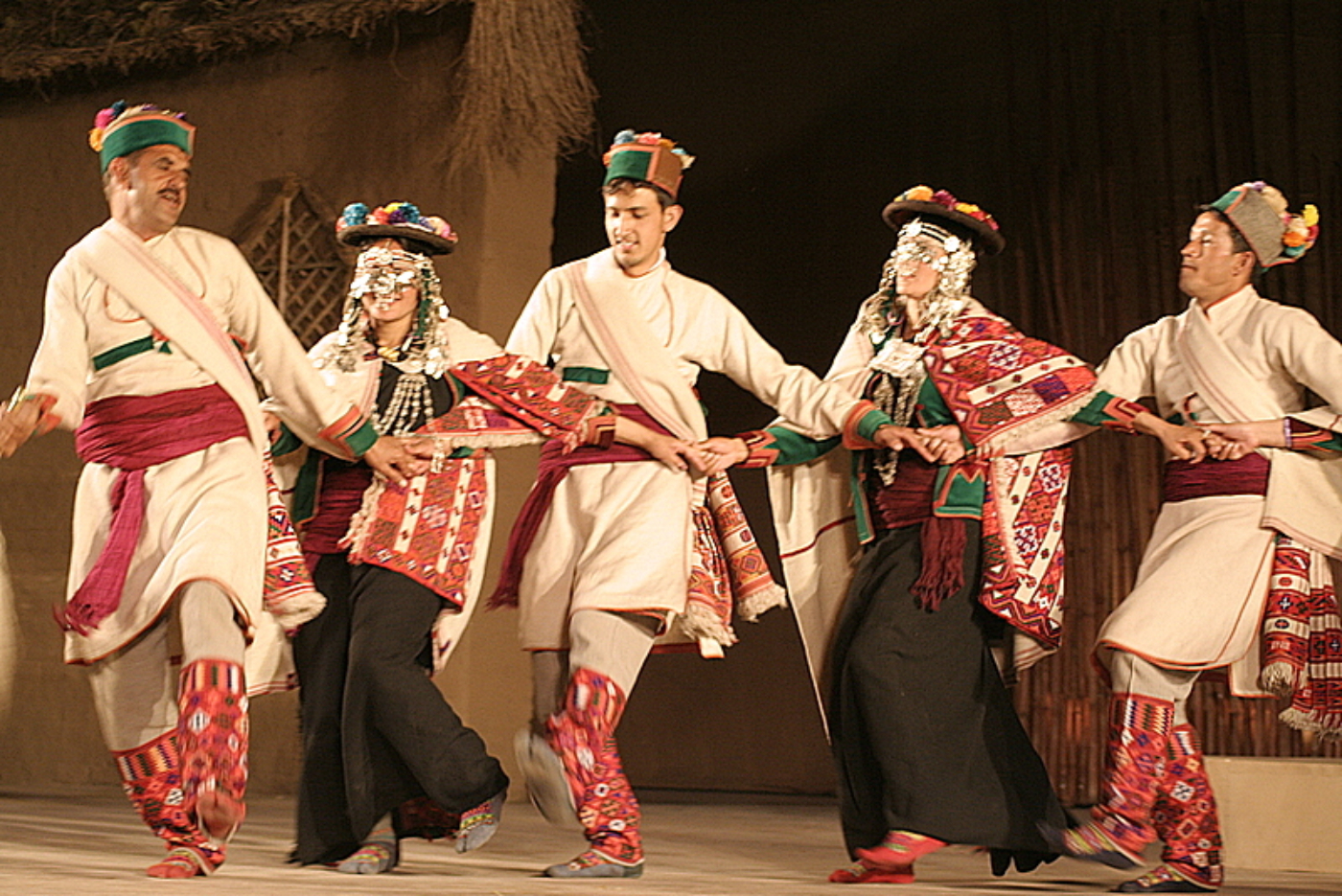
Costume: Traditional Himachali attire, with women in ghagras and men in kurta and chadar.
Nati is a popular folk dance from Himachal Pradesh, especially performed during the Dussehra and Diwali festivals. It’s known for its fast footwork and the dancers often move in circles, creating a visual spectacle. The colorful ghagras for women and simple yet striking kurta-pajamas for men make the dance even more lively and fun.
Rauf (Kashmir)
Festival: Eid
Costume: Traditional Kashmiri attire, including Pherans and headgear.
Rauf is a popular folk dance performed during Eid in Kashmir. The dance is performed by both men and women and involves slow, graceful movements. Dancers are typically dressed in traditional Kashmiri Pherans (long robes), and the performance is accompanied by the melodious sounds of Kashmiri folk music.
Tamasha (Maharashtra)
Festival: Gudi Padwa
Costume: Colorful sarees and traditional jewelry.
Tamasha is a folk-dance form that originated in Maharashtra. It is usually performed in open spaces with a group of dancers. The dance is often accompanied by storytelling, and the performers wear traditional sarees for women and dhoti and kurta for men. It’s performed during festivals like Gudi Padwa.
Puducherry Traditional Dance (Puducherry)
Festival: Cultural Festivals
Costume: Colorful attire, often influenced by French and Tamil cultures.
In Puducherry, a blend of Tamil and French influences shapes the folk dance traditions. Dancers wear colorful, light costumes, which combine the elegance of Tamil folk art and the vibrancy of French colonial aesthetics. The dances are a mix of energetic footwork and expressive hand gestures, often performed during local cultural festivals.
Villu Paatu (Tamil Nadu)
Festival: Pongal, Tamil New Year
Costume: Traditional sari for women, veshti for men.
Villu Paatu is a unique folk dance and music tradition from Tamil Nadu. It is usually performed by a group of musicians and dancers, with the villu (a bow-shaped musical instrument) playing a major role in the performance. The dance includes rhythmic hand and foot movements, with colorful traditional costumes enhancing the festive mood. It’s performed during Pongal and other harvest-related festivals.
Kuttu (Tamil Nadu)
Festival: Deepavali, Karthigai Deepam
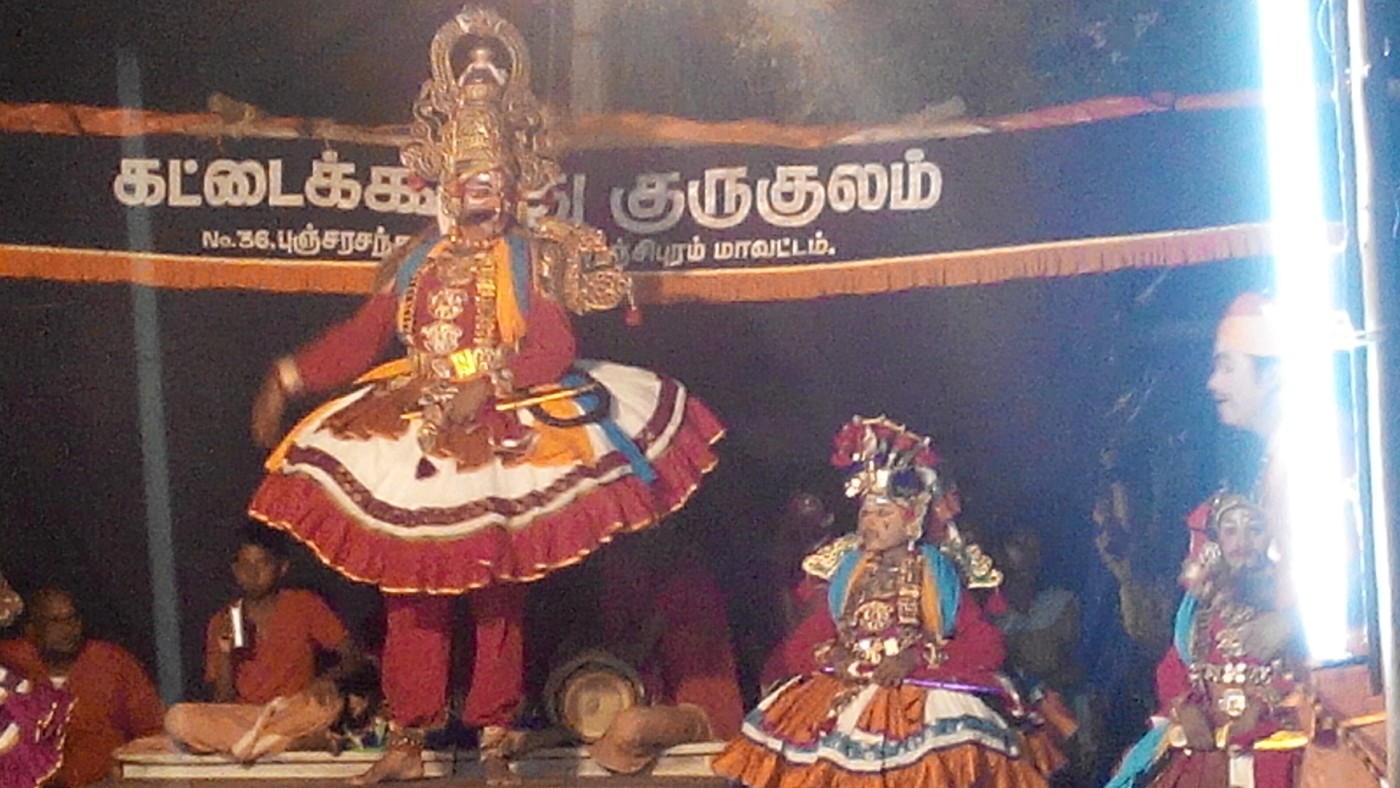
Costume: Veshti (lungi) for men, colorful sari for women.
Kuttu is a popular folk dance from Tamil Nadu that is closely associated with temple festivals. The dancers wear traditional attire and perform to the beat of drums and nadaswaram (a wind instrument). The rhythm of the dance and the energy of the performers create a powerful, uplifting performance. It’s especially popular during festivals like Deepavali and Karthigai Deepam.
Garudadhwani (Uttarakhand)
Festival: Makar Sankranti, Baisakhi
Costume: Bright attire with traditional accessories.
Garudadhwani is a folk dance from Uttarakhand, typically performed during harvest festivals like Makar Sankranti. The dance involves dramatic movements that mimic the flight of Garuda, a mythical bird in Hindu mythology. The dancers wear bright costumes and often use bells or small drums to add rhythm to the performance.
Dhol Cholam (Manipur)
Festival: Yaoshang, Holi
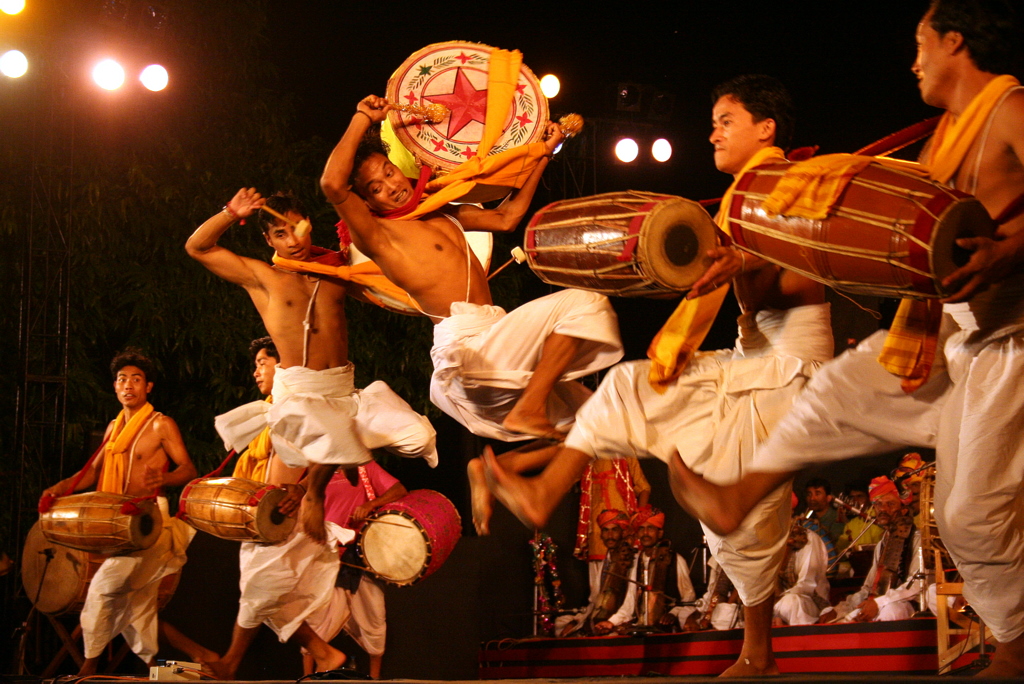
Costume: Traditional Phanek and Rishang for women, Khamen for men.
Dhol Cholam is a vigorous folk dance from Manipur, performed during the Yaoshang festival (a Manipuri version of Holi). The dancers beat large drums and wear traditional Phanek (skirts) and Rishang (blouses) for women, and Khamen for men. The rhythm is fast and the beats are loud, making this dance a lively celebration of the season.
Gidda (Punjab)
Festival: Baisakhi, Lohri
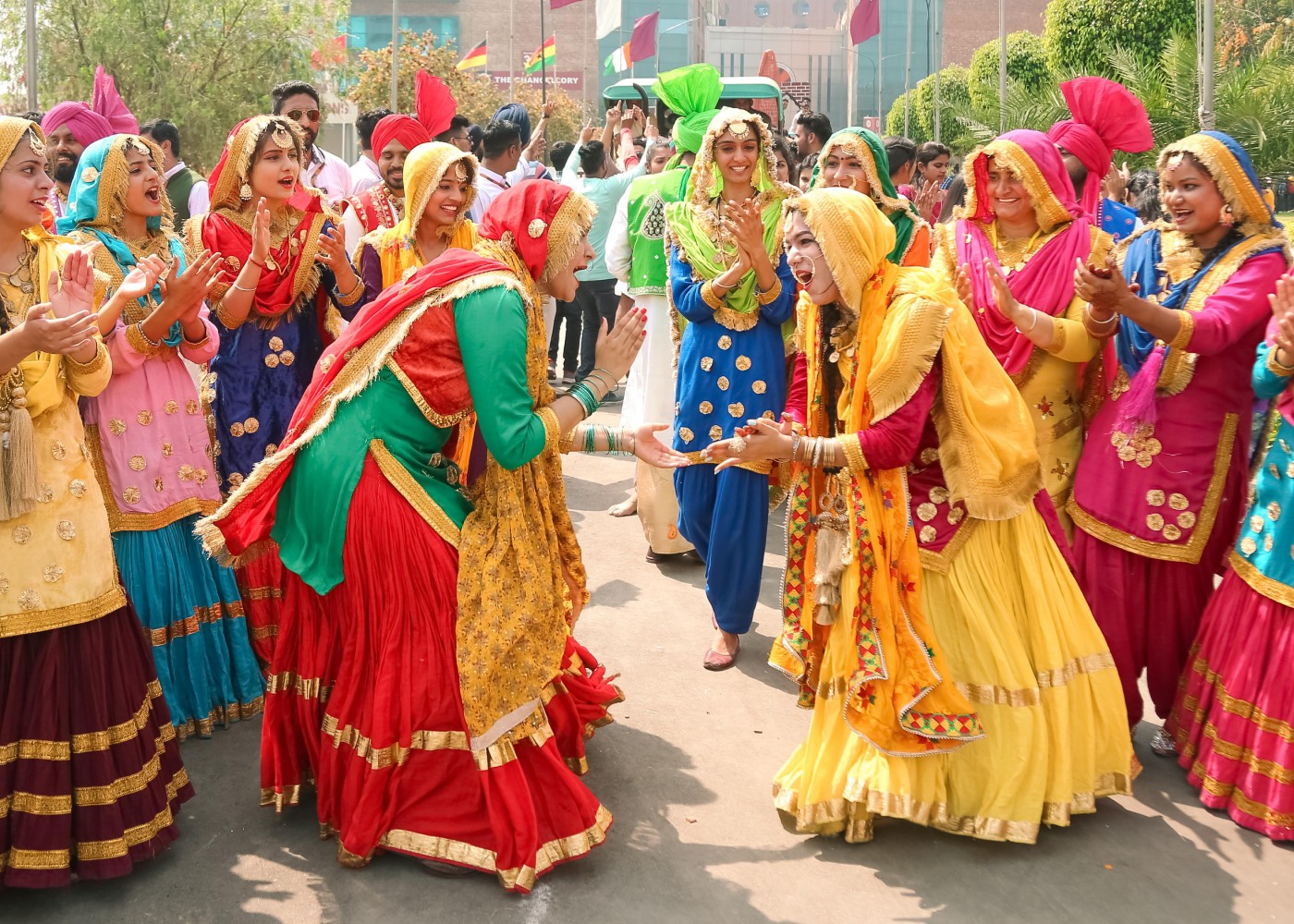
Costume: Colorful salwar kameez with dupatta.
Gidda is the female counterpart of Bhangra, performed by women in Punjab. It’s a lively dance usually performed in a circle, with clapping and singing. The dancers wear colorful salwar kameez, often with mirror work and embellishments. Gidda is performed during major festivals like Lohri and Baisakhi and celebrates the spirit of joy and togetherness.
Kangra Dance (Himachal Pradesh)
Festival: Shivaratri
Costume: Traditional Himachali attire with shawls.
Kangra dance is a traditional folk dance of Himachal Pradesh, performed to celebrate the festival of Shivaratri. The dancers wear beautiful Himachali costumes, including colorful shawls and kurta-pajama for men and ghagra for women. The dance is energetic and involves spinning, clapping, and rhythmic movements.
Kalaripayattu (Kerala)
Festival: Onam
Costume: Traditional attire with warriors’ gear.
While Kalaripayattu is mainly a martial art, it is also often performed as a folk dance, particularly during Kerala’s Onam festival. The dancers wear traditional warrior attire, using sticks and swords. The graceful, fluid movements are combined with high-energy acrobatics, reflecting the martial traditions of Kerala.
Choudhuri (Uttar Pradesh)
Festival: Holi, Diwali
Costume: Traditional kurta and chadar for men, lehenga and choli for women.
Choudhuri is a folk dance performed mainly in Uttar Pradesh during festivals like Holi and Diwali. The dance is an energetic one, where dancers perform in pairs or groups. Men and women wear bright, festive attire with intricate designs, and the dance is known for its joyful spirit. The dhol and tabla beats accompany the movements of the dancers.
Chili (Chhattisgarh)
Festival: Hareli
Costume: Traditional attire made from natural materials, like leaves and flowers.
Chili is a folk dance from Chhattisgarh, usually performed during the Hareli festival, a harvest festival celebrated by the indigenous tribes. The dancers wear simple costumes made from leaves, flowers, and other natural materials, symbolizing their deep connection with nature and the harvest. The dance involves rhythmic movements and is a celebration of fertility and abundance.
Karma (Jharkhand, Chhattisgarh, Madhya Pradesh)
Festival: Karma Festival
Costume: Traditional attire with leaves and floral decorations.
Karma is a tribal dance performed during the Karma festival, which marks the harvest season in the regions of Jharkhand, Chhattisgarh, and Madhya Pradesh. The dance involves both men and women moving in circles, holding twigs or branches. The dancers wear traditional tribal attire, often decorated with leaves, flowers, and beads, reflecting their bond with nature.
Bilai (Madhya Pradesh)
Festival: Diwali, Teej
Costume: Bright, colorful lehenga and saree for women; dhoti for men.
Bilai is a folk dance from Madhya Pradesh, performed during festivals like Diwali and Teej. The dance involves circular movements and is accompanied by rhythmic clapping and singing. The women wear beautiful lehenga and saree, while men wear dhoti. The dance is a reflection of the celebration of nature, harvest, and community life.
Wangala (Meghalaya)
Festival: Wangala Festival
Costume: Traditional attire, including feathered headgear for men and bright dresses for women.
Wangala is a traditional dance from Meghalaya, performed during the Wangala Festival, which marks the end of the harvest season. The dancers wear colorful costumes, with men often wearing headgear made of feathers and women in bright, decorated dresses. The dance is accompanied by the rhythmic beat of drums, and the movements imitate the celebrations of the harvest.
Dholki (Rajasthan)
Festival: Gangaur Festival
Costume: Colorful ghagras and cholis for women, traditional Rajasthani outfits for men.
Dholki is a folk dance from Rajasthan, typically performed during the Gangaur Festival. It is a lively dance where women move to the beat of the dholki (a traditional drum), clapping and spinning in vibrant ghagras and cholis. The dance is a celebration of the worship of Goddess Gauri and is an expression of joy and togetherness.
Puli Kali (Kerala)
Festival: Onam
Costume: Tiger-inspired body paint and colorful attire.
Puli Kali, or the “Tiger Dance,” is performed during the Onam festival in Kerala. It involves dancers who paint their bodies to look like tigers, and the dance is accompanied by rhythmic drumbeats. The performers wear colorful attire and create an exciting and energetic performance that symbolizes the mythical tigers of Kerala’s folklore.
Koorpan (Tamil Nadu)
Festival: Pongal
Costume: Traditional sari for women and veshti for men.
Koorpan is a folk dance from Tamil Nadu, performed during the Pongal festival, which celebrates the harvest. The dance involves intricate footwork and is usually performed in pairs or groups. The dancers wear traditional saris and veshti, and the performance reflects the joy of the harvest season.
Sankirtan (Manipur)
Festival: Yaoshang, Ningol Chakouba
Costume: Traditional Phanek and Rishang for women, Khamen for men.
Sankirtan is a devotional folk dance from Manipur that is performed during the Yaoshang festival (Manipur’s version of Holi). The dance involves group performances in honor of Lord Krishna, with men and women wearing traditional Manipur attire. It is often accompanied by chants and devotional music, symbolizing peace and devotion.
Bailo (Goa)
Festival: Carnival, Shigmo
Costume: Colorful, ornate costumes with feathers and beads.
Bailo is a folk dance from Goa, typically performed during the Carnival and Shigmo festivals. The dancers wear vibrant, feathered costumes and perform to the beat of drums and other musical instruments. The dance has a festive spirit, often involving group performances and symbolizing the unity of the Goan people.
Nongkrem (Meghalaya)
Festival: Nongkrem Festival
Costume: Traditional Khasi attire, including the khasi headgear for men.
Nongkrem is a traditional dance of the Khasi tribe of Meghalaya, performed during the Nongkrem Festival. The dance is dedicated to the goddess Ka Blei Synshar and is performed in honor of a good harvest. The dancers wear traditional Khasi attire, including unique headgear and colorful robes, adding to the cultural significance of the dance.
Bedia (Madhya Pradesh)
Festival: Teej, Diwali
Costume: Traditional sarees and lehenga for women, kurta and dhoti for men.
Bedia is a tribal dance form performed by the communities of Madhya Pradesh during Teej and Diwali. The dance is simple yet energetic, involving rhythmic steps and clapping. The women wear colorful lehenga and sarees, and men wear dhoti and kurta. The dance is a way to celebrate the harvest and to honor the gods.
Dollu Kunitha (Karnataka)
Festival: Makar Sankranti
Costume: Traditional dhoti, kurta, and large drums.
Dollu Kunitha is a popular drum dance from Karnataka, typically performed during Makar Sankranti. The dance involves a group of men playing large drums called dollus while dancing in a circle. The energetic beats and vigorous movements are accompanied by colorful traditional attire, making it a high-energy and exciting performance.
Lezim (Maharashtra)
Festival: Ganesh Chaturthi, Gudi Padwa
Costume: Bright, traditional Maharashtrian attire, often with Lezim (a musical instrument).
Lezim is a traditional dance from Maharashtra, performed during festivals like Ganesh Chaturthi and Gudi Padwa. The dancers hold a small percussion instrument called Lezim, and the rhythm of the dance is in sync with the sound of the instrument. The costumes are bright and festive, with women wearing traditional sarees and men in kurta and dhoti.
Conclusion
Indian folk dances are not just about the movements and rhythm, but also about expressing the culture and tradition of the region. Each dance tells a story, whether it’s about the harvest, Gods, or social life. The colorful costumes, intricate jewelry, and energetic performances make these dances a visual delight. Whether it’s the energetic beats of Bhangra or the graceful movements of Chhau, Indian folk dances are a celebration of life, tradition, and culture. If you ever get the chance, don’t miss the opportunity to experience these dances during their respective festivals and document the memories!

Good