

3. The Power of Light Modifiers in Photography
What Do Modifiers Actually Do?
Light modifiers change four key properties of light:
- Quality → Hard (sharp shadows) vs. Soft (diffused shadows).
- Spread → How widely the light covers an area.
- Direction → Where the light falls, how controlled it is.
- Character → Mood, texture, or style the light conveys.
Choosing the right modifier is less about “gear” and more about storytelling.
Types of Light Modifiers and How They Transform Images
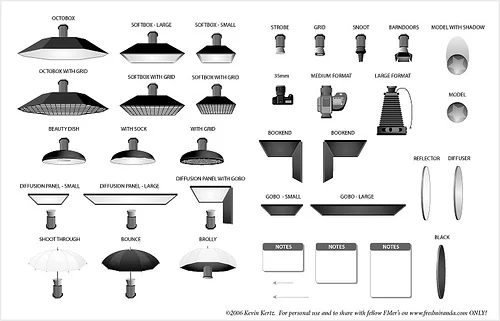
Umbrellas
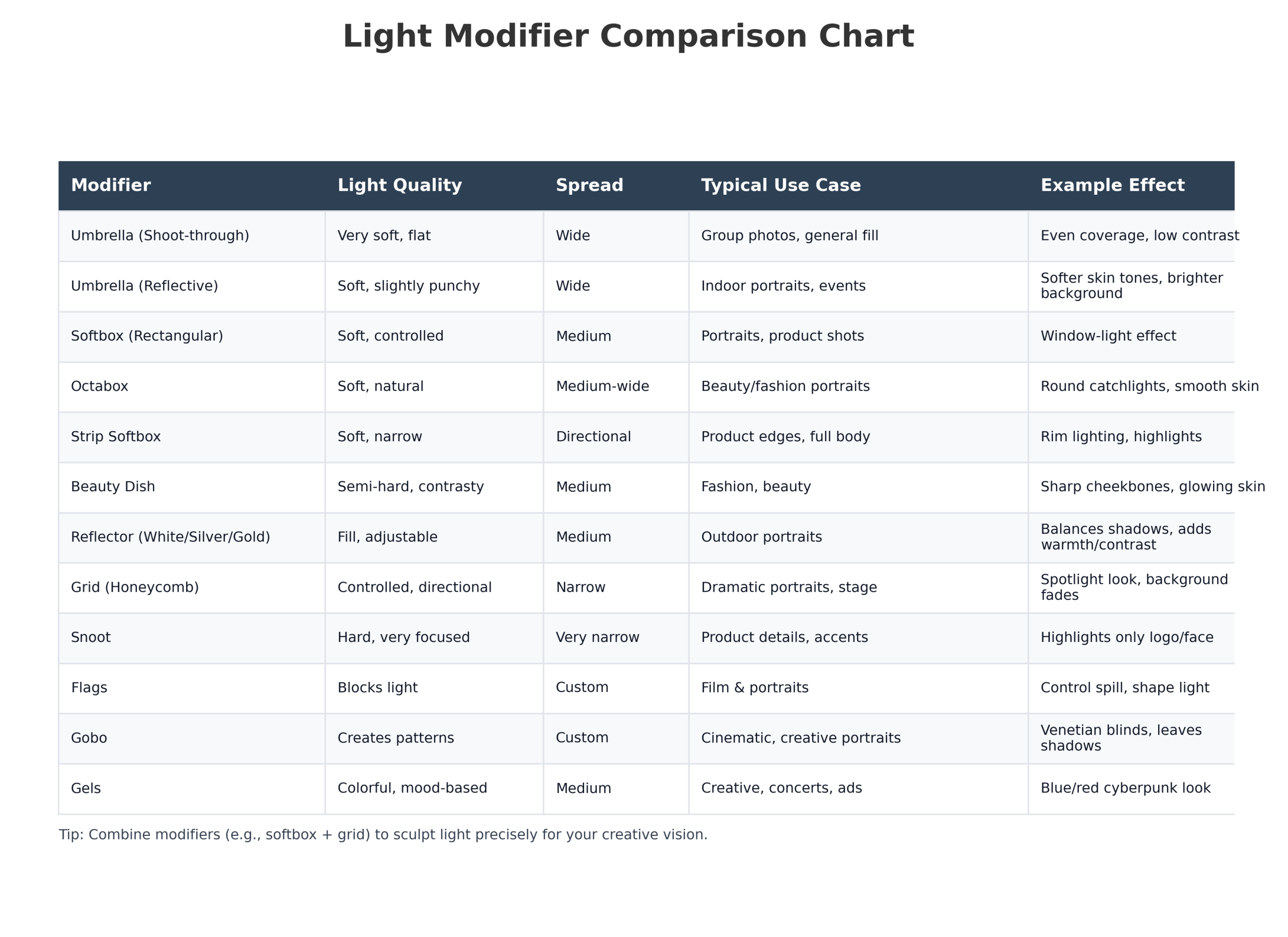
- Shoot-through umbrella: Makes light soft and broad, spreads everywhere.
- Reflective umbrella: Bounces light back, softer but more controlled.
Example: Wedding group photo → umbrella gives wide, soft coverage so everyone is evenly lit.
Softboxes
- Rectangular softbox: Controlled soft light, easy to simulate window light.
- Octabox: Rounder, creates natural catchlights in eyes.
- Strip softbox: Narrow and tall, great for edge lighting or full-body highlights.
Example: Fashion shoot → octabox close to subject gives smooth skin tones and circular catchlights, creating a polished magazine look.
Beauty Dish
- Creates light between hard and soft.
- Punchy, with strong contrast and crisp highlights.
- Popular in beauty/fashion because it sculpts cheekbones and adds drama.
Example: Model headshot → beauty dish creates glowing skin with dramatic contour shadows.
Reflectors
- Bounce light into shadows to control contrast.
- White = neutral soft fill.
- Silver = brighter, more contrast.
- Gold = warm tones (sunset feel).
Example: Outdoor portrait → reflector bounces golden-hour sun back into subject’s face for balanced exposure.
Grids (Honeycombs)
- Attach to softboxes or reflectors to narrow spread.
- Keep light off background or unwanted areas.
Example: Actor portrait → grid on softbox keeps light on the face, background fades into darkness (cinematic look).
Snoots
- Tube/cone shape, very narrow spotlight.
- Great for highlighting details or dramatic portrait effects.
Example: Product shoot → snoot highlights just the label on a wine bottle, rest stays in shadow.
Flags and Gobos
- Flags block light.
- Gobos (go-betweens) create patterned shadows.
Example: Film noir portrait → gobo with venetian blind pattern makes striped shadows across subject’s face for drama.
Gels
- Transparent colored sheets placed over lights.
- Change white balance or add mood.
Example: Club photography → blue gel on one side, red gel on the other → cyberpunk vibe.
How Modifier Size and Distance Affect Light
- Large modifier close to subject → very soft, wrapping light (glamour portraits).
- Small modifier far from subject → hard, punchy light (dramatic portraits).
- Same modifier moved closer/further drastically changes shadow softness.
Example:
- 120cm octabox at 1m → soft, dreamy look.
- Same octabox at 4m → shadows harder, light looks “smaller.”
Practical Scenarios
Portrait Photography
- Beauty dish → sharp, dramatic headshots.
- Octabox → flattering, natural look.
- Grid → isolate face, cinematic storytelling.
Product Photography
- Strip softbox → beautiful edge highlights on bottles.
- Snoot → spotlight logo.
- Flags → block spill, control reflections.
Interiors/Architecture
- Umbrella → fill entire room.
- Grids → focus on specific furniture without spilling light.
Creative Experimentation
Modifiers aren’t just tools, they’re brushes. Think of them like a painter’s kit:
- Softbox = wide brush.
- Snoot = fine detail brush.
- Gobo = texture brush.
- Gel = color palette.
The power lies not just in using one modifier, but in layering multiple for storytelling.
Key Takeaway
Modifiers are not about “soft vs. hard light” — they’re about control.
- Want flattering? → softbox or reflector.
- Want drama? → snoot or beauty dish.
- Want story/mood? → gels or gobos.
Once you master modifiers, you stop fighting with light and start painting with it.


