

Abhinaya is the art of expression in Indian classical dance and drama, where performers convey emotions, stories, and spiritual themes without speaking a single word. Through precise facial expressions (evoke Rasa), hand gestures (Mudras), and body movements, dancers and actors bring characters and narratives to life. Rooted in the ancient treatise Natya Shastra, Abhinaya transforms performance into a powerful, visual language that resonates deeply with audiences.
The concept of Abhinaya is central to the Natya Shastra, the ancient Indian treatise on performing arts, written by the sage Bharata around 200 BCE to 200 CE. This text doesn’t just teach how to dance or act — it dives deep into how to express emotions so that the audience truly feels what the performer is conveying.
What is Abhinaya?
The word “Abhinaya” comes from Sanskrit: “abhi” means “towards,” and “naya” means “to guide or lead.” So, Abhinaya literally means “leading towards” — guiding the audience towards an emotional experience.
According to Sage Bharata in the Natya Shastra, Abhinaya is the means of expression used by performers to communicate the story, emotions, and ideas to the audience. It is through Abhinaya that the theory of Rasa (emotional flavors) comes alive.
Why is Abhinaya Important?
Abhinaya is the bridge between the performer and the audience. Without it, dance or drama becomes mechanical, like a mere display of steps or words. Through Abhinaya:
- The audience connects emotionally, feeling the love, anger, fear, or joy portrayed.
- It helps communicate complex stories and ideas beyond language barriers.
- It turns performing arts into a spiritual experience, fulfilling Bharata’s vision that art should uplift and transform.
Together, these layers make the emotion vivid and real to the audience.
The Four Types of Abhinaya
Abhinaya is often described as the heartbeat of Indian classical dance and drama — the powerful art of conveying emotions and stories through nuanced expression. Bharata Muni’s Natya Shastra beautifully categorizes this expressive art into four types. Each type is like a different language or tool that, when combined, creates the full emotional tapestry of a performance.
1. Āṅgika Abhinaya — Expression Through the Body and Movement
Imagine watching a dancer who doesn’t say a word but makes you feel everything — joy, longing, fear — simply through the way they move. This is Āṅgika Abhinaya, the physical form of expression.

What it involves: The entire body is a canvas here. The eyes communicate subtle emotions; a quick glance or a slow blink can say volumes. The hands (mudras) paint pictures — a flower held delicately, the curve of a river, or the fierce claw of a tiger. The posture, head tilts, footwork, and torso movements all combine to narrate the story and evoke emotions.
Example: In Bharatanatyam, the dancer’s eyebrows raise with surprise, eyes widen in awe, and fingers flutter like a bird — all helping the audience visualize the narrative without words. When the heroine expresses sorrow, her shoulders slump and her steps become heavy, physically embodying the weight of grief.
Why it’s powerful: It’s a universal language. Even if you don’t understand the spoken word or cultural context, Āṅgika Abhinaya can move your heart purely through the language of movement.
2. Vāchika Abhinaya — Expression Through Speech and Sound
While dance and mime can tell stories, words give them voice. This is Vāchika Abhinaya, where speech, singing, and vocal sounds breathe life into the narrative.
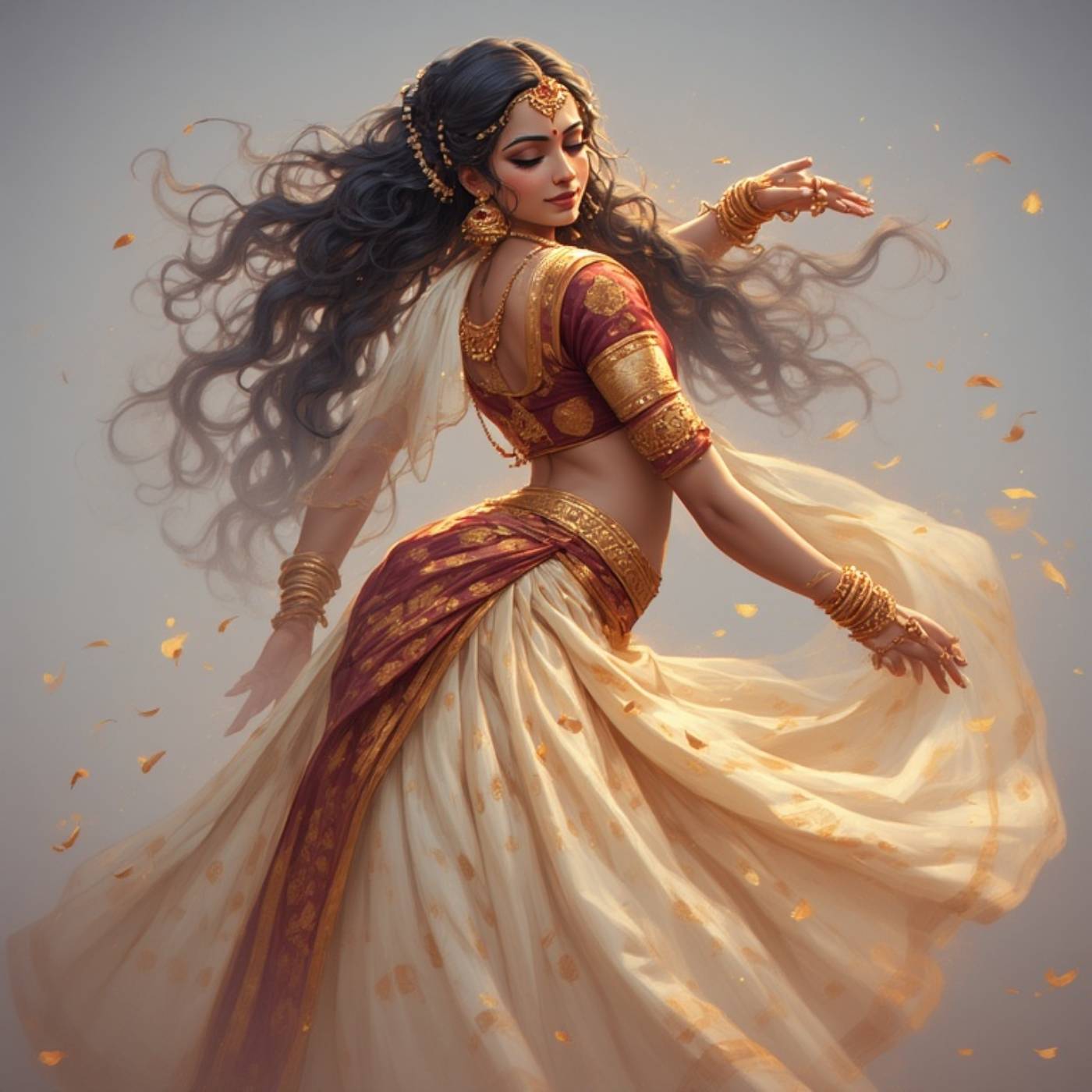
What it involves: Dialogue, poetry, song, and chanting become expressive tools. The tone, pitch, rhythm, and emotion in the voice deepen the mood. It’s not just what is said, but how it’s said — a trembling voice to show fear, a steady one for authority, or a soft whisper for love.
Example: In Kuchipudi or Sanskrit theater, actors sing verses or recite poetry that narrate the story. A warrior might shout a battle cry, or a lover might sing a soulful lament. Even in dance-drama forms like Kathakali, the vocalists provide the emotional backdrop through rhythmic chants and songs that interact with the dancer’s movements.
Why it’s powerful: Words and sounds can clarify complex ideas, add layers to emotions, and connect directly with the audience’s intellect and heart.
3. Āhārya Abhinaya — Expression Through Costume and Makeup
Step into the world of Indian classical performance, and you’re immediately struck by the stunning costumes, intricate jewelry, and bold makeup. This is Āhārya Abhinaya — the visual storytelling through external adornment.
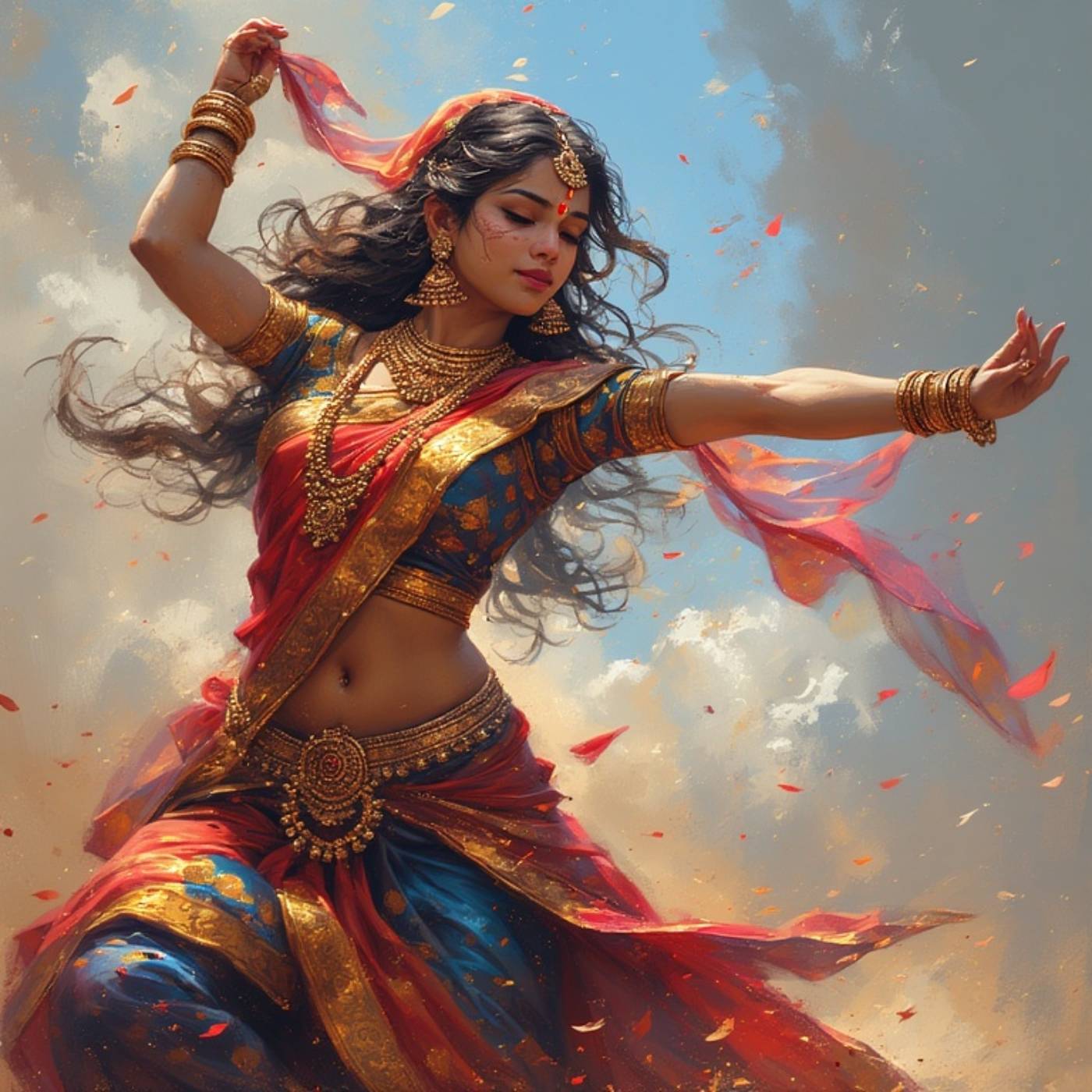
What it involves: Costumes are carefully designed to represent characters, mood, or even symbolic themes. The colors, fabrics, ornaments, and makeup are not just for beauty but are coded visual cues that help the audience instantly recognize the character’s nature.
Example: In Kathakali, the bright green face paint with red designs marks heroic or divine characters; red and black symbolize villains. The tall headgear and heavy necklaces in Bharatanatyam evoke royalty or divine beings. The flowing white costume in Mohiniyattam represents grace and purity.
Why it’s powerful: Āhārya Abhinaya sets the stage for storytelling, creating an immersive visual experience and helping the audience instantly connect with the character or theme being portrayed.
4. Sāttvika Abhinaya — Expression Through Inner Emotion and Spontaneity
Perhaps the most profound and elusive form, Sāttvika Abhinaya is the expression that comes from deep within — the genuine emotions and involuntary reactions that spontaneously escape from the performer’s body.

What it involves: It’s not merely acting; it’s feeling the emotion inside so intensely that it naturally manifests through subtle signs — a quiver in the voice, a tear glistening in the eye, the tension in a muscle, or a fleeting smile. This is the realm where the performer becomes the character, losing the boundary between self and role.
Example: Imagine an actor portraying grief so deeply that real tears form; or the slight tremble of the hands conveying fear without any deliberate gesture. Legendary classical dancers and actors often describe this as entering a meditative or trance-like state where their internal emotions radiate outward.
Why it’s powerful: Sāttvika Abhinaya touches the soul of the audience. It creates an authentic emotional resonance, making the experience unforgettable and transformative.
Putting It All Together: The Symphony of Abhinaya
When a classical performance combines these four types, it becomes a multi-layered emotional experience:
- The body moves (Āṅgika)
- The voice narrates and sings (Vāchika)
- The costume dazzles and defines (Āhārya)
- The inner feelings shine through (Sāttvika)
Together, they create a world where stories aren’t just told — they are felt, lived, and remembered.
Example to Understand Abhinaya
Imagine a dancer telling the story of Radha waiting for Krishna. Without words, through Abhinaya, the dancer:
- Uses Āṅgika Abhinaya: Gentle hand movements showing looking around, eye darting to signal hope and longing.
- Uses Sāttvika Abhinaya: A soft tear forming in the eye to show deep emotional pain.
- Wears Āhārya Abhinaya: Costume and jewelry that signify Radha’s character.
- If spoken words or song are included, that’s Vāchika Abhinaya — narrating her thoughts or feelings.
Closing Thought
Abhinaya is not just technique; it is an art of transforming performance into experience. Bharata’s vision, preserved for over two millennia in the Natya Shastra, continues to inspire dancers and actors to reach beyond mere imitation — to truly embody emotions and bring audiences along on an emotional journey.
If you ever watch a classical dance or drama again, pay close attention to the performer’s expressions and gestures — you’ll begin to see how much meaning is packed into every subtle movement, thanks to the art of Abhinaya.
Acknowledgment:
I would like to acknowledge the works of Bharata Muni and scholars such as Manomohan Ghosh, Kapila Vatsyayan, G.K. Bhat, Leela Venkataraman and Ananda Lal whose translations and interpretations of the Natyasashtra have greatly contributed to the understanding of classical Indian theatre and dance. Their research provided the foundational knowledge for this article.
You might like to read >>>


