

Music and rhythm are the heartbeat of Indian classical drama and dance, not merely background sound or decoration. According to the ancient Natya Shastra, they shape the flow of the story, guide the timing of every movement, and deepen the emotions expressed on stage. Without music and rhythm, the entire drama would lose its life and energy.
Let’s explore how music and rhythm work together in Indian classical arts to create a powerful and immersive experience.
Ragas — The Emotional Colors of Music
A raga is a specific set of musical notes arranged in a way that evokes certain feelings or moods, known as rasas. Think of ragas as musical emotions — each one brings a unique atmosphere to a scene.
- For example, Raga Bhairavi often brings a sense of sadness or devotion. So, if a character is experiencing sorrow or longing, a singer or instrumentalist might use Bhairavi to highlight this mood.
- On the other hand, Raga Hamsadhwani is bright and joyful, perfect for happy or festive scenes.
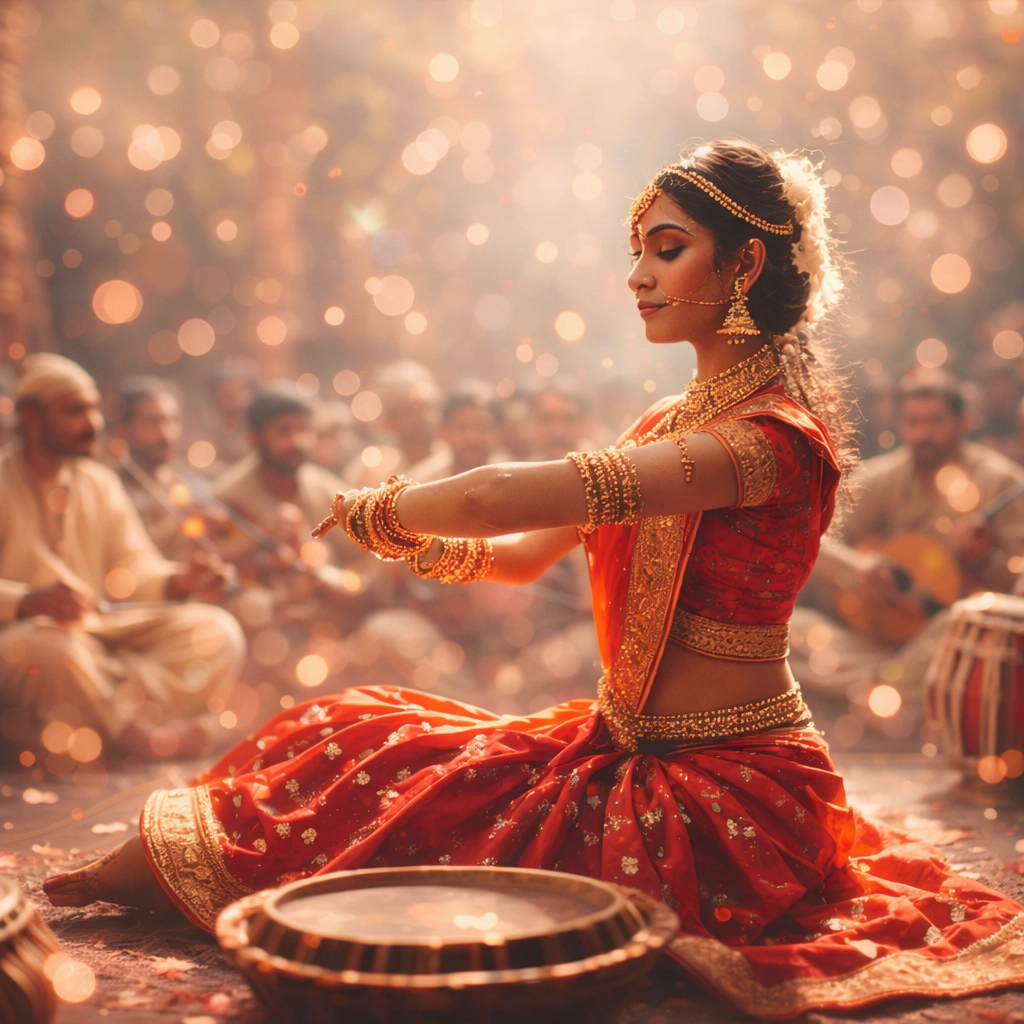
In a dance-drama, the raga helps the dancer connect emotionally with the story, guiding their facial expressions (abhinaya) and gestures (mudras) to match the mood created by the music.
Talas — The Rhythmic Foundation
While ragas provide the melody, talas provide the rhythm — the steady beat or pulse that structures the entire performance.
- A tala is a rhythmic cycle, like a repeating pattern of beats. These cycles can be simple, like the common 8-beat Adi tala, or very complex, with intricate subdivisions.
- The dancer’s steps, hand movements, and expressions are carefully timed to these beats. For example, in Kathak, fast spins and footwork often align perfectly with quick, complex tala patterns, creating a dazzling display of rhythm and movement.
The tala sets the pace of the story — slow and steady for a romantic scene, fast and energetic for a battle or celebration.
Instruments — The Voices of Drama
Natya Shastra also talks about various instruments used to bring music and rhythm to life. Some of the most important ones include:
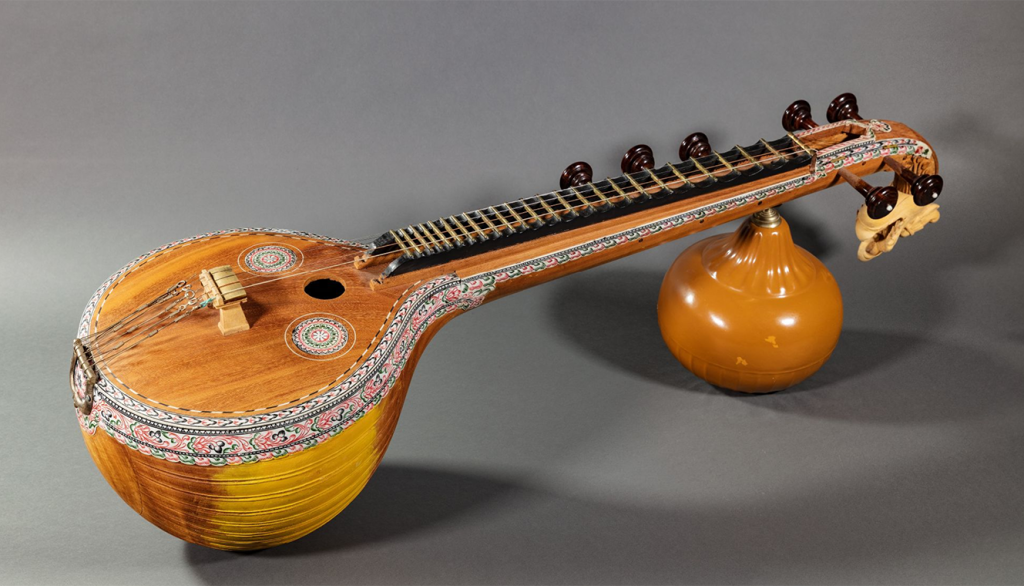
1. Veena: A stringed instrument with a deep, melodious sound. It often carries the main tune in a performance, helping to set the emotional tone.
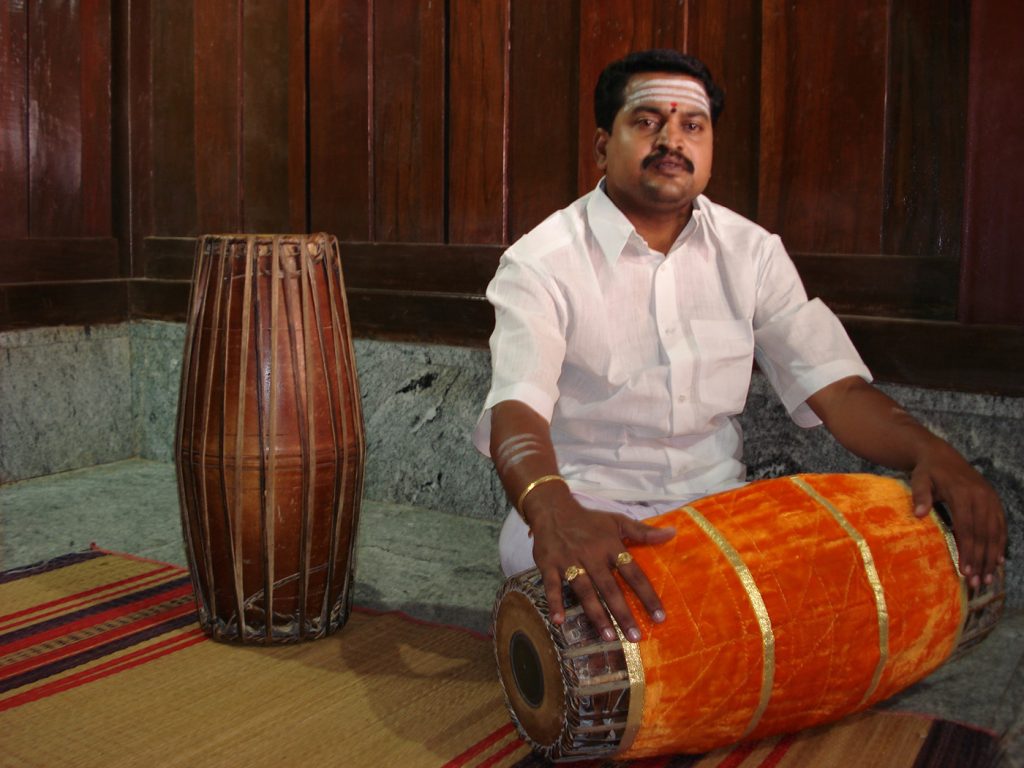
2. Mridangam: A two-headed drum that provides the rhythmic base, especially in South Indian classical dance like Bharatanatyam and Kuchipudi. Its beats guide the dancer’s footwork.
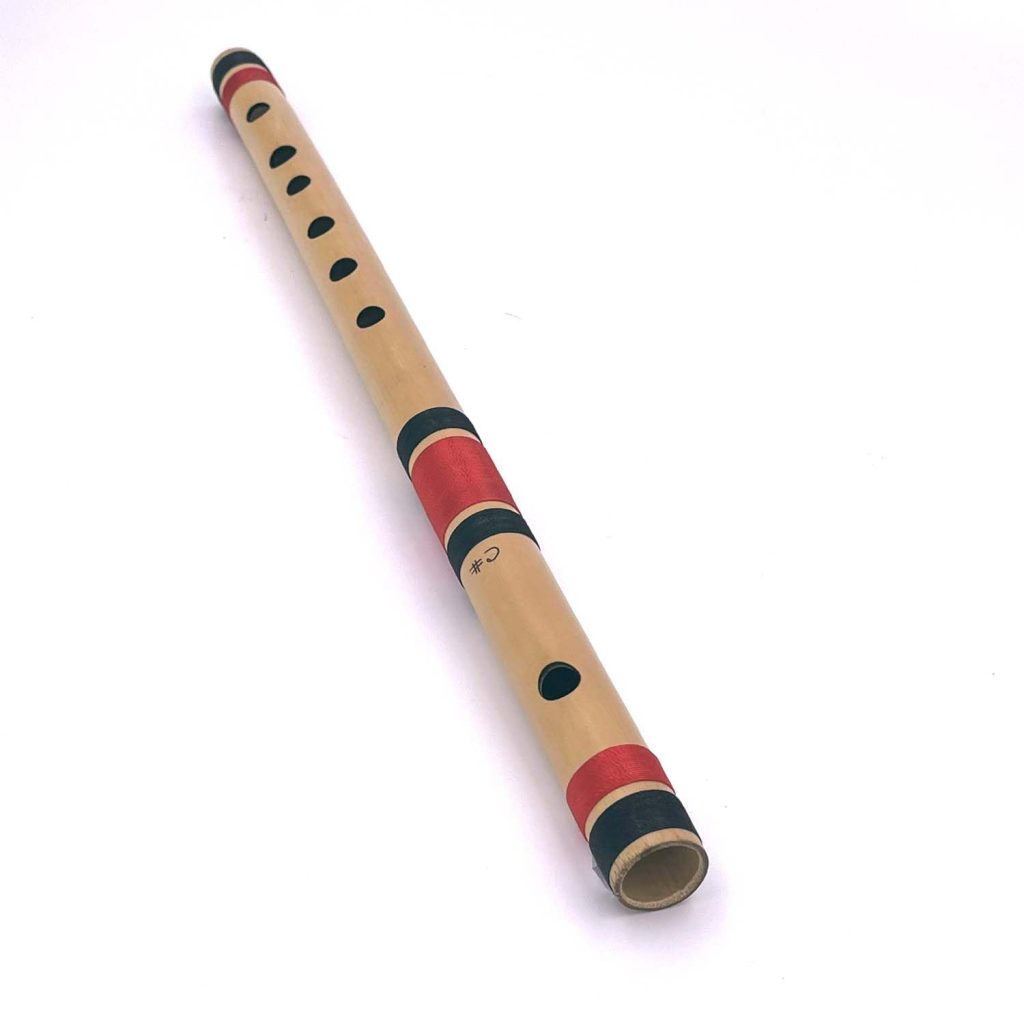
3. Flute: A bamboo wind instrument with a soft, sweet tone. It is used to express gentle or romantic emotions, often accompanying dances like Odissi or Manipuri.
4. Cymbals (Manjira)
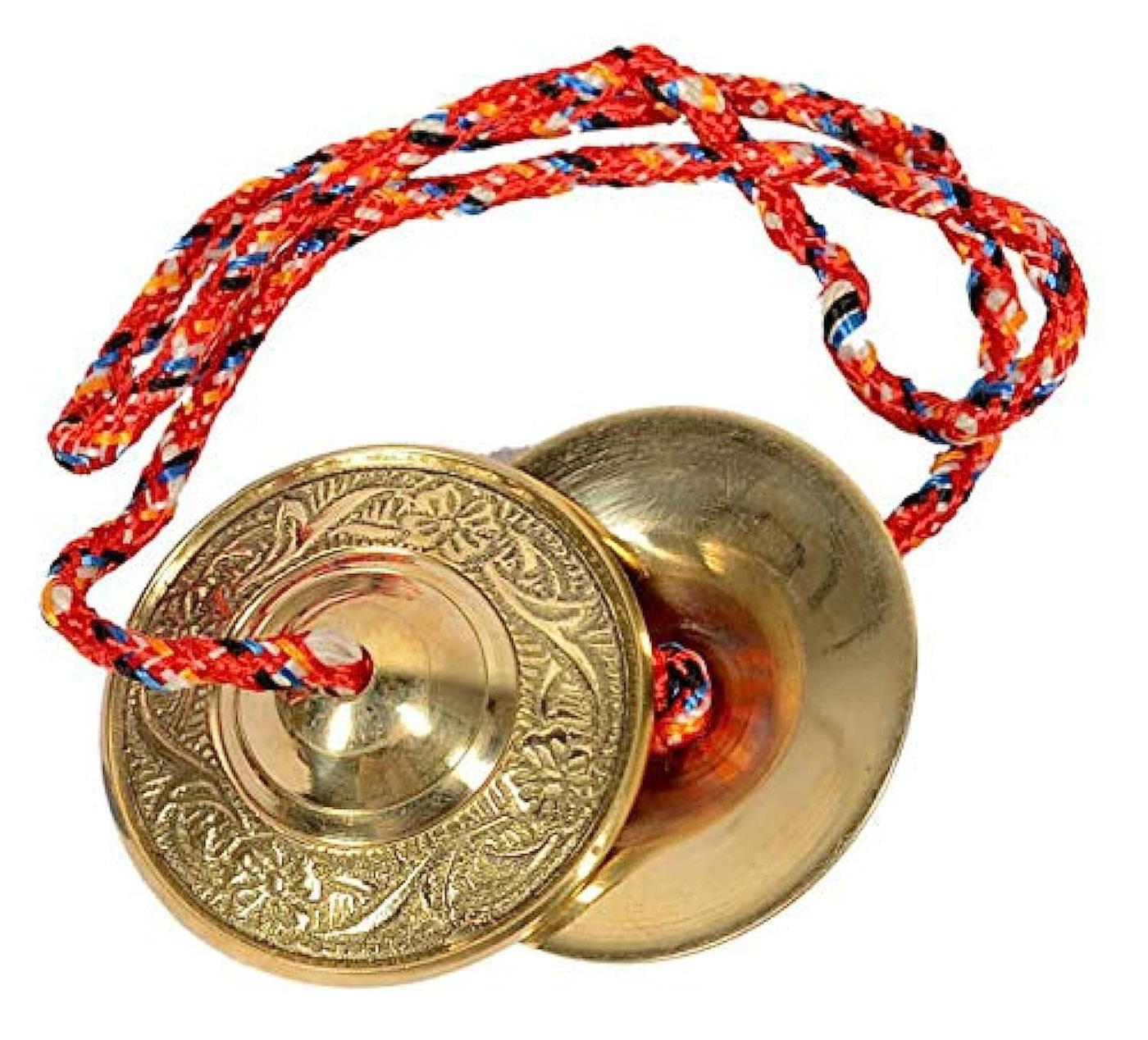
Small metal cymbals produce a bright, sharp sound that highlights rhythmic patterns and keeps time during the performance. These instruments work together, creating layers of sound that support and enhance the dancers’ storytelling.
Now a days more instruments are added for its versatility and portability. They are as follows:
5. Tabla
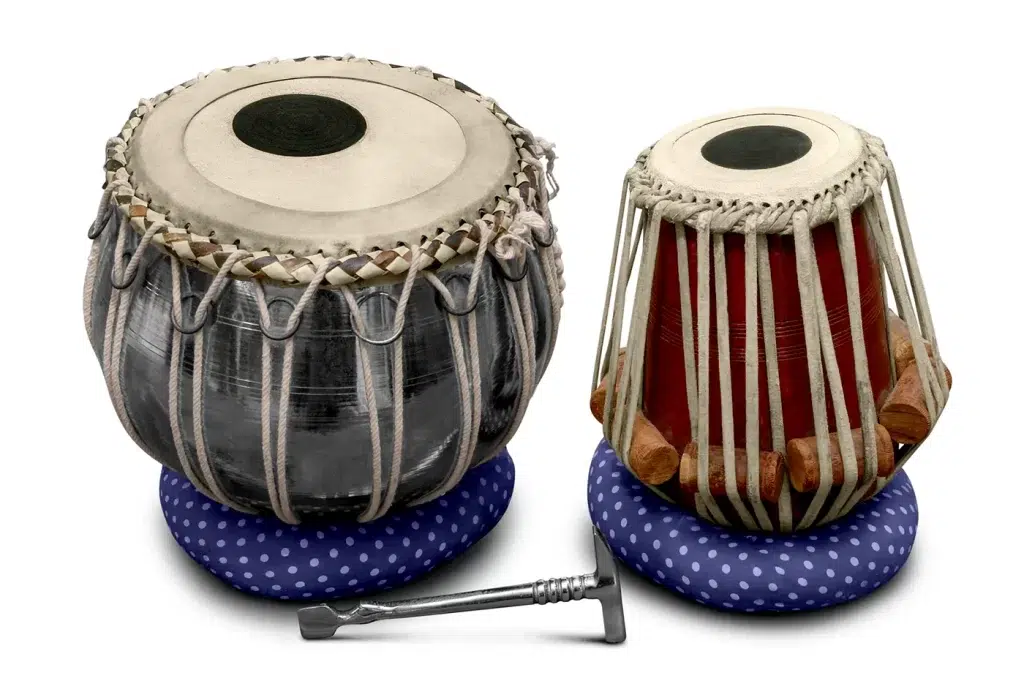
- A pair of drums used in North Indian classical music, essential for Kathak dance.
- Offers a wide range of sounds and rhythmic patterns that match the dancer’s intricate footwork.
- Its dynamic beats can intensify the drama or gently support softer movements.
6. Pakhawaj
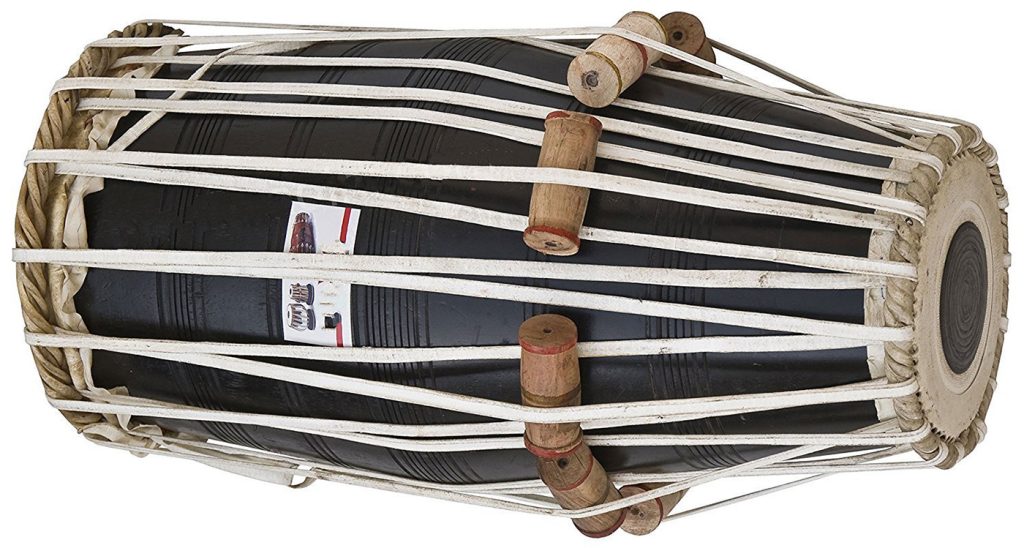
- A barrel-shaped drum similar to the mridangam, used mainly in North Indian classical music and dance.
- Known for deep, rich tones that provide the rhythmic foundation in traditional dance-dramas.
- Particularly important in Dhrupad music and some Kathak performances.
7. Harmonium
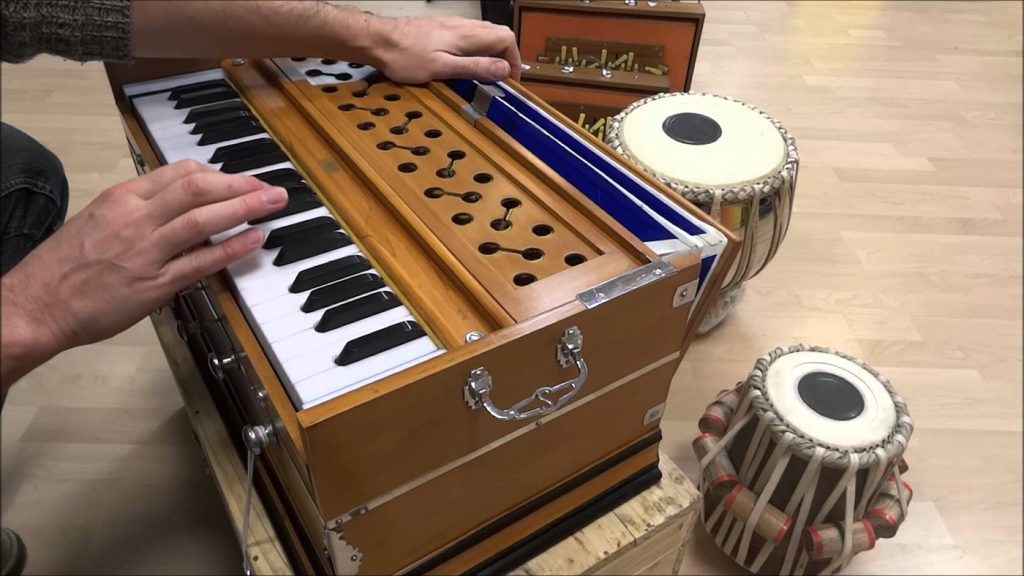
- A small keyboard instrument that produces melody and drone.
- Often accompanies vocalists in classical and semi-classical performances.
- Supports the raga by filling in harmonic textures, helping dancers and singers stay in tune.
8. Nadaswaram
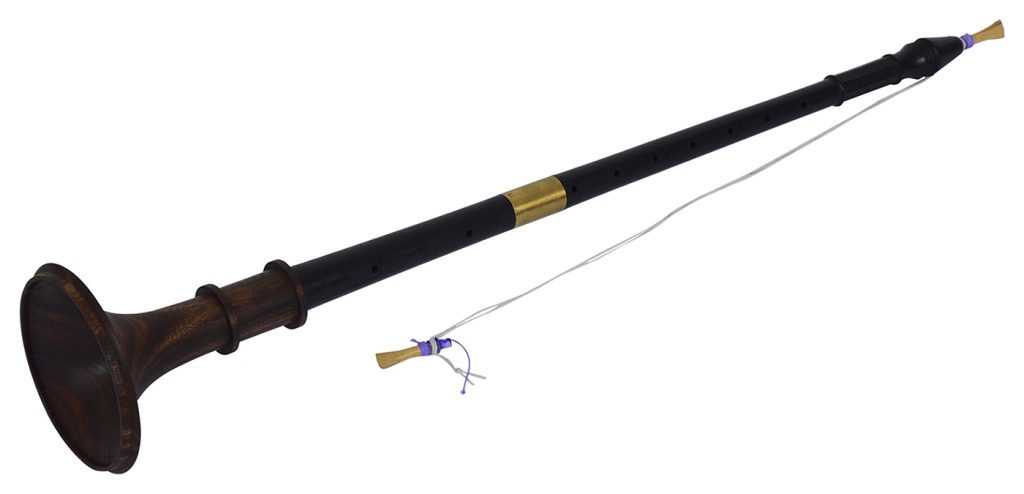
- A traditional wind instrument from South India, similar to an oboe.
- Played in temple festivals and classical performances like Bharatanatyam and Kuchipudi.
- Its loud and piercing sound is believed to invoke divine presence and create an auspicious atmosphere.
9. Chenda
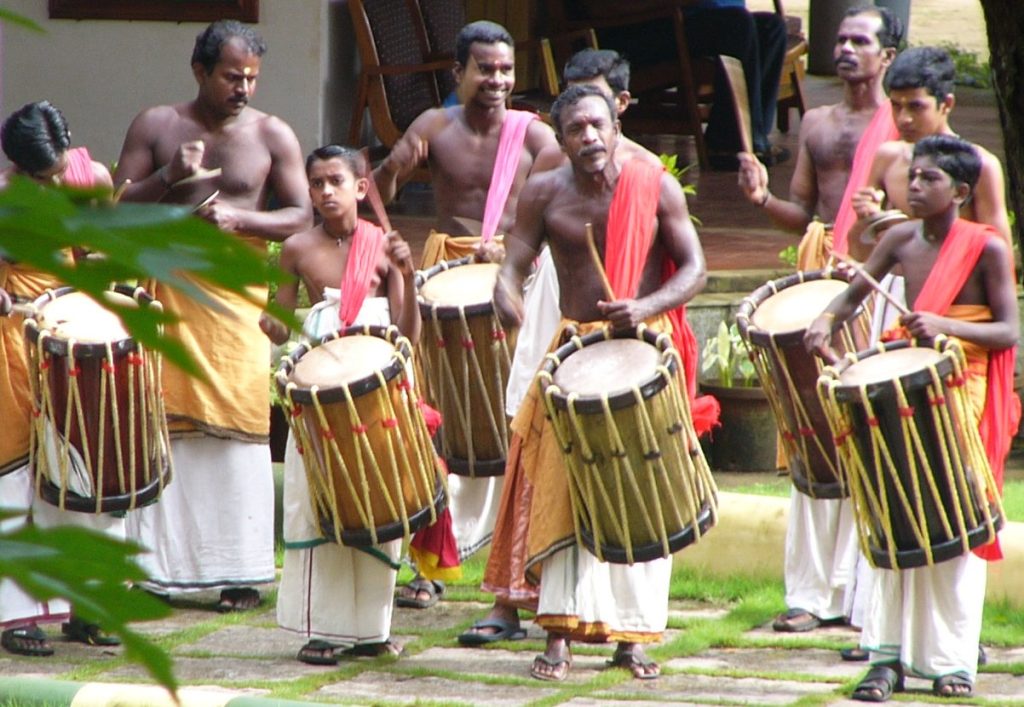
- A cylindrical drum from Kerala, used in Kathakali and Mohiniyattam.
- Known for sharp, thunderous beats that heighten dramatic moments.
- Helps synchronize the dancer’s powerful gestures and expressions.
10. Sitar
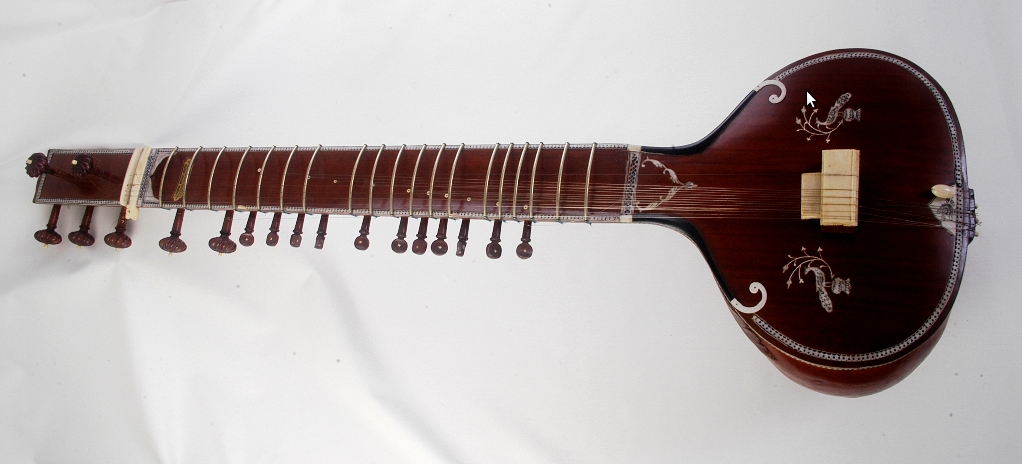
- Traditional Indian string instrument with a long neck and multiple strings
- Produces rich, resonant tones with sympathetic strings adding depth
- Known for intricate melodic and rhythmic patterns
- Portable and versatile, ideal for live classical dance and drama accompaniment
- Enhances mood and emotion with its expressive sound
11. Violin
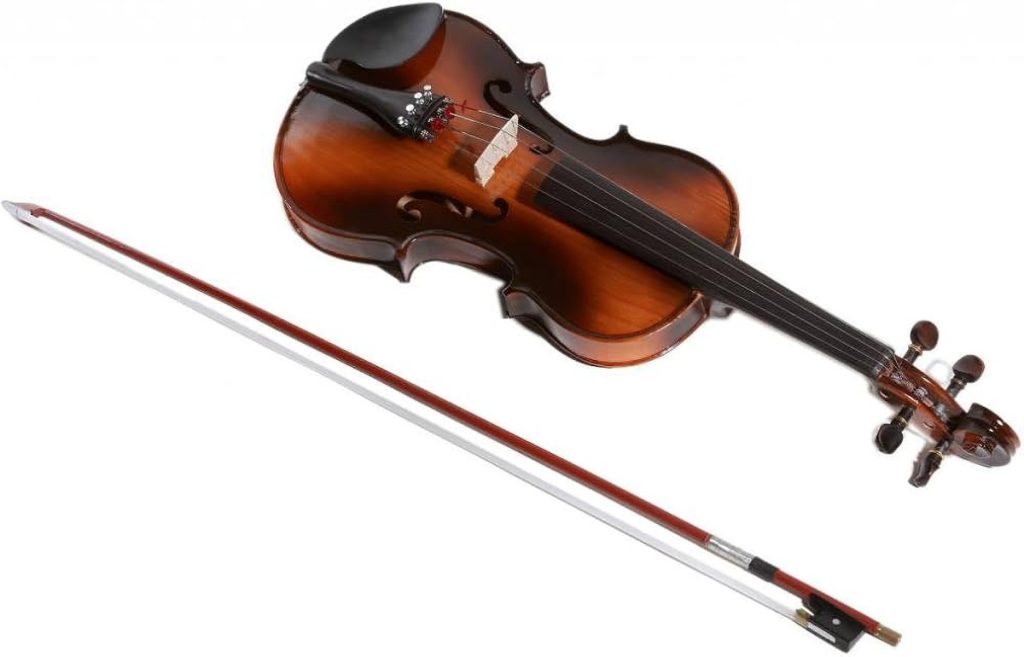
- Originally a Western instrument adapted into Indian classical music in the 18th century
- Highly versatile, capable of mimicking vocal nuances with smooth glides and ornamentations
- Compact and easy to transport, perfect for live performances
- Complements rhythmic and emotional elements in dance and drama
- Widely used across various Indian classical dance and music styles
Music, Abhinaya, and Mudras — A Perfect Harmony
The beauty of Indian classical drama lies in how music, abhinaya (expression), and mudras (hand gestures) blend into one seamless art form.
- When the musician plays a sorrowful raga, the dancer’s face reflects sadness through subtle expressions.
- As the tala beats quicken, the dancer’s footwork becomes lively and energetic, matching the music’s rhythm.
- The mudras, or hand signs, are perfectly timed to musical cues, telling parts of the story without words.
This close connection between sound and movement creates an immersive experience that pulls the audience into the narrative, making them feel the emotions deeply.
Example: A Scene from Bharatanatyam
Imagine a Bharatanatyam dancer portraying the story of a lover waiting for their beloved. The music begins with the gentle notes of Raga Kalyani, known for its mood of devotion and love. The slow Adi tala sets a calm rhythm.
As the dancer moves gracefully, their facial expressions show longing and hope. Their hands form mudras symbolizing waiting and anticipation. The soft sounds of the flute add sweetness to the scene, while the mridangam’s steady beats mark the passing moments.
Together, the music and dance create a beautiful emotional journey — all guided by the principles laid down in the Natya Shastra.
Conclusion
Music and rhythm in the Natya Shastra are far more than just sounds; they are the very pulse of drama. Through ragas, talas, and carefully chosen instruments, music shapes the emotions, guides the timing, and supports the storytelling of Indian classical dance and drama.
When you watch a performance, listen closely — the music is speaking a language as expressive as the dancer’s movements and gestures, telling a story that touches the heart and soul.
Acknowledgment:
I would like to acknowledge the works of Bharata Muni and scholars such as Manomohan Ghosh, Kapila Vatsyayan, G.K. Bhat, Leela Venkataraman and Ananda Lal whose translations and interpretations of the Natyasashtra have greatly contributed to the understanding of classical Indian theatre and dance. Their research provided the foundational knowledge for this article.
You might like to read:
