

Psychophysics of visual perception is the science of how our eyes and brain work together to interpret what we see. In photography, this means understanding why some images feel calm, others feel energetic, and some make us stop and stare.
When we look at a photo, our brain is not just recording objects—it’s processing balance, patterns, colors, lines, and tension. This is why two photos of the same subject can feel completely different. One might soothe us, while the other excites or unsettles us.
Most photography lessons simplify composition into rules like “use the rule of thirds” or “center your subject.” While useful, these don’t explain the deeper why. Psychophysics helps us go beyond rules to discover how viewers actually experience an image.
What is Psychophysics of Visual Perception?
Psychophysics studies the link between the outside world (light, shapes, lines, colors) and our inner experience (calmness, energy, curiosity).
When you frame a shot, you’re essentially “playing” with how the viewer’s brain will:
- Distribute attention across the image.
- Seek balance and harmony.
- Feel movement or stability.
- Detect patterns or disruptions.
Example:
- A lone tree in an open field feels calm and minimal.
- The same tree pushed to the edge of the frame feels unsteady, almost as if it’s leaving.
Balance: Why Some Photos Feel “Right”
Balance doesn’t mean perfect symmetry—it’s about distributing visual weight (brightness, color, size, detail) so the viewer feels at ease.
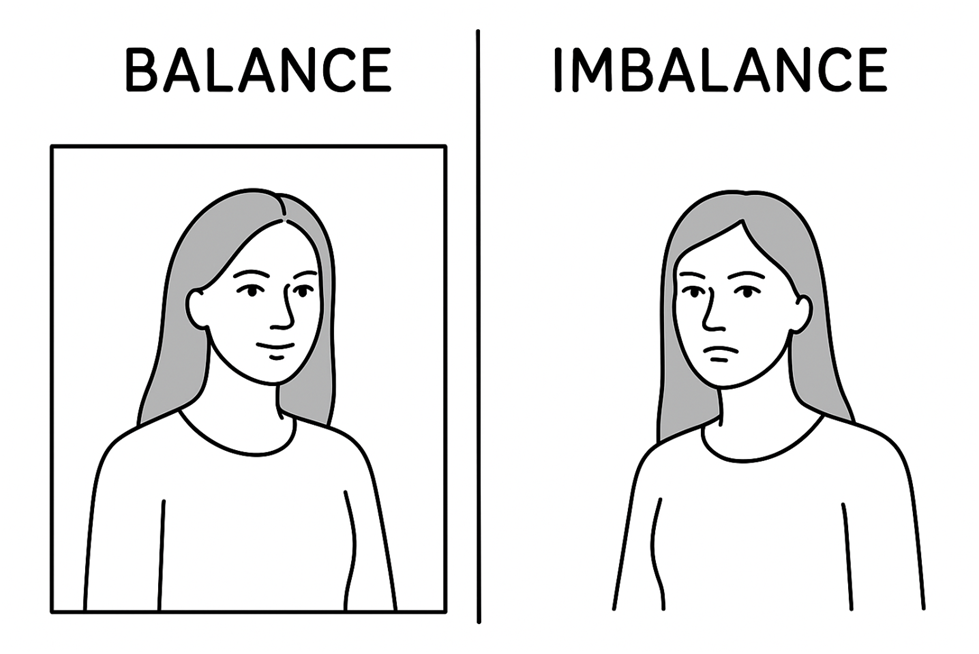
Genre Examples of Balance:
- Portrait Photography: A subject placed off-center balanced by negative space, like a plain wall or soft sky. The emptiness counterbalances the person’s presence.
- Landscape Photography: A mountain on one side balanced by a lake or setting sun on the other. The elements share importance.
- Street Photography: A bustling crowd balanced by a single person in quiet isolation. The push and pull between busy and calm creates harmony.
- Product Photography: A small object placed on a large white background, balanced by shadow. The shadow becomes a compositional element that anchors the frame.
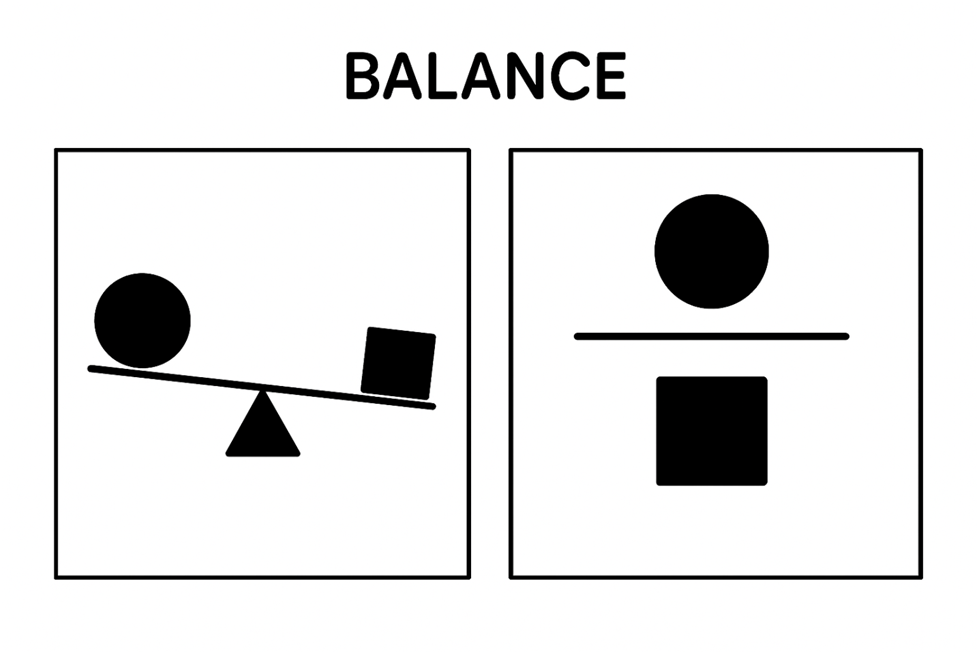
When balance works, the viewer doesn’t question it—they just feel that the photo “sits right.”
Tension: Making Photos Feel Alive
Tension is created when balance is slightly broken. It makes the photo feel charged, alive, and sometimes even uncomfortable—but in a good way.
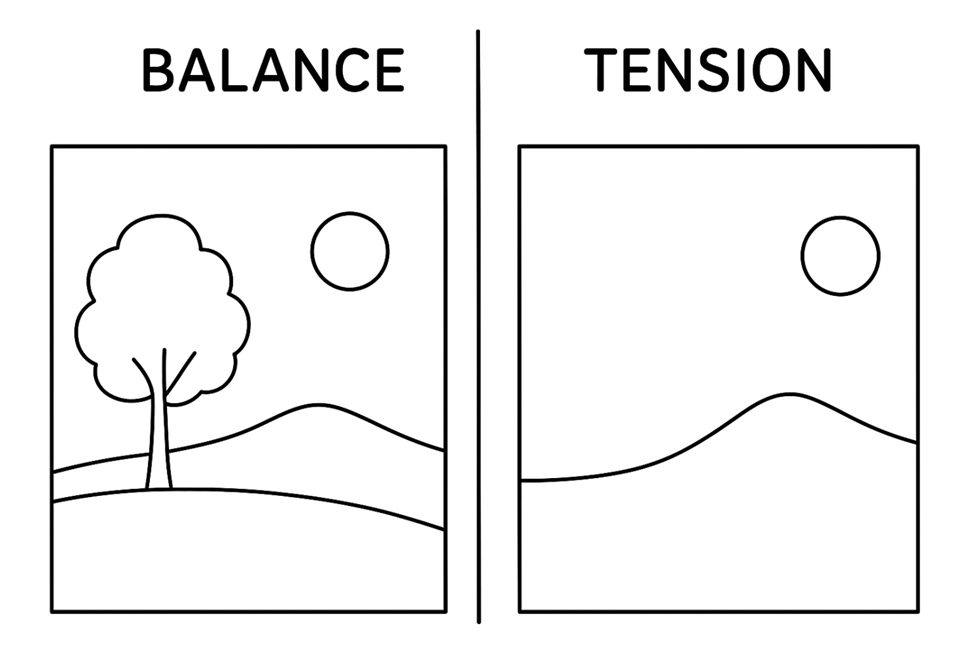
Genre Examples of Tension:
- Portrait Photography: A subject cropped at the edge of the frame, leaving little breathing space. The viewer feels close, almost intruding.
- Landscape Photography: A storm cloud dominating one side of the image, pressing against a small strip of land. The imbalance creates drama.
- Street Photography: A runner caught mid-stride diagonally across the frame. The diagonals scream motion, pulling the eye forward.
- Product Photography: A perfume bottle placed too close to the edge of the image, with shadows spilling off-frame. The brain senses unease, which keeps attention fixed.
Tension doesn’t always mean chaos—it means energy. It’s what keeps a photo from being too safe or boring.
Patterns: The Brain’s Love for Order
Our brains crave patterns. We relax when we see repetition, but we also lock in when something disrupts that repetition.
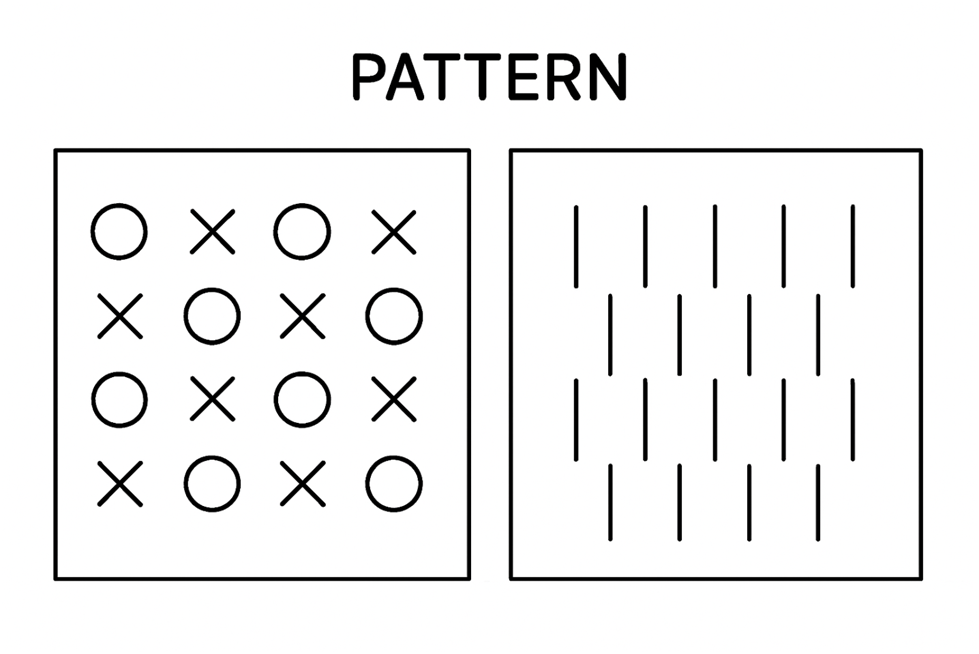
Genre Examples of Patterns:
- Portrait Photography: A group of dancers in identical outfits, with one dancer breaking the pose. The disruption becomes the story.
- Landscape Photography: Repeating waves along a shoreline. The rhythm calms the eye. Add one surfer cutting across the waves, and the disruption draws immediate focus.
- Street Photography: Rows of bicycles parked neatly, with one bicycle toppled over. The viewer zooms in on the odd one out.
- Product Photography: A set of identical items (lipsticks, watches, bottles) lined up. One slightly tilted product catches the brain instantly—it becomes the focal point.
Patterns + disruption = predictability mixed with surprise. That combination is irresistible to the brain.
Why This Matters for Storytelling
Every photograph is more than objects—it’s an experience shaped by how our brain perceives the frame. By using balance, tension, and patterns, photographers can craft emotional narratives to tell a story.
Storytelling Across Genres:
- Portraits: Balance makes a subject look calm and composed; tension (like cutting close to the edge) can suggest struggle or intimacy.
- Landscapes: Balanced horizons suggest peace; tilted or storm-heavy skies suggest danger or awe.
- Street Photography: Repetition of people crossing a road shows routine; one figure breaking the rhythm tells a unique story.
- Product Photography: Balanced arrangements suggest reliability; asymmetrical or tension-filled setups suggest boldness or uniqueness.

Example:
A war photo showing soldiers in perfect rows (pattern) with one soldier looking directly at the camera (disruption). The viewer no longer sees “soldiers” but a human being. That’s storytelling through perception.
Conclusion: Seeing With the Brain, Not Just the Eyes
The psychophysics of visual perception explains why certain photos feel powerful while others fall flat. It shows us:
- Balance = harmony and stability.
- Tension = energy and curiosity.
- Patterns = order, with disruption creating focus.
Instead of memorizing rules, think of your frame as a conversation with the brain. Use perception to control how your viewer feels—calm, curious, or unsettled.
In the end, every great photograph is more than just light and objects—it’s a carefully crafted experience in perception.
